When you’re 70 miles into a 100-mile race through remote mountain terrain, the last thing you want to question is whether your GPS watch will guide you back to the aid station or die before the next checkpoint. For ultrarunners, a GPS tracking watch with offline maps isn’t just another piece of gear—it’s your navigator, safety net, and digital pacer rolled into one rugged package. Unlike road marathons where civilization is never far away, ultramarathons often traverse wilderness areas where cell service is a fantasy and getting lost could mean serious trouble.
The evolution of GPS watch technology has been a game-changer for endurance athletes who push beyond the marathon distance. Modern watches with offline mapping capabilities have transformed how we plan routes, navigate courses, and monitor performance across 30, 50, or 100+ mile adventures. But not all GPS watches are created equal, and the features that matter for a 5K runner become critical failures when you’re 18 hours into a mountain 100-miler. Understanding what separates a reliable ultrarunning companion from a flashy wrist ornament could be the difference between a PR and a DNF.
Top 10 GPS Tracking Watches for Ultrarunners
Detailed Product Reviews
1. Garmin Enduro™ 3 – 51 mm, Solar, Sapphire, Ultraperformance GPS Smartwatch, Extreme Battery Life, Detailed Mapping, Built-in LED Flashlight, Carbon Gray DLC Titanium with Black UltraFit Nylon Strap

Overview: The Garmin Enduro 3 is the ultimate ultraperformance GPS smartwatch engineered for extreme endurance athletes. Weighing just 63g with a titanium bezel and sapphire lens, it combines premium durability with remarkable comfort for multi-day adventures. This third-generation model pushes battery technology to unprecedented levels while maintaining Garmin’s signature mapping and training intelligence.
What Makes It Stand Out: The solar charging system delivers up to 90 days in smartwatch mode—transforming how athletes approach long expeditions. The dynamic round-trip routing automatically adjusts your path to ensure you return on schedule, while the built-in LED flashlight provides practical illumination for predawn starts or emergency situations. The UltraFit nylon strap maintains comfort during week-long events, and the always-on display remains visible without sacrificing longevity.
Value for Money: At $874.99, the Enduro 3 commands a premium price that serious ultramarathoners and adventure racers will justify. Compared to the Fenix 7X Solar ($899) and competitors like the Coros Vertix 2 ($699), it offers superior battery performance and specialized endurance features that offset the cost for dedicated athletes. Casual runners will find it overkill, but for those tackling 200-mile races or multi-week treks, the investment pays dividends in reliability and peace of mind.
Strengths and Weaknesses:
- Strengths: Revolutionary 90-day solar battery life; exceptionally lightweight titanium construction; scratch-resistant sapphire display; intelligent dynamic routing; practical LED flashlight; comprehensive TopoActive maps.
- Weaknesses: Extremely high price point; overwhelming feature set for non-ultra athletes; complex interface requires learning curve; limited smartwatch app ecosystem compared to Apple Watch.
Bottom Line: The Garmin Enduro 3 is unequivocally the best endurance sports watch available, but only serious ultra-athletes should consider this investment. For weekend warriors, Garmin’s Forerunner series offers better value.
2. Fajocru Fall Detection Smart Watch for Seniors with GPS Tracking, SOS Alert & HD Video Call, Waterproof Fitness Tracker for Dementia/Alzheimer’s, 4G Safety (Casual, Red)

Overview: The Fajocru Smart Watch addresses critical safety concerns for seniors, particularly those with cognitive decline. This 4G-enabled device transforms traditional medical alert systems into a modern wearable that supports independence while providing caregivers with powerful monitoring tools. With HD video calling and real-time GPS tracking, it bridges communication gaps when seconds matter most.
What Makes It Stand Out: Fall detection technology automatically triggers alerts, while the SOS button provides instant emergency access. Caregivers gain unprecedented control through the “Se Tracker” app, configuring safe zones that trigger immediate notifications when breached. The ability to store a month of location history proves invaluable for dementia patients who may wander. Two-way voice messaging and video calls keep families connected without requiring smartphone literacy from the wearer.
Value for Money: While pricing isn’t specified, the comprehensive 4G connectivity and medical-grade features suggest mid-range positioning around $150-250. This represents significant savings compared to traditional monthly-monitored medical alert systems that charge $30-50 per month. The absence of recurring fees makes it economically attractive for long-term care scenarios, though the SIM card requirement adds minimal cellular plan costs.
Strengths and Weaknesses:
- Strengths: Dedicated fall detection; HD video calling capability; robust caregiver app with geofencing; 4G connectivity ensures constant contact; dementia-specific design considerations; no monthly monitoring fees.
- Weaknesses: Complex SIM card installation process risks activation failure; unknown brand reliability; potentially bulky for frail wrists; limited battery life details; requires technical setup that may challenge some caregivers.
Bottom Line: An exceptional safety net for vulnerable seniors with engaged caregivers. The Fajocru excels in emergency preparedness, but the setup complexity demands patience. Ideal for families prioritizing proactive monitoring over simplicity.
3. GPS Tracker for Kids (iOS Only) iOS Only Real Time Mini Locator Watch Band for Teens Special Needs and Elderly Hidden Tracking Device Works with Apple Find My No Monthly Fee Smart Safety Solution
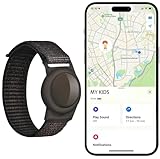
Overview: This budget-friendly GPS tracker leverages Apple’s Find My ecosystem to provide location monitoring without subscription costs. Designed as a discreet wristband for children, teens, special needs individuals, and seniors, it prioritizes simplicity and affordability over advanced smartwatch features. The waterproof design ensures all-day wearability across various activities and conditions.
What Makes It Stand Out: The complete elimination of monthly fees distinguishes this $19.99 tracker from competitors requiring $10-25 monthly subscriptions. Seamless Apple Find My integration means iOS users can monitor locations using a familiar interface without installing additional apps. The extended battery life reduces maintenance hassles, while the waterproof construction withstands swimming and rough play, making it practical for active kids.
Value for Money: At under twenty dollars with zero recurring costs, this tracker delivers exceptional value for iPhone-centric families. Traditional GPS watches for kids cost $100-200 plus subscriptions. While it lacks calling or geofencing alerts, the core tracking functionality matches more expensive alternatives. The trade-off is reliance on Apple’s crowdsourced network, which works excellently in urban areas but may have gaps in remote locations.
Strengths and Weaknesses:
- Strengths: Unbeatable price point; no monthly fees; effortless Apple ecosystem integration; waterproof durability; long battery life; lightweight and comfortable design.
- Weaknesses: iOS exclusive alienates Android families; no two-way communication; lacks dedicated SOS button; dependent on nearby Apple devices for location triangulation; minimal customization options.
Bottom Line: Perfect for budget-conscious iPhone users seeking basic, reliable tracking. It won’t replace a full-featured smartwatch, but it accomplishes core safety monitoring admirably at a fraction of the cost.
4. GPS Tracker for Kids, Real-Time Mini GPS Tracking Watches Works with Find My (iOS Only) APP, Hidden GPS Tracker,Waterproof,No Monthly Fee (Black)

Overview: This iOS-exclusive GPS tracking watch offers a maintenance-free safety solution for families deeply integrated into Apple’s ecosystem. Positioned as a hidden tracking device, it provides real-time location monitoring through the Find My app without the burden of subscription fees. The black, waterproof design suits everyday wear for kids, teens, seniors, and special needs individuals who require discreet oversight.
What Makes It Stand Out: The remarkable one-year battery life eliminates charging routines entirely—a game-changer for forgetful teens or seniors who struggle with device maintenance. Smart alert functionality notifies caregivers when the wearer exits predefined areas, adding proactive safety measures missing from basic trackers. The low-battery alert ensures continuous connectivity, while the waterproof rating supports swimming and showering without removal.
Value for Money: Priced at $26.23, this tracker sits slightly above the most basic models but justifies the premium with its year-long battery and smart alert capabilities. Competing devices with similar features typically cost $50-80. The absence of monthly fees means break-even occurs within two months compared to subscription-based services, making it exceptionally economical for long-term use.
Strengths and Weaknesses:
- Strengths: Extraordinary one-year battery life; no subscription costs; geofencing alerts enhance safety; waterproof construction; seamless Find My integration; low-profile design.
- Weaknesses: iOS-only compatibility excludes Android users; limited to location tracking only; no voice calling or messaging; relies on Apple’s network density; black color may not appeal to all children.
Bottom Line: An outstanding “set it and forget it” tracking solution for iPhone families. The year-long battery and smart alerts make it superior to cheaper alternatives, though communication features remain absent.
5. 2026 AI Smart Watch with Standalone GPS & Offline Maps, 5ATM Waterproof, 1.43" AMOLED, 21-Day Battery, 178 Sports Modes, Compass, Heart Rate/SpO2/Stress/Sleep Monitor, for Android iOS Men Women Black

Overview: The 2026 AI Smart Watch positions itself as a feature-packed alternative to premium brands at a mid-range price point. With standalone GPS, offline topographic maps, and an extensive AI ecosystem, it targets tech-savvy users who want advanced functionality without paying Garmin or Apple prices. The 5ATM waterproof rating and 21-day battery make it suitable for serious athletes and everyday users alike.
What Makes It Stand Out: The AI integration goes beyond basic voice commands, offering 20 virtual companions including fitness trainers and psychological counselors. Real-time translation across 24 languages and AI-generated fitness plans demonstrate ambitious software capabilities. The standalone GPS with offline maps functions independently of smartphone connectivity, while 178 sport modes cover everything from mountaineering to diving. The 1000-nit AMOLED display ensures visibility in all conditions.
Value for Money: At $123.99, this watch dramatically undercuts competitors with similar specs. Devices offering standalone GPS, AMOLED displays, and comprehensive health tracking typically start at $300. While the unknown brand raises durability questions, the two-year feature set—including AI capabilities usually found in concept devices—delivers remarkable bang for buck. The 21-day battery life alone justifies the price compared to Apple Watch’s daily charging requirement.
Strengths and Weaknesses:
- Strengths: Impressive 21-day battery; standalone GPS with offline maps; comprehensive AI feature set; bright AMOLED display; 5ATM waterproofing; extensive health monitoring; affordable pricing.
- Weaknesses: Unproven brand reliability; AI features may be gimmicky; unknown accuracy of health sensors; limited third-party app support; potential software bugs in new product.
Bottom Line: A compelling choice for tech enthusiasts willing to gamble on a new brand. The feature list rivals watches three times the price, making it an excellent value proposition for Android users and budget-conscious iPhone owners.
6. Fajocru Fall Detection Smart Watch for Seniors with GPS Tracking, SOS Alert & HD Video Call, Waterproof Fitness Tracker for Dementia/Alzheimer’s, 4G Safety (Modern,Black)

Overview: The Fajocru smartwatch delivers comprehensive safety monitoring for seniors, particularly those with cognitive decline. This 4G-enabled device combines fall detection, real-time GPS tracking, and emergency communications in a modern black design that replaces traditional watches while providing peace of mind for caregivers.
What Makes It Stand Out: Unlike competitors, this watch includes a pre-installed data SIM with one year of free service, eliminating immediate subscription costs. The HD video calling feature allows face-to-face communication, while the dedicated SOS button triggers emergency calls to three preset numbers. Caregivers receive instant safe zone alerts via the “Se Tracker” app when wearers wander, making it invaluable for dementia care.
Value for Money: At $99.99 with included data service, this watch significantly undercuts subscription-based alternatives that charge $30-50 monthly. While you’ll need your own SIM for voice calls, the first year of GPS tracking and messaging costs nothing extra, representing exceptional upfront value for families managing care expenses.
Strengths and Weaknesses: Strengths include fall detection, waterproof construction, caregiver-friendly app with geofencing, two-way voice messaging, and 30-day location history. The pre-installed SIM’s data-only limitation is a weakness—you must install a separate voice-enabled SIM for phone calls, which adds complexity. The watch may also require technical setup that some seniors find challenging.
Bottom Line: This is an excellent choice for caregivers seeking affordable, feature-rich monitoring. The included data service and video calling capabilities make it a practical safety net for vulnerable seniors, despite minor SIM configuration requirements.
7. AngelSense Assistive Technology Watch with Personal GPS Tracker for Teens, Adults, Seniors, Autism, Special Needs, Dementia, Speakerphone, SOS Button, Live Tracking, Subscription Required

Overview: AngelSense positions itself as premium assistive technology for vulnerable individuals with autism, dementia, or special needs. This GPS watch offers continuous monitoring through a subscription-based service that extends beyond simple location tracking to provide proactive safety measures and communication tools.
What Makes It Stand Out: The device’s intelligent auto-learning capability distinguishes it from standard GPS trackers—it learns daily routines to send alerts only for genuinely unusual events like early departures or unexpected stops. The assistive speakerphone with auto-answer ensures caregivers can always reach the wearer, while Safe Ride Monitoring tracks school bus routes, delays, and stops in real-time.
Value for Money: The $89 upfront cost is deceptive—the mandatory $49.99 monthly subscription with a one-year contract makes this a $689+ first-year investment. While expensive, the unlimited tracking, 60 voice minutes, premium support, and specialized features for special needs justify the price for families requiring comprehensive, reliable monitoring where safety cannot be compromised.
Strengths and Weaknesses: Strengths include accurate indoor/outdoor tracking, intelligent alerting, emergency search tools with audible alarms, one-way listening capability, and a school dashboard for customization. The 16-hour battery life requires nightly charging, which can be problematic. The high monthly fee and contract commitment are significant financial drawbacks for budget-conscious families.
Bottom Line: AngelSense is unparalleled for families managing elopement risks or complex special needs. The cost is substantial, but the specialized features and reliability make it worthwhile when standard trackers fall short.
8. Brhgph Smart Watch with Ai Functions GPS Tracking for Android Phones and iPhone Compatible Bluetooth Call Message Alert Heart Rate/Sleep Monitor IP68 Waterproof for Women

Overview: The Brhgph smartwatch enters the market as an ultra-affordable AI-integrated wearable, targeting budget-conscious consumers who want advanced features without premium pricing. Designed for both Android and iPhone compatibility, it promises artificial intelligence capabilities alongside standard fitness and communication functions.
What Makes It Stand Out: This watch claims to be the first AI-powered smartwatch with features like customizable AI-generated watch faces, instant Q&A responses, and real-time translation—capabilities rarely seen in sub-$20 devices. It also monitors emotional states and fatigue levels, offering breath exercises for stress management, distinguishing it from basic fitness trackers.
Value for Money: At $18.99, this watch is remarkably inexpensive, delivering GPS tracking, Bluetooth calling, message notifications, and health monitoring for less than a restaurant meal. While established brands charge $100+ for similar features, this makes advanced wearable technology accessible to virtually any budget, perfect for first-time smartwatch users or those wanting to experiment with AI functions.
Strengths and Weaknesses: Strengths include the unbeatable price point, IP68 waterproof rating, comprehensive health monitoring (heart rate, sleep, blood oxygen), and innovative AI features. However, the unknown brand raises questions about long-term reliability, accuracy, and app support. The AI capabilities may be gimmicky rather than genuinely useful, and GPS precision is unverified compared to established brands.
Bottom Line: This is an impressive value proposition for budget shoppers willing to accept potential quality trade-offs. It’s ideal for testing smartwatch utility before investing in premium alternatives, though serious athletes should look elsewhere.
9. Wearable4U Garmin Enduro 3 – 51 mm, Solar, Sapphire, Ultraperformance GPS Smartwatch, Carbon Gray DLC Titanium with Black UltraFit Nylon Strap Black Earbuds Bundle

Overview: The Garmin Enduro 3 represents the pinnacle of ultra-endurance sports technology, engineered for athletes who demand maximum performance in extreme conditions. This 51mm solar-charged behemoth combines military-grade durability with unprecedented battery life, packaged with premium accessories for serious adventurers.
What Makes It Stand Out: The solar charging system delivers up to 90 days of smartwatch mode battery life—revolutionary for multi-day expeditions. The titanium bezel and scratch-resistant sapphire lens withstand punishing conditions, while the built-in LED flashlight and preloaded TopoActive maps provide critical navigation tools. Weighing just 63g, it maintains comfort despite its robust construction.
Value for Money: At $909.99, this is a substantial investment, but justified for ultramarathoners, mountaineers, and adventure racers who rely on continuous GPS tracking. Standard GPS watches require weekly charging and lack the durability for extreme use. The included earbuds bundle adds value, though the primary worth lies in the watch’s reliability when failure isn’t an option.
Strengths and Weaknesses: Strengths include industry-leading battery life, solar charging, premium materials, comprehensive mapping, and lightweight design. The 51mm size overwhelms smaller wrists, and the feature set is overkill for casual runners. The price excludes all but dedicated endurance athletes, and the complexity may intimidate beginners.
Bottom Line: This is the ultimate tool for ultra-endurance athletes who need dependable performance in remote locations. For weekend warriors or gym-goers, the investment is excessive—opt for a mid-range Forerunner instead.
10. Elderly 4G GPS Smart Watch Waterproof Senior Real-Time Tracking Phone Video Call SOS Emergency Alarm Voice Message Geo-Fence Touch Screen Pedometer Anti-Lost Tracker Father Mother’s Day Global Version

Overview: This senior-focused smartwatch delivers comprehensive safety features with worldwide 4G compatibility, making it suitable for families across the globe. Designed as an all-in-one communication and tracking device, it addresses the primary concerns of elderly care through real-time monitoring and emergency response capabilities.
What Makes It Stand Out: The watch’s global version works in virtually any country, a significant advantage over region-locked competitors. It stores 90 days of location history—three times longer than most alternatives—and supports both phone and video calls for richer communication. The SOS emergency feature cycles through three preset numbers twice, ensuring someone responds during critical situations.
Value for Money: Priced at $97.99, this watch offers strong value with its international compatibility and extensive feature set. While it requires a separate Nano SIM with voice and data, the absence of mandatory subscription fees keeps long-term costs manageable. Families with relatives abroad benefit from the global coverage without paying premium import or roaming charges.
Strengths and Weaknesses: Strengths include worldwide 4G support, 90-day route history, waterproof design, video calling, and comprehensive safety features. The requirement for a self-sourced SIM card adds setup complexity, and the generic branding may raise concerns about software updates and customer support. The interface might challenge less tech-savvy seniors.
Bottom Line: This is an excellent option for families needing reliable, international elderly monitoring. The global compatibility and extensive location history justify the minor setup effort, making it a practical choice for dispersed families prioritizing senior safety.
Why Offline Maps Are a Game-Changer for Ultrarunners
Offline maps represent the single most important advancement for trail and ultrarunners in the past decade. When you’re traversing remote singletrack where course markings might be sparse or vandalized, having a complete topographic map stored locally on your wrist provides an unparalleled sense of security. Unlike smartphone apps that become expensive paperweights without cell service, watches with offline maps store detailed cartographic data directly in their memory, accessible regardless of connectivity.
The real magic happens when you combine these maps with GPS tracking. Your position updates in real-time on a detailed trail network, showing not just where you are, but the elevation profile ahead, nearby water sources, and the exact distance to the next aid station. For self-supported adventures or races with complex navigation like the Barkley Marathons or Dragon’s Back, this capability transforms from convenience to survival tool. Many ultrarunners report that the psychological benefit alone—knowing you can’t truly get lost—helps them push through low points that might otherwise trigger a drop.
GPS Accuracy in Challenging Terrain: What You Need to Know
GPS accuracy becomes exponentially more critical the farther you run from civilization. In dense forest canopies, deep canyons, or near cliff faces, standard GPS receivers can drift by 30-50 meters or lose signal entirely. This isn’t just annoying—it can place you on the wrong trail junction when every second counts. High-end ultrarunning watches now support multiple satellite constellations simultaneously: GPS (American), GLONASS (Russian), Galileo (European), and sometimes BeiDou (Chinese).
The key is understanding how these systems work together. Multi-band GNSS receivers can access multiple frequencies from the same constellation, cutting through interference from dense foliage and multipath errors caused by canyon walls. For ultrarunners, this means your watch maintains lock in conditions where older models would show “GPS lost.” Look for watches that specifically mention multi-band or dual-frequency support—not just multi-constellation, which simply means they can see more satellites but still use only one frequency. The difference in track accuracy through a redwood forest or slot canyon is night and day.
Battery Life Strategies for 100-Mile Races
Battery anxiety has ended more ultramarathon attempts than bonking. When your race might take 24-36 hours, your watch needs to outlast your legs. Manufacturers advertise battery life in ideal conditions, but the reality of ultrarunning is far from ideal. Continuous GPS tracking with offline maps, heart rate monitoring, and navigation alerts can cut advertised specs by 60-70%. A watch claiming “40 hours of GPS” might only deliver 12-15 hours with full features enabled.
Smart ultrarunners develop battery management strategies before race day. This includes understanding the difference between GPS recording intervals—1-second recording provides the most accurate track but drains battery fastest, while “UltraTrac” or similar modes extend life by reducing fix frequency at the cost of accuracy. Some watches allow you to create custom battery profiles that automatically adjust GPS mode, screen brightness, and sensor usage based on remaining charge. The best approach is to test your watch on a long training run, simulating race-day settings exactly, then add a 20% safety margin to the measured battery life.
Understanding Map Types: TOPO, Vector, and Raster Explained
Not all maps are created equal, and the type stored on your watch dramatically affects both utility and performance. Topographic (TOPO) maps show elevation contours, trail networks, and natural features—the gold standard for ultrarunners. But these come in two formats: vector and raster. Vector maps use mathematical equations to draw lines and shapes, making them infinitely scalable without losing clarity and requiring minimal storage space. When you zoom in on a vector map, text and trail lines remain crisp.
Raster maps are essentially images—scanned paper maps or satellite imagery. They look gorgeous and can show incredible detail, but they become pixelated when zoomed and consume massive amounts of memory. A single raster map tile might use 10x the storage of a vector equivalent. For ultrarunners, the sweet spot is typically vector TOPO maps for navigation supplemented with the ability to load custom raster layers for specific race sections. Understanding this distinction helps you choose a watch with appropriate storage capacity—most quality ultrarunning watches now offer 16-32GB, enough for vector maps of entire states or countries.
Essential Navigation Features for Trail and Mountain Running
Beyond basic mapping, certain navigation features become invaluable during ultras. Breadcrumb trails show your exact path traveled, crucial for backtracking if you need to retreat from a wrong turn. Waypoint navigation lets you preload aid stations, water sources, and critical junctions with custom alerts. The best watches allow you to create these waypoints directly on the device mid-run, not just in pre-race planning software.
ClimbPro or similar features automatically detect upcoming ascents, showing gradient, distance to summit, and elevation gain remaining. During a 100-miler with 20,000 feet of climbing, this helps you mentally prepare for each challenge and conserve energy on gradual inclines that don’t warrant power-hiking. Some advanced watches also offer “sight ’n go” navigation, where you point the watch at a distant landmark and create a route to it on the fly—perfect for adventurous off-trail sections or when you need to detour around an obstacle.
Data Precision: Why Every Second and Meter Matters
Ultrarunning demands precision in ways shorter distances don’t. When you’re managing nutrition for a 24-hour effort, knowing your exact pace and distance impacts calorie and fluid planning. Watches that record GPS points every second provide the most accurate distance measurements, preventing the gradual drift that occurs with smart recording modes. But precision extends beyond GPS.
Barometric altimeters measure elevation more accurately than GPS alone, which can drift by 30+ meters vertically in challenging conditions. The best watches combine GPS, barometric, and accelerometer data through sensor fusion algorithms to smooth anomalies. For example, they can detect when GPS elevation spikes unrealistically during a canyon traverse and override it with barometric data. Temperature compensation matters too—barometric sensors drift as air temperature changes from dawn to deep night during a 100-miler. High-end watches automatically calibrate using known elevation points from your map data.
Durability Standards for Extreme Endurance Events
Your watch will experience more abuse in one ultramarathon than most devices see in their lifetime. It must survive impacts from falls on rocky terrain, immersion in creek crossings, temperature swings from freezing pre-dawn starts to midday desert heat, and constant vibration. The IP (Ingress Protection) rating system provides a baseline—IP68 means dust-tight and submersion beyond 1 meter, but for ultrarunning, you want to dig deeper.
MIL-STD-810G certification indicates military-grade testing for shock, vibration, and temperature extremes. Sapphire crystal lenses resist scratches from granite scree fields far better than chemically strengthened glass. Button durability matters more than touchscreen responsiveness when you’re wearing gloves or have bloody fingers from a fall. The bezel should protect the screen while being replaceable, as even the toughest watch will show battle scars after multiple 100-milers. Consider also the strap attachment system—quick-release pins can fail, while integrated strap designs offer more security.
Display Readability in Adverse Conditions
During an ultramarathon, you’ll check your watch in conditions ranging from blinding midday sun to pitch-black night with a headlamp. Transflective memory-in-pixel (MIP) displays excel in bright sunlight, actually becoming more readable as ambient light increases. AMOLED screens offer stunning contrast and colors but can wash out in direct sun and consume more battery. For ultras, MIP is generally preferred.
Backlight strategy becomes critical for overnight running. The best watches offer variable brightness, red-light modes that preserve night vision, and gesture activation that responds reliably when you flick your wrist. Some models automatically adjust backlight based on ambient light sensors, saving battery during dawn and dusk transitions. Consider also the size and layout of data fields—during a 3 AM bonk, you need to glance and comprehend your pace, distance, and time to next aid without stopping or squinting. Customizable layouts let you prioritize the metrics that matter most for your race strategy.
Customizable Data Screens for Ultra-Distance Monitoring
Pre-race planning and mid-race execution require different data. The ability to create multiple activity profiles with distinct data screens is non-negotiable for serious ultrarunners. You might want a “climbing” screen showing vertical speed, current grade, and elevation gained; a “nutrition” screen tracking time elapsed since last fueling and calories consumed; and a “navigation” screen showing bearing, distance to next waypoint, and off-course alert.
The best watches allow 8-10 customizable data fields per screen and unlimited screens per profile. Some offer dynamic data fields that change based on context—showing pace when running on flats but switching to vertical speed when climbing above a certain grade. Advanced metrics like power (from wrist-based algorithms or external sensors), running efficiency, and real-time stamina can help you avoid the catastrophic late-race blowups that define ultras. The key is configuring these before race day and practicing with them during long training runs so comprehension becomes automatic.
Training Load and Recovery Metrics for Endurance Athletes
Ultramarathon training demands careful balance between building volume and avoiding overtraining. Modern GPS watches analyze training load, aerobic/anaerobic effect, and recovery time, but these algorithms were often designed for shorter, more intense efforts. For ultrarunners, you need watches that accurately assess the impact of 6-hour easy runs and back-to-back 30-mile weekends.
Look for devices that track acute versus chronic training load, showing your 7-day and 42-day trends. This helps identify when you’re building too quickly—a common cause of ultrarunning injuries. Recovery metrics should incorporate sleep quality, heart rate variability (HRV), and resting heart rate trends over weeks, not just days. Some watches now offer “endurance scores” or “trail running VO2 max” that better reflect the demands of long, slow distance. The most sophisticated systems can detect when you’re accumulating fatigue across a training block and suggest taper timing, potentially preventing a DNS on race morning.
SOS and Safety Features for Remote Trail Running
When you’re 40 miles from the nearest road, your watch becomes your lifeline. The most critical safety feature is incident detection—using accelerometers to detect hard falls and automatically sending an SOS with your GPS coordinates to emergency contacts. For this to work in true backcountry, you need a watch with satellite communication capability, not just Bluetooth connection to a phone.
Even without satellite connectivity, pre-programmed “check-in” messages sent when you reach waypoints can reassure crew. Some watches offer “live track” features that broadcast your position via satellite, allowing friends and family to follow your progress in real-time. The best safety feature, however, might be the simplest: an “assist” button that sends a custom message with your location to a preset contact—perfect for situations where you’re not critically injured but need help, like running out of water or encountering an impassable trail.
The Importance of a Robust Software Ecosystem
Hardware is only half the equation. The companion app and web platform determine how easily you can plan routes, analyze post-race data, and sync with training platforms. Look for software that allows complex route creation with elevation profiles, automatic aid station detection, and the ability to add custom points of interest. The sync process should be seamless—when you finish a 20-hour race, you want your data uploading reliably, not failing because of a buggy Bluetooth connection.
Integration with third-party platforms like Strava, TrainingPeaks, and Komoot is essential, but deeper ecosystem features matter more. Can you download community-created routes for your target race? Does the platform offer heat maps showing popular trail networks? Can you overlay weather data on your route to plan gear? The best ecosystems also include robust data export options, ensuring you’re not locked into a single platform if you switch watch brands in the future.
Ergonomics and Comfort for Multi-Day Events
A watch that feels fine for a 2-hour run can become a torture device by hour 20. Weight distribution matters—top-heavy watches rotate on your wrist, requiring tighter straps that impede circulation. The ideal ultrarunning watch has a balanced center of gravity and a curved back plate that conforms to your wrist bone. QuickFit or similar tool-less strap systems let you adjust tightness as your wrist swells during long efforts.
Consider also the button layout. During a race, you’ll operate your watch by feel, often while moving. Buttons should be distinguishable by size and texture, with enough resistance to prevent accidental presses but not so stiff they require stopping. The crown (if present) should be recessed to avoid snagging on gaiters or sleeves. Some ultrarunners prefer slightly larger watches because the increased surface area distributes pressure, while others prioritize minimal weight. The key is testing during your longest training runs, not just at the store counter.
Investment Analysis: Balancing Cost and Capability
Premium GPS watches for ultrarunning range from $400 to over $1000, representing a significant investment. The price differential often reflects materials (titanium vs. stainless steel), sensor sophistication (multi-band GNSS, barometric altimeter quality), and software depth. However, the most expensive watch isn’t always the best for your needs.
Consider your race calendar. If you run one 50K annually on well-marked trails, a mid-range watch with basic offline maps might suffice. But if you’re tackling multiple 100-milers in remote wilderness, the premium for satellite communication and multi-band GNSS becomes justified insurance. Factor in total cost of ownership—some watches require paid subscriptions for advanced features or map updates. Others include premium features free but cost more upfront. Calculate cost per hour of expected use: a $800 watch used 500 hours yearly for three years costs $0.53 per hour. That’s cheap compared to race fees, travel, and gear that fails mid-race.
Future-Proofing: What to Look for in Tomorrow’s Tech
Technology evolves rapidly, and today’s flagship becomes tomorrow’s baseline. When investing in a watch that should last 3-5 years, consider the upgrade path. Does the manufacturer have a history of providing firmware updates that add features to older models? Some brands regularly update 3-year-old watches with new sport modes and navigation features, while others abandon hardware after 18 months.
Storage capacity is a key future-proofing metric. As maps become more detailed and new features require local processing, 8GB of storage that seems ample today may feel cramped in two years. User-replaceable straps and bezels extend physical lifespan. Perhaps most importantly, consider the company’s direction in sensor technology. If they’re investing in new biometrics like hydration sensing or muscle oxygen saturation, those sensors may come to existing models via software updates. A watch with a robust processor and ample memory is more likely to receive meaningful updates than one already maxed out on day one.
Pro Tips for Maximizing Your Watch’s Potential
Mastering your watch before race day separates finishers from DNFs. Start by creating a race-day activity profile months in advance, then use it on every long run. This builds muscle memory for button sequences—critical when you’re hypothermic or exhausted. Download and test your race route multiple times, noting any discrepancies between the digital map and actual trail conditions. Many ultrarunners discover that popular routes have unmapped social trails or recent re-routes.
Learn the battery-saving tricks specific to your model. This might include disabling GLONASS in open terrain where GPS alone is sufficient, or setting up automatic brightness adjustment. Create a “low power” profile that you can activate mid-race if battery drops faster than expected. Practice with the navigation features on unfamiliar trails to build confidence in the watch’s directions. Finally, pair your watch with external sensors (chest strap HRM, foot pod) during training to understand how wrist-based metrics compare, giving you backup data sources if one sensor fails.
Field-Tested Troubleshooting for Common GPS Watch Issues
Even the best watches encounter problems. GPS drift in deep canyons can be mitigated by briefly stopping in an open area to let the watch reacquire signal. If your distance seems off mid-race, check if the watch is set to “smart recording” instead of 1-second intervals—a common default that saves battery but sacrifices accuracy. Barometric altimeters can be fooled by weather changes; manually calibrate at known elevations like aid stations to maintain accuracy.
Screen fogging occurs when moisture gets trapped during creek crossings. The fix is prevention—ensure all charging port covers are sealed and consider a thin screen protector that creates a barrier. If your watch freezes (the software kind, not temperature), the reset sequence varies by brand but usually involves holding specific button combinations. Memorize this before race day. Battery draining faster than expected? Disable vibration alerts, reduce backlight timeout, and switch from a watch face with seconds to one without—those small changes can add hours.
Frequently Asked Questions
How much battery life do I really need for a 100-mile race?
Plan for your realistic finish time plus 30% buffer. If you’ll finish in 24 hours, you need at least 32 hours of battery with your exact settings. Test this during a long training run—advertised specs assume ideal conditions and minimal features enabled. Many ultrarunners carry a portable battery pack for emergency mid-race charging, which takes 30-60 minutes to add significant charge.
Can I rely solely on my watch navigation, or should I carry a paper map?
Always carry a backup. Watches can fail—batteries die, software crashes, screens break. Paper maps don’t. Think of your watch as primary navigation that makes paper maps your backup, not a replacement. Many races require carrying maps anyway. Practice navigating with both so you can seamlessly transition if needed.
What’s the difference between multi-GNSS and multi-band GPS?
Multi-GNSS means your watch can see satellites from GPS, GLONASS, Galileo, and other systems—more satellites to choose from. Multi-band means it can receive multiple radio frequencies from those satellites, which cuts through interference from dense trees and canyon walls. For ultrarunners in remote terrain, multi-band is far more valuable than simply having more satellites on one frequency.
How do I download maps to my watch?
Most watches sync with a companion app on your phone or computer. You select a geographic area, choose map detail level, and download via Wi-Fi or USB. For races, you can often download GPX files from the race website and overlay them on your base maps. Start downloads the night before—they can take hours for large areas. Verify the download completed and test the maps before leaving for a remote run.
Will using offline maps drain my battery faster?
Yes, but modern watches are efficient. The map display itself uses minimal power; the real drain comes from constant screen activation and route calculations. Set your navigation alerts to vibration only, reduce map detail level, and use a data screen with minimal fields to maximize battery. Some watches have a “map only” mode that disables other sensors when navigating.
How accurate is wrist-based heart rate during ultras?
Accuracy drops significantly during ultras. As you fatigue, your running form changes, introducing more arm movement artifacts. Sweat and cold temperatures affect sensor contact. For serious training and racing, pair your watch with a chest strap HRM for medical-grade accuracy. Use wrist HRM as a backup and for 24/7 resting heart rate tracking, which provides valuable recovery data.
Can I create custom workouts on my watch for race-day pacing?
Absolutely. Most premium watches allow creating complex workouts with target paces, heart rate zones, or power targets for different race segments. You can set up alerts for nutrition timing—like “eat every 30 minutes”—and create interval workouts for training. Practice these extensively; a complicated workout can become confusing when exhausted.
What should I do if my watch shows me off-course during a race?
First, don’t panic. Stop and compare your watch position to physical landmarks. If you’re confident you’re on the correct trail, your watch’s GPS may have drifted. Continue following the marked course. If you’re genuinely lost, backtrack to your last known position using the breadcrumb trail. This is why practicing navigation features beforehand is crucial—you’ll trust the watch when it matters.
How often should I replace my GPS watch?
With proper care, 3-5 years is realistic. Battery capacity degrades over charge cycles, typically retaining 80% capacity after 500 full charges. If you train 10 hours weekly, that’s roughly 5 years. Software support is the bigger factor—manufacturers often stop updates after 3-4 years. Replace when you notice significant battery degradation, hardware failures, or when new features would genuinely improve your training/racing.
Is satellite communication worth the extra cost?
If you regularly run solo in remote areas without cell service, yes. Satellite SOS can literally save your life. For crewed races on established trails, it may be overkill. Consider your risk tolerance and typical running locations. Some watches offer satellite messaging as a subscription service, letting you activate only for remote adventures. Evaluate whether the peace of mind justifies the monthly fee for your specific use case.