Picture this: twenty hikers returning to basecamp after a grueling day on the trail, parched and desperate for clean water. Meanwhile, your camp’s designated “water person” is sweating over a pump filter, arms burning from what feels like a CrossFit workout in disguise. There’s a better way. Gravity water filters have revolutionized how large groups handle backcountry hydration, transforming a labor-intensive chore into a passive, set-it-and-forget-it operation that keeps everyone hydrated without the hassle.
These systems harness the simple power of gravity to push water through sophisticated filtration media, delivering liters of safe drinking water while you focus on what matters—cooking dinner, sharing stories, or simply recovering from the day’s adventures. But not all gravity filters are created equal, and choosing the right system for your group’s specific needs requires understanding nuances that manufacturers rarely advertise. This guide cuts through the marketing noise to equip you with the knowledge to select, operate, and maintain a gravity filtration system that will serve your crew reliably for years.
Top 10 Gravity Water Filters for Large Group Camps
Detailed Product Reviews
1. Platypus GravityWorks Group Camping Water Filter System, 6-Liter

Overview: The Platypus GravityWorks 6-Liter represents the gold standard for group water filtration in the backcountry. This gravity-fed system eliminates tedious pumping, using a simple hang-and-filter approach that delivers six liters of clean water in under four minutes. Meeting EPA/NSF guidelines for removing 99.9999% of bacteria and 99.9% of protozoa, it provides peace of mind for families and camping groups seeking reliable water treatment without physical exertion.
What Makes It Stand Out: The system’s standout feature is its impressive speed-to-capacity ratio. The 6-liter reservoirs for both dirty and clean water allow efficient batch processing, while the hollow-fiber microfilter maintains rapid flow without manual effort. The PFAS-free DWR coating on the storage sack demonstrates environmental responsibility without compromising protection. Intuitive design requires minimal setup—simply fill the dirty reservoir, hang it from a tree, and let gravity work.
Value for Money: At $149.95, this premium investment justifies its cost through reliable performance and durability. While significantly more expensive than budget options, the filtration speed, certified protection, and build quality make it economical for regular group campers when considering cost-per-use over years of service. The time and effort saved at camp offset the initial expense.
Strengths and Weaknesses: Strengths include lightning-fast filtration, comprehensive EPA/NSF certification, effortless operation, and high-quality reservoirs. The PFAS-free coating is a thoughtful eco-friendly touch. Weaknesses are the premium price point, slightly heavier weight for ultralight backpackers, and occasional hose kinking that can interrupt flow. The system performs best when reservoirs are fully suspended.
Bottom Line: For serious group campers and outdoor leaders, the GravityWorks 6-Liter is worth every penny. Its combination of speed, capacity, and proven reliability makes it the top choice for those prioritizing performance and safety over budget considerations. The convenience factor alone transforms camp water management.
2. MSR AutoFlow XL 10-Liter Group Backpacking and Camping Gravity Water Filter

Overview: The MSR AutoFlow XL addresses larger groups with its substantial 10-liter capacity, making it ideal for basecamps and extended group trips. This gravity-fed system delivers clean water at 1.75 liters per minute without pumping, effectively removing 99.9999% of bacteria and 99.9% of protozoa. The durable construction ensures safe drinking water for multiple people while minimizing maintenance frequency in demanding environments.
What Makes It Stand Out: The massive 10-liter capacity sets this apart from most competitors, reducing refill frequency for large groups. The innovative 3-dimensional film reservoir features a flat base that resists tipping and includes a built-in sediment trap to extend filter life. The separate hang strap and bag clip provide versatile hanging options, while the easily cleanable filter design simplifies field maintenance without specialized tools.
Value for Money: Priced at $129.95, the AutoFlow XL offers exceptional value for large groups. It costs less than the smaller Platypus 6-liter while providing 67% more capacity. The durable construction and sediment management features translate to lower long-term replacement costs, making it economically smart for group leaders and outfitters who need reliable volume without premium pricing.
Strengths and Weaknesses: Major strengths include unparalleled capacity, robust construction, effective sediment management, and competitive pricing. The stable reservoir design prevents camp spills. However, the system’s bulk makes it less suitable for smaller groups or fast-and-light missions. The flow rate, while adequate, can slow with heavily sedimented water, and virus protection isn’t explicitly specified in the documentation.
Bottom Line: For large group outings, scout troops, or basecamp scenarios, the MSR AutoFlow XL is the capacity king that doesn’t compromise on quality. Its thoughtful design and group-focused features make it the most practical choice when serving many thirsty campers who need abundant water with minimal effort.
3. Waterdrop Gravity Water Filter Straw, Camping Water Filtration System, Water Purifier Survival for Travel, Backpacking and Emergency Preparedness, 1.5 gal Bag, 5 Stage Filtration, Pack of 2

Overview: The Waterdrop Gravity Water Filter Straw offers an affordable entry into gravity-fed filtration with a unique 5-stage purification system. This pack of two includes 1.5-gallon bags and filter straws designed for individual or small group use during travel, backpacking, and emergency situations. The system effectively reduces chlorine, particulates, and harmful contaminants while delivering improved taste without requiring complex setup or operation.
What Makes It Stand Out: The five-stage filtration process incorporating coconut shell activated carbon and 0.1-micron ultrafiltration provides comprehensive treatment uncommon in this price range. The innovative backwash purifier function allows easy cleaning without extra syringes, extending the impressive 1,400-gallon lifespan. Its versatility shines through multiple connection options—use with the included bag, as a straw directly, or attached to standard bottles with 27.5mm threads.
Value for Money: At $46.99 for a two-pack, this represents exceptional value at under $24 per unit. The extended lifespan and included accessories make it one of the most cost-effective solutions for occasional campers or emergency backup systems. While not replacing premium group filters, it delivers remarkable performance per dollar spent and provides redundancy with two complete systems.
Strengths and Weaknesses: Strengths include unbeatable affordability, versatile usage modes, long filter life, and effective 5-stage filtration. The compact size suits solo travelers perfectly. Weaknesses involve the smaller 1.5-gallon bag limiting group utility, slower flow rates compared to premium systems, and lack of explicit NSF certification. Build quality may not match established outdoor brands with decades of field testing.
Bottom Line: Perfect for budget-conscious adventurers, emergency kits, or as a backup filter. The Waterdrop system delivers surprising capability at a fraction of the cost, making it ideal for individuals and small groups who prioritize affordability and versatility over premium features and brand reputation.
4. Membrane Solutions Gravity Water Filter Pro 6L, NSF/ANSI 42&372&401 Certified, 0.1 μm Versatile Water Purifier Camping with Adjustable Tree Strap Storage Bag, Survival Gear for Emergency Preparedness

Overview: The Membrane Solutions Gravity Water Filter Pro 6L disrupts the market by offering certified filtration at an unbelievably low price point. Meeting NSF/ANSI standards 42, 372, and 401, this system removes heavy metals, chlorine, and contaminants while maintaining a 6-liter capacity suitable for groups. The 4-stage filtration process with 0.1-micron hollow fiber membrane ensures comprehensive water treatment for camping and emergencies.
What Makes It Stand Out: Achieving multiple NSF certifications at $31.98 is unprecedented. The system includes an adjustable tree strap for easy hanging and offers remarkable versatility—functioning as a gravity filter, direct straw, or bottle connector. The superior backwash solution uses standard bottles for cleaning, eliminating need for additional tools. The 1,320-gallon lifespan competes with premium brands while maintaining optimal 500ml/min flow rate.
Value for Money: This filter redefines value, costing 80% less than comparable certified systems. At under $32 for a 6-liter NSF-certified setup, it’s accessible to virtually any budget. The certification provides assurance typically reserved for $100+ filters, making it a game-changer for cost-conscious group campers and emergency preppers who refuse to compromise on verified safety standards.
Strengths and Weaknesses: Unbeatable price and legitimate NSF certifications are major strengths. The versatile design, decent lifespan, and group capacity add tremendous value. However, the 500ml/min flow rate is slower than premium competitors, and the lesser-known brand raises questions about long-term reliability and customer support. Build quality consistency may vary between production batches.
Bottom Line: If you need group capacity with certified safety on a tight budget, this is a no-brainer. While it may not match the refinement of premium brands, the Membrane Solutions filter delivers certified performance at a price that seems too good to be true—but isn’t. Ideal for smart shoppers prioritizing certifications over brand names.
5. Platypus GravityWorks Group Camping Water Filter System, 4-Liter

Overview: The Platypus GravityWorks 4-Liter delivers the same trusted performance as its larger sibling in a more compact package. This gravity-fed system meets EPA/NSF guidelines for removing 99.9999% of bacteria and 99.9% of protozoa, making it ideal for smaller groups and families. The system filters four liters in just 2.5 minutes without any pumping required, maintaining the brand’s reputation for speed and reliability.
What Makes It Stand Out: The 4-Liter maintains Platypus’s reputation for speed and reliability in a more manageable size for couples or small families. The same high-quality hollow-fiber microfilter and PFAS-free DWR-coated storage sack ensure environmental responsibility. The reduced capacity means less weight and bulk while retaining the effortless hang-and-filter operation that defines the GravityWorks line, with reservoirs that fill easily in any water source.
Value for Money: At $134.95, the 4-Liter version presents a questionable value proposition. It costs only $15 less than the 6-liter model while providing 33% less capacity. For most buyers, stepping up to the 6-liter makes more financial sense. However, for those who absolutely need to save space and weight for duos or small families, the premium quality may justify the minimal savings.
Strengths and Weaknesses: Strengths include rapid filtration, proven EPA/NSF certification, lightweight design for its class, and the reputable Platypus brand with excellent field support. The PFAS-free coating is environmentally conscious. The primary weakness is poor value compared to the 6-liter model. The capacity may still be insufficient for larger groups, forcing frequent refills that negate the convenience benefits.
Bottom Line: The GravityWorks 4-Liter excels in quality and performance but suffers from awkward positioning in the product line. Choose it only if the 6-liter’s size is absolutely prohibitive for your specific needs; otherwise, the larger model offers substantially better value for nearly identical weight and features, making this a niche product for minimalist pairs.
6. Katadyn Gravity BeFree 10L Water Microfilter, Camping, Backpacking, Emergency Preparedness, Blue
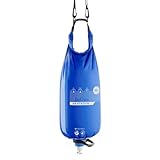
Overview: The Katadyn Gravity BeFree 10L is a high-capacity water filtration system designed for group adventures and emergency scenarios. Weighing just 10.7 ounces, this blue gravity bag delivers an impressive 2 liters per minute output, making it ideal for family camping trips or basecamp setups where multiple people need clean water quickly.
What Makes It Stand Out: The 10-liter capacity sets this apart from personal filters, eliminating constant refilling for groups. The 0.1-micron hollow-fiber filter exceeds EPA standards, removing 99.9999% of bacteria and 99.9% of protozoa including Giardia and Cryptosporidium. Its fast flow rate of 2L per minute is notably quicker than many competitors, while the lightweight design defies its large capacity.
Value for Money: At $113, this represents premium pricing, but cost-per-person drops significantly for groups of 4+. Compared to buying individual filters for each camper, it pays for itself on a single extended trip. The durable construction ensures seasons of use, making it more economical than disposable options for regular adventurers.
Strengths and Weaknesses: Strengths include exceptional flow rate, true group capacity, lightweight portability, and proven filtration efficacy. Weaknesses involve the higher upfront cost that may deter solo backpackers, and the larger packed size compared to personal systems. The gravity system also requires hanging time versus instant pump filters.
Bottom Line: For families or groups prioritizing convenience and speed, the Katadyn BeFree 10L is worth every penny. It’s a reliable, efficient workhorse that transforms water gathering from a chore to a passive task, letting you focus on enjoying the outdoors.
7. Katadyn Gravity BeFree 3.0L Water Filter, Fast Flow, 0.1 Micron EZ Clean Membrane Personal Small Group Camping, Backpacking Emergency Preparedness, Clear, 8020470
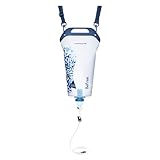
Overview: The Katadyn BeFree 3.0L scales down the brand’s proven gravity filtration into a personal or small-group format. This collapsible system combines portability with powerful 0.1-micron filtration, processing up to 1,000 liters of contaminated water without chemicals while packing down remarkably small for backpackers. Its clear construction allows visual inspection of water quality before filtration begins.
What Makes It Stand Out: The revolutionary EZ-Clean Membrane requires no backflushing or tools—simply shake or swish to clear debris. This maintenance-free design solves a common pain point of hollow-fiber filters. The BPA-free Thermoplastic Polyurethane construction balances durability with packability, and the clear bag lets you monitor water levels and clarity. This self-cleaning capability is a game-changer for multi-day trips.
Value for Money: Priced at $79.95, it sits in the mid-range but delivers premium Katadyn reliability. For couples or small groups, it’s more practical than the 10L version while maintaining the same filtration standards. The 1,000-liter filter lifespan provides years of service for occasional users, and the lack of replacement parts needed for cleaning adds hidden savings.
Strengths and Weaknesses: Strengths include the effortless cleaning mechanism, compact collapsible design, trusted brand reputation, and chemical-free operation. Weaknesses are the smaller 3L capacity requiring more frequent filling for groups, and the flow rate slows as the filter loads up. It’s also less cost-effective per liter than larger systems, and the bag’s flexible material can be punctured if not handled carefully.
Bottom Line: Perfect for backpacking duos or solo hikers wanting gravity convenience without bulk. The EZ-Clean feature alone justifies the investment, making filter maintenance on trail virtually effortless while delivering safe, great-tasting water.
8. Waterdrop Gravity Water Filter Straw, Camping Water Filtration System, Water Purifier Survival for Travel, Backpacking and Emergency Preparedness, 1.5 gal Bag, 5 Stage Filtration, Pack of 1
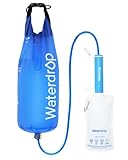
Overview: Waterdrop’s Gravity Water Filter Straw offers a budget-conscious entry into gravity filtration with impressive 5-stage technology. The 1.5-gallon bag provides all-day hydration for individuals, while the versatile straw design connects to bottles or bags, delivering up to 1,400 gallons of filtered water for outdoor and emergency use. This system effectively reduces chlorine, particulates, sediment, and unpleasant odors.
What Makes It Stand Out: The comprehensive 5-stage filtration combines coconut shell activated carbon, 0.1-micron ultrafiltration, and multiple fiber layers to tackle chlorine, particulates, and unpleasant tastes beyond just biological threats. The innovative backwash purifier function allows easy cleaning without special tools, extending filter life significantly. The 1.5-gallon capacity equals about 11 bottles of water, meeting demanding hydration needs.
Value for Money: At $39.99, this is exceptional value—offering more filtration stages and higher capacity than many pricier competitors. The 1,400-gallon lifespan and included gravity bag make it one of the most cost-effective systems available, especially for budget-minded adventurers or emergency preppers building comprehensive kits without breaking the bank.
Strengths and Weaknesses: Strengths include multi-stage filtration, impressive lifespan, backwash functionality, versatile connectivity, and unbeatable price. Weaknesses involve a lesser-known brand reputation compared to Katadyn or LifeStraw, potentially questionable long-term durability, and slower flow rates than premium options. The bag material may not be as robust as TPU alternatives, requiring more careful handling.
Bottom Line: An outstanding value proposition for cost-conscious campers and preppers. While it may lack the brand pedigree of pricier options, the performance specifications and features deliver remarkable bang for your buck.
9. LifeStraw Peak Series Compact Gravity Water Filter System; 3L; Dark Mountain Gray

Overview: LifeStraw’s Peak Series 3L Gravity System builds on their legendary filtration reputation with enhanced performance and versatility. This dark mountain gray unit protects against an exhaustive list of contaminants including bacteria, parasites, microplastics, and sediment, while offering multiple configuration options for diverse outdoor scenarios. The enhanced microfilter performance ensures consistent flow even in challenging water conditions.
What Makes It Stand Out: The re-engineered membrane with custom backwash accessory maintains flow better in silty conditions—a common failure point for hollow-fiber filters. Its extreme durability and leak-proof design withstand harsh treatment. The system’s versatility allows use as a gravity filter, squeeze bottle, straw, or inline filter with a water bottle, adapting to any situation. This multi-modal functionality eliminates need for separate devices.
Value for Money: At $49.40, it’s competitively priced for a premium brand. The social impact—providing one child with safe water for a year per purchase—adds intangible value. Performance-wise, it matches or exceeds competitors costing significantly more, particularly with its enhanced silt resistance. The 3L capacity hits the sweet spot for individual or pair use without excess weight.
Strengths and Weaknesses: Strengths include superior microfilter performance, exceptional versatility, rugged construction, trusted brand reliability, and meaningful social impact. Weaknesses are the 3L capacity limiting group use, and the flow rate can decrease in extremely turbid water despite improvements. It’s slightly heavier than ultralight options, and the gray color makes dirt less visible than clear alternatives.
Bottom Line: A top-tier choice for serious adventurers who value versatility and durability. LifeStraw’s enhanced engineering and proven track record make this a reliable companion for any backcountry mission, with the added benefit of supporting global water initiatives.
10. Üν Gravity Water Filter Straw with 2 Gallon Bag and LED Display, Portable Survival Water Purifier for Travel, Backpacking and Emergency, Compact Gravity Water Filtration System for Outdoor Adventures

Overview: The Üν Gravity Water Filter Straw disrupts the market with an unprecedented feature set at a shockingly low price point. This system includes a 2-gallon bag, 6-level filtration, and a unique LED display that counts down filtration time—packing premium features into a budget-friendly package for outdoor and emergency use. The intelligent display makes filtration progress visible for user confidence.
What Makes It Stand Out: The LED intelligent display is a first in this category, providing visual confirmation of filtration progress and peace of mind. Six filtration stages—including activated carbon fiber, double-layer PP cotton, and hollow fiber membranes—address contaminants from microplastics to harsh chemicals. The replaceable ultrafiltration membrane and activated carbon components solve long-term maintenance concerns, allowing users to refresh parts rather than replace the entire unit after each adventure.
Value for Money: At $12.49, this is astoundingly inexpensive—roughly 75% less than comparable systems. The 2-gallon bag capacity and 1,320-gallon filter lifespan deliver specifications that defy the price tag, making it accessible for all budget levels. This pricing structure allows even casual campers to own reliable water purification.
Strengths and Weaknesses: Strengths include revolutionary LED display, comprehensive 6-stage filtration, massive bag capacity, replaceable components, and incredible affordability. Weaknesses involve an unknown brand with unproven reliability, potential quality control issues at this price point, and the LED feature may be unnecessary gimmickry adding failure points. Durability concerns are valid given the extreme price discount.
Bottom Line: A gamble that could pay off spectacularly for budget buyers. While brand trust is unestablished, the features and price make it worth trying for casual users, though critical applications warrant proven alternatives. Consider it for backup or light use rather than primary expedition gear.
Understanding Gravity Water Filtration Systems
At their core, gravity water filters are elegantly simple: an elevated dirty water reservoir feeds water through a filter element into a clean water container below. No pumping, no batteries, no chemicals—just physics doing the heavy lifting. The system relies on hydrostatic pressure generated by the height difference between water levels, typically requiring just a few feet of elevation to create sufficient flow.
The Science Behind the Flow
The flow rate depends on several interconnected factors: the reservoir’s water height (greater height = more pressure), the filter’s surface area, pore size, and the water’s cleanliness. Most systems generate between 0.5 to 2 liters per minute under optimal conditions, though real-world performance varies dramatically. Understanding that flow rate decreases as the water level drops helps you manage expectations and plan filtration schedules around camp activities rather than watching the system like a hawk.
Why Gravity Filters Dominate Large Group Camping
For groups of six or more, gravity filters offer advantages that pump systems simply cannot match. The hands-free operation means one person isn’t tethered to a filtration chore for hours. While the system works autonomously, you can multitask—setting up tents, preparing meals, or planning the next day’s route. This efficiency compounds with group size; a 12-person group might need 24 liters of water daily, a volume that would take 45-60 minutes of continuous pumping but can be filtered passively over a couple of hours.
Moreover, gravity systems scale gracefully. Many designs allow you to connect multiple filter elements in parallel, effectively doubling or tripling flow rates without adding significant complexity. This modular approach lets you adapt your system for different trip sizes rather than buying separate units for different group counts.
Capacity Matters: Sizing Your System for Group Needs
The cardinal rule of group camping: always size up your water capacity. A 4-liter system might suffice for a couple, but it’s woefully inadequate for a basecamp scenario. For large groups, look for reservoirs that hold 10-20 liters minimum, with the ability to process multiple batches sequentially. Consider that camp life requires water for drinking, cooking, cleaning dishes, and sometimes personal hygiene.
Daily Water Budget Calculations
Experienced group leaders plan for 2-3 liters per person per day in moderate climates, escalating to 4-5 liters in hot, dry conditions or during strenuous activity. A 12-person group in summer should target 36-48 liters daily. Rather than one massive system, many seasoned campers prefer two 10-12 liter units running simultaneously—this provides redundancy if one fails and offers flexibility for splitting the group or filtering different water types.
Decoding Filter Technologies and Micron Ratings
Micron ratings determine what contaminants make it through to your drinking water. A micron is one-millionth of a meter; bacteria range from 0.2 to 2 microns, while protozoa like Giardia and Cryptosporidium measure 3-15 microns. Absolute ratings (meaning 99.9% removal at that size) are more meaningful than nominal ratings.
Ceramic vs. Hollow Fiber vs. Carbon: The Showdown
Ceramic filters feature porous ceramic walls that trap pathogens on the surface. Their main advantage is cleanability—you can scrub the outer layer dozens of times to restore flow rate. However, they’re brittle and crack if dropped, rendering them useless.
Hollow fiber membranes use hundreds of tiny tubes with microscopic pores. Water flows through the tube walls while pathogens get stuck outside. They’re durable and lightweight but require careful backflushing to maintain performance. Once clogged beyond recovery, replacement is your only option.
Activated carbon doesn’t filter pathogens but excels at removing chemicals, pesticides, and improving taste and odor. Most quality systems combine carbon with either ceramic or hollow fiber elements, positioning carbon downstream to polish the water after biological threats are removed.
Flow Rate Realities: What to Expect in the Field
Manufacturers’ flow rate claims are laboratory fantasies. That “2 liters per minute” spec assumes crystal-clear tap water and a full reservoir. In the backcountry with turbid lake water and a half-empty bag, expect 30-50% of advertised rates. Cold water also flows slower—viscosity increases as temperature drops, cutting flow rates by up to 25% in near-freezing conditions.
Plan your filtration schedule conservatively. Start filtering well before you need the water, and never let the reservoir run completely dry. Refilling when it’s half-empty maintains better pressure and prevents air locks that can stop flow entirely. For groups, establish a “water monitor” rotation—someone checks and refills the system every hour during active camp periods.
Material Matters: Durability in Demanding Environments
Your filter will endure abuse: dropped from tables, crammed into overstuffed packs, exposed to UV radiation, and handled with dirty hands. Reservoir materials range from lightweight, packable TPU (thermoplastic polyurethane) to rigid, bombproof polycarbonate. TPU bags pack smaller and weigh less but puncture more easily and can develop leaks at welded seams over time.
Consider the filter housing material too. ABS plastic offers good impact resistance, while stainless steel provides ultimate durability at the cost of weight. For large group use where the system stays at basecamp, stainless steel’s longevity justifies its heft. For mobile expeditions, reinforced ABS strikes the right balance.
Portability vs. Capacity: Finding the Balance
The paradox of group gear: you need large capacity, but someone has to carry it. A 20-liter system with stainless housing might weigh 5-6 pounds—significant for backpacking but trivial when split among a group. Look for systems that pack flat, with detachable hoses and nesting components. Some designs allow you to leave the clean water reservoir behind, using your group’s existing water bottles or dromedary bags as the collection vessel.
Consider your group’s mobility. For car camping or short walk-in basecamps, prioritize capacity and durability. For multi-day backpacking with a mobile camp, accept smaller batches in exchange for lighter weight. The sweet spot for most large backpacking groups is two 10-liter systems that can be distributed between strong hikers.
Setup and Priming: Your First Filter Run
A rushed setup guarantees frustration. Always prime new filter elements before first use—this saturates the media and prevents air locks. Submerge the element completely for 15-30 minutes, gently tapping to release trapped air bubbles. Connect hoses securely, ensuring the dirty hose reaches the reservoir bottom and the clean hose won’t contaminate your output.
Elevation is critical. Hang the dirty reservoir at least 3-4 feet above the clean container. Higher is better, but beyond 6 feet you risk hose kinking or instability. Use a dedicated hang system—tree branches, a custom tripod, or even a trekking pole lashed between trees. Never hang from a flimsy branch that could dump 15 liters of precious water.
Maintenance in the Wilderness: Keeping Water Flowing
Field maintenance separates reliable systems from abandoned gear. Establish a daily routine: inspect hoses for kinks, check connections for leaks, and monitor flow rate. A sudden slowdown indicates clogging or air in the system. Backflush hollow fiber filters daily in turbid water conditions—this simple reversal of flow clears debris from the filter surface.
Backflushing Techniques That Actually Work
The “air lock” backflush method works wonders for hollow fiber filters. Disconnect the clean hose, raise the filter above the dirty reservoir, and let gravity pull clean water backward through the element for 30 seconds. For severe clogs, use a clean water-filled syringe to force water backward through the filter at pressure. Never use dirty water for backflushing—you’ll just drive contaminants deeper into the media.
Cleaning Ceramic Elements Like a Pro
Ceramic elements show their worth when flow slows. Remove the element and gently scrub the outer surface with the included abrasive pad or fine steel wool. Use light pressure—scrubbing too aggressively removes the filtration layer prematurely. Rinse with clean water and reinstall. You’ll know it’s time to replace the element when scrubbing no longer restores flow, indicating the ceramic wall has become too thin.
Water Source Strategy: Working With What Nature Provides
Gravity filters excel with clear to moderately turbid water. Murky, silty sources challenge any filter, clogging elements within minutes. Pre-filtering through a bandana, coffee filter, or dedicated sediment filter extends element life dramatically. Let silty water settle in a bucket or pot for 30 minutes before filtering the clearer water from the top.
Avoid water with visible chemical contamination, algae blooms, or agricultural runoff. While carbon helps with some chemicals, no portable filter removes dissolved salts, heavy metals, or radiological contaminants. When in doubt, choose the clearest, fastest-moving water source available—moving water generally harbors fewer pathogens than stagnant pools.
Contaminant Removal: What Gets Filtered and What Doesn’t
Understanding capabilities prevents dangerous assumptions. Quality gravity filters with 0.1-0.2 micron absolute ratings remove bacteria (E. coli, Salmonella) and protozoa (Giardia, Cryptosporidium) effectively. Viruses, however, are much smaller (0.02-0.1 microns) and typically pass through standard filters.
In North American backcountry, viruses are rarely an issue—bacteria and protozoa pose the primary threats. For international travel or areas with known viral contamination, pair your gravity filter with chemical treatment (chlorine dioxide tablets) or UV sterilization. Some advanced systems incorporate iodinated resin for viral protection, but these have limited capacity and shorter lifespans.
Cold Weather Considerations
Freezing temperatures present unique challenges. Water expands when it freezes, potentially rupturing filter elements and rendering them useless. Hollow fiber membranes are particularly vulnerable—ice crystals can crack the delicate fibers. Always sleep with your filter element in your sleeping bag during sub-freezing nights. Never let filtered water freeze in the clean reservoir.
Flow rates plummet in cold water. Warm the dirty water bag in the sun or near (not on) a stove before filtering. Insulate hoses with foam pipe insulation if temperatures stay below freezing. Some groups switch to chemical treatment in deep winter, accepting the wait time to avoid filter damage.
Cost Analysis: Long-Term Value for Group Investments
Sticker shock is common—quality large-group systems range from $150 to $400. But calculate cost per liter: a $200 system processing 5,000 liters costs $0.04 per liter, far cheaper than disposable filters or bottled water. For a group of 10 on a week-long trip, that’s $2 per person for the entire expedition.
Factor in replacement element costs and lifespan. Hollow fiber elements typically last 1,500-2,000 liters, ceramics up to 50,000 liters (with proper cleaning). For frequent group leaders, ceramic’s longevity justifies higher upfront cost. Occasional campers might prefer cheaper hollow fiber replacements. Split the purchase cost among regular group members—most systems pay for themselves within two trips compared to individual filter purchases.
Troubleshooting Common Field Problems
Slow flow? Check for air locks, kinked hoses, or a clogged pre-filter. Try raising the dirty reservoir higher. If flow remains poor, backflush or clean the element.
Leaks at connections? Ensure hoses are fully seated on barbed fittings. Carry a small tube of food-grade silicone lubricant to ease connections and improve seals. Tighten any threaded fittings, but avoid over-tightening plastic threads.
Cloudy output? You likely have a damaged element. Ceramic cracks create channels that bypass filtration. Hollow fiber fibers can break, allowing contaminants through. Stop using the filter immediately and switch to backup treatment.
System won’t prime? Submerge the element longer, tapping firmly to dislodge air. Some elements require a slow initial flow to fully saturate—be patient. In rare cases, a manufacturing defect prevents priming; test your system before every major trip.
Frequently Asked Questions
How many people can a gravity filter realistically support?
A single 10-liter system with one filter element comfortably supports 4-6 people for drinking and cooking water. For 8-12 people, run two systems simultaneously or use a dual-element setup. Beyond 12 people, consider a basecamp-style system with 20-liter capacity and multiple elements. Always size up for hot weather or high-activity trips where water consumption increases.
What’s the practical difference between 0.1 and 0.2 micron ratings?
Both ratings effectively remove protozoa and most bacteria. The 0.1 micron filter catches slightly smaller bacteria like Campylobacter more reliably, while 0.2 micron filters flow faster and resist clogging better. In practice, either works for North American backcountry. Choose 0.1 micron for developing countries or areas with questionable water quality. The flow trade-off is minimal—maybe 10-15% slower.
How often should I clean or backflush my filter in the field?
With clear mountain streams, backflush every 2-3 days. In murky water, backflush daily or when you notice a 25% flow reduction. Ceramic filters need scrubbing when flow drops significantly—perhaps every 5-10 days depending on water quality. Never wait until flow stops completely; that’s like driving your car until the engine seizes. Preventive maintenance keeps performance consistent and extends element life dramatically.
Can I filter water with lots of sediment or mud?
You can, but it’s like driving through sand—hard on the equipment. Always pre-filter sediment-heavy water through a cloth, bandana, or dedicated sediment filter. Let it settle first, then filter from the top. Some systems include a pre-filter screen on the intake hose—clean this frequently. In extremely turbid conditions, consider switching to chemical treatment or letting water settle overnight before filtering.
Do gravity filters remove viruses?
Standard gravity filters with ceramic or hollow fiber elements do NOT reliably remove viruses. Viruses are simply too small. In virus-prone areas (developing countries, areas with poor sanitation), pair your filter with chlorine dioxide tablets or a UV purifier. Some specialized filters incorporate iodinated resin for viral protection, but these have shorter lifespans and can affect taste.
How long do filter elements actually last in real-world use?
Hollow fiber elements typically process 1,500-2,000 liters before replacement. Ceramic elements can last 50,000+ liters with proper cleaning—potentially a lifetime for casual users. However, physical damage ends an element’s life instantly. A dropped ceramic element that cracks is finished. A hollow fiber element frozen with water inside is ruined. Track your filtered volume and inspect elements regularly. Many groups mark their reservoir with tape to log liters processed.
Is it safe to leave filtered water in the reservoir overnight?
Yes, if the reservoir is clean and sealed. However, bacteria can grow in any stagnant water, especially in warm conditions. For maximum safety, filter into individual bottles rather than storing bulk water. If you must store water overnight, ensure the clean reservoir is completely dry before use and keep it sealed. In hot weather (above 80°F), treat stored water with a few drops of chlorine dioxide if it will sit more than 12 hours.
What’s the best way to pack and transport a gravity filter system?
Disassemble completely, drain all water, and air-dry components before packing. Pack the filter element in protective clothing in your pack’s center—never in an external pocket where it can freeze or get crushed. Coil hoses without kinks and secure them with rubber bands. Store small fittings in a zip-top bag so they don’t vanish. Many experienced campers dedicate a small dry bag to their water system, keeping everything organized and protected.
Are gravity filters better than pump filters for large groups?
For stationary basecamps, absolutely. The hands-free operation and higher volume capacity make gravity filters superior for groups of six or more. Pump filters excel for mobile scenarios—small groups on the move who need quick water at stream crossings. Some leaders carry a small pump filter as backup while relying on gravity for bulk camp water. The ideal approach depends on your group’s style: basecamp-heavy trips favor gravity; point-to-point backpacking might benefit from a hybrid approach.
How do I know when it’s time to replace the filter element rather than just clean it?
For hollow fiber filters, when backflushing no longer restores 75% of the original flow rate, the element is exhausted. For ceramic filters, when the outer diameter has worn down to the wear indicator line (or about 2mm of material remains), replacement is mandatory. Cracks, chips, or any visible damage mean immediate replacement. If filtered water tastes off or appears cloudy despite cleaning, the element has likely failed. Always carry a backup element on extended trips—it’s cheap insurance against a ruined filter.