There’s nothing quite like the solitude of a trail that doesn’t appear on Google Maps. The further you venture from cell towers and paved roads, the more your navigation tools define your experience—and your safety. While smartphone apps have their place, off-grid hiking demands something more robust: a dedicated handheld GPS and trail navigation device built to function where connectivity goes to die.
These purpose-built tools aren’t just about preventing you from becoming a search-and-rescue statistic. They’re about confidence—the freedom to explore that tempting side trail, to bushwhack to a hidden alpine lake, or to navigate confidently through whiteout conditions. But not all GPS devices are created equal, and the feature list can feel like alphabet soup. This guide cuts through the marketing jargon to help you understand what truly matters when selecting a navigation companion for your most remote adventures.
Top 10 Handheld GPS for Off-Grid Hikes
Detailed Product Reviews
1. Garmin 010-02256-00 eTrex 22x, Rugged Handheld GPS Navigator, Black/Navy

Overview: The Garmin eTrex 22x is a rugged handheld GPS navigator built for serious outdoor enthusiasts who demand reliability. With its compact design and preloaded Topo Active maps, this device provides turn-by-turn routing for both cycling and hiking adventures without relying on cellular connectivity. The 2.2-inch sunlight-readable color display delivers 240 x 320 pixels of clarity, even in harsh lighting conditions.
What Makes It Stand Out: The combination of GPS and GLONASS satellite support ensures superior tracking in dense forests and deep canyons where single-system devices fail. The 8GB internal memory with microSD expansion offers ample storage for additional maps, while the preloaded routable roads and trails eliminate the need for immediate purchases. Garmin’s reputation for durability shines through its IPX7 waterproof rating and sturdy construction that withstands drops and weather.
Value for Money: At $180, the eTrex 22x sits in the mid-range for handheld GPS units. While more expensive than basic models, the preloaded Topo Active maps alone justify the premium over entry-level devices requiring separate map purchases. Compared to smartphone GPS apps, it eliminates battery drain and connectivity concerns, making it cost-effective for frequent hikers and geocachers who value standalone reliability.
Strengths and Weaknesses: Strengths:
- Preloaded routable Topo Active maps included
- Dual satellite system support for better coverage
- Expandable storage via microSD card slot
- Excellent 25+ hour battery life on AA batteries
- Rugged, IPX7 waterproof design
Weaknesses:
- Smaller 2.2" screen limits map detail visibility
- No wireless connectivity or smartphone integration
- Basic interface feels dated compared to modern devices
- Requires separate AA battery purchase
Bottom Line: The eTrex 22x is an excellent choice for traditionalists who prioritize reliability and preloaded maps over modern connectivity features. It’s ideal for hikers and cyclists wanting a dependable, standalone navigation tool without recurring subscription fees or smartphone dependency.
2. Garmin eTrex® SE GPS Handheld Navigator, Extra Battery Life, Wireless Connectivity, Multi-GNSS Support, Sunlight Readable Screen
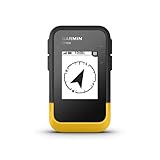
Overview: The Garmin eTrex SE modernizes the classic eTrex series with smartphone connectivity while maintaining legendary battery efficiency. This handheld navigator bridges the gap between traditional GPS devices and digital planning tools, offering up to 1,800 hours of expedition mode battery life. The 2.2-inch high-resolution display remains easy to read even in bright sunlight, making it practical for all-day outdoor use.
What Makes It Stand Out: The unprecedented battery longevity—168 hours in standard mode and 1,800 hours in expedition mode—sets a new benchmark for extended adventures. Wireless pairing with the Garmin Explore app enables weather updates, smart notifications, and seamless geocaching integration through Geocaching Live. Multi-GNSS support (GPS, GLONASS, Galileo, BeiDou, QZSS) provides exceptional accuracy in the most challenging environments where single-system receivers fail.
Value for Money: At $127.90, the SE offers remarkable value by combining premium features typically found in higher-priced models. The free app connectivity and automatic geocache updates eliminate subscription costs, while the AA battery flexibility saves money compared to proprietary rechargeable units. It’s competitively priced against entry-level models but delivers advanced satellite coverage and modern smartphone integration features.
Strengths and Weaknesses: Strengths:
- Extraordinary battery life for extended expeditions
- Five-system satellite support for maximum coverage
- Smart app integration for weather and notifications
- Automatic Geocaching Live updates when paired
- Field-replaceable AA batteries for convenience
Weaknesses:
- No preloaded maps (requires manual download)
- Smaller 2.2" screen size limits detail
- App dependency for full functionality
- AA batteries not included in package
Bottom Line: Perfect for long-distance hikers and geocachers who need maximum battery life and modern connectivity. The eTrex SE delivers exceptional value by combining Garmin’s reliability with smartphone-enhanced features at an accessible price point, making it ideal for multi-day adventures.
3. NiesahYan A6 Handheld GPS for Hiking, Rugged Waterproof GPS Navigator with 20 Hrs of Battery Life, 2 Navigation Mode, 2.4" Color Display and GPS Compass, Moon Phase Information
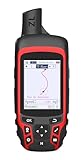
Overview: The NiesahYan A6 is a budget-friendly handheld GPS navigator designed for casual hikers seeking essential navigation features without premium pricing. Its 2.4-inch color display and multi-system satellite support deliver reliable positioning in a rugged, waterproof package. The device focuses on fundamental waypoint and track navigation, storing up to 1,000 waypoints for route planning and backtracking.
What Makes It Stand Out: The A6 excels at core navigation tasks with both waypoint and track navigation modes, guiding users back to starting positions when lost. The inclusion of a GPS compass, barometric altimeter, and moon phase information provides valuable environmental data. Its side non-slip design and physical buttons ensure operability in harsh conditions, while the 3,500mAh rechargeable battery delivers 20 hours of navigation mode use.
Value for Money: At $119.99, the A6 undercuts major brands while offering comparable core functionality. The rechargeable battery saves long-term costs compared to AA-powered units, though 20-hour life is modest for extended trips. For occasional hikers, it provides essential features without Garmin’s premium pricing, though it lacks preloaded maps and wireless connectivity found in similarly priced competitors.
Strengths and Weaknesses: Strengths:
- Affordable entry price point
- Multi-GNSS satellite support (GPS, Galileo, BeiDou, QZSS)
- Waypoint and track navigation capabilities
- Rechargeable battery included
- Rugged, waterproof construction
Weaknesses:
- No preloaded maps requires manual loading
- Limited 20-hour battery life for extended adventures
- Unknown brand reliability and support
- Smaller feature set than established competitors
- No smartphone integration or wireless features
Bottom Line: A solid entry-level GPS for budget-conscious hikers who prioritize basic navigation and waypoint marking. While it lacks advanced features, the A6 delivers essential functionality at an attractive price, making it ideal for weekend warriors and outdoor newcomers who don’t need brand-name ecosystem integration.
4. Handheld GPS for Hiking, Rugged and Waterproof Handheld GPS Navigator, 3.2" Sunlight Readable Screen, Compact Satellite Handheld GPS with USA Topo Map, Multi-GNSS Support, Extra Battery Life

Overview: This rugged handheld GPS navigator offers an impressive 3.2-inch sunlight-readable display in a compact, lightweight anti-slip design. Built for all-weather hiking, it combines multi-system satellite support with essential sensors for comprehensive outdoor navigation. The device includes a USA Topo Map and provides location precision within 6 feet using GPS, Galileo, BeiDou, and QZSS systems.
What Makes It Stand Out: The larger 3.2-inch screen provides superior map readability over typical 2.2-inch models, while the 3-axis compass delivers accurate bearings even when stationary. IP66 water resistance and USB-C charging bring modern convenience to the outdoors. The 36-hour rechargeable battery outlasts many competitors, and the barometric altimeter provides accurate elevation data for route planning and weather monitoring.
Value for Money: At $159.99, this unit challenges Garmin’s dominance by offering a larger display and longer battery life for less money. The inclusion of a 3-axis compass and barometric altimeter at this price point represents strong value. While brand recognition is lower, the feature set matches or exceeds units costing $50-100 more, making it an attractive proposition for feature-focused buyers.
Strengths and Weaknesses: Strengths:
- Large 3.2" sunlight-readable display
- 36-hour battery life with USB-C charging
- 3-axis compass and barometric altimeter included
- IP66 water-resistant design
- Multi-GNSS support for superior accuracy
- Compact and lightweight construction
Weaknesses:
- Generic brand with unproven long-term support
- No preloaded maps mentioned beyond USA Topo
- Unknown durability track record
- No wireless connectivity or smartphone integration
- Limited ecosystem and community features
Bottom Line: An excellent value proposition for hikers wanting a large screen and long battery life without paying premium prices. The feature-rich specification makes it a compelling alternative to brand-name units, though long-term reliability and support remain unproven compared to established manufacturers.
5. 2 Packs GPS Handheld for Hiking Real Time Group Outdoor Exploring Tracking Communication Device Gotele Xquad 03 Off Grid Tracker No Network Required

Overview: The Gotele Xquad 03 redefines handheld GPS by enabling real-time group tracking and off-grid communication without cellular networks. This two-pack system creates a private mesh network for up to 15 adventurers, making it invaluable for group hikes, search-and-rescue teams, and family outings. The devices provide accurate real-time positioning and direction for every group member simultaneously.
What Makes It Stand Out: Unlike traditional GPS units, the Xquad 03 provides two-way communication and live position sharing across a three-mile range. The safety boundary alert system instantly notifies when group members stray from designated zones—crucial for keeping track of children or dispersed teams. Operating without phones, networks, or fees, it functions completely off-grid using proprietary RF technology, eliminating subscription costs forever.
Value for Money: At $169.99 for two units, the price per device is highly competitive. The elimination of subscription fees and independence from cellular infrastructure provides ongoing savings. For group leaders, the safety features alone justify the cost compared to multiple individual GPS units or satellite communicators costing 3-5 times more. The two-pack configuration offers immediate value for partners or small teams.
Strengths and Weaknesses: Strengths:
- Real-time group tracking and communication
- No subscription fees or network required
- Safety zone alerts enhance security
- 3-mile range in varied terrain
- Two units included for immediate use
- Simple closed-network operation
Weaknesses:
- Limited to group use cases; less useful for solo hikers
- Shorter 2-day battery life compared to traditional GPS
- No traditional map navigation capabilities
- Proprietary technology limits compatibility
- Range significantly affected by terrain and obstacles
Bottom Line: Essential for group outdoor activities where staying connected is paramount. The Gotele Xquad 03 excels as a safety and coordination tool, making it perfect for families, guides, and team expeditions. Don’t expect traditional GPS mapping, but for group awareness and off-grid communication, it’s unmatched at this price point.
6. ZL180 Handheld GPS for Surveying, High Precision Rugged Land Surveying Equipment for Ranches, Garden, Farmland and Parking Area Distance Measuring

Overview: The ZL180 Handheld GPS is a specialized surveying tool designed for precise land measurement in agricultural and outdoor applications. Priced at $81.68, this compact device targets farmers, ranchers, and property managers who need accurate area calculations without the complexity of full navigation systems.
What Makes It Stand Out: This unit achieves impressive precision with area measurement error as low as 0.003 acres using dual GPS+GLONASS satellite coverage. Its 4-in-1 functionality handles both area and distance measurements for straight lines and curves. The 2.4-inch FSTN display with backlight ensures readability in various lighting conditions, while the ergonomic grooved design prevents drops during fieldwork.
Value for Money: At under $85, the ZL180 offers professional-grade measurement accuracy that rivals devices costing hundreds more. While it lacks waypoint navigation—a deliberate limitation for its surveying focus—it delivers exceptional value for users who primarily need boundary mapping and area calculation for fields, gardens, and parking areas.
Strengths and Weaknesses: Pros include remarkable measurement precision, lightweight portability (180g), intuitive operation, and reliable satellite acquisition. Cons are the inability to save waypoints or navigate, requirement for open-sky conditions (no indoor functionality), and a basic monochrome display that lacks mapping capabilities. The device demands careful satellite signal verification before use.
Bottom Line: The ZL180 excels as a dedicated land measurement tool for agricultural and property applications. If your needs center on accurate area calculation rather than trail navigation, this rugged, affordable GPS delivers professional results without unnecessary features or expense.
7. Garmin 010-00970-00 eTrex 10 Worldwide Handheld GPS Navigator

Overview: The Garmin eTrex 10 represents the entry point into Garmin’s renowned handheld GPS lineup, offering core navigation functionality at $159.90. This rugged navigator comes preloaded with a worldwide basemap and targets outdoor enthusiasts seeking reliable positioning without advanced mapping features.
What Makes It Stand Out: Built on Garmin’s trusted platform, the eTrex 10 features WAAS-enabled GPS with HotFix and GLONASS support for rapid, dependable positioning. Its IPX7 waterproof rating withstands immersion, while paperless geocaching support modernizes treasure hunting. The device runs 20 hours on two AA batteries, providing exceptional field endurance with readily available power sources.
Value for Money: While pricier than basic GPS units, the Garmin brand ensures durability, firmware support, and ecosystem compatibility. The $160 investment buys proven reliability rather than flashy features, making it sensible for users prioritizing function over form. However, the monochrome display and lack of detailed maps limit its appeal compared to similarly priced competitors.
Strengths and Weaknesses: Pros include legendary Garmin ruggedness, excellent battery life, straightforward interface, and dependable satellite acquisition. Cons feature the basic 2.2-inch monochrome screen, absence of topographic or road maps, limited memory, and dated design. It stores waypoints and tracks but lacks modern connectivity options.
Bottom Line: The eTrex 10 is a no-frills workhorse for basic navigation needs. Ideal for geocachers and backup navigation, it sacrifices display quality and mapping for bulletproof reliability. Consider this if you trust the Garmin name and need simple, dependable GPS functionality.
8. A6 Handheld GPS for Hiking, Multi-GNSS Support, Lightweight Rugged GPS Navigator,Waterproof GPS Handheld for Camping and Backpacking

Overview: The A6 Handheld GPS positions itself as a feature-rich alternative to premium brands, offering multi-GNSS support and color display for $99.59. Designed for hikers and campers, this lightweight navigator balances advanced capabilities with affordability in a rugged package.
What Makes It Stand Out: Accessing four satellite systems (GPS, GLONASS, BEIDOU, QZSS) delivers under-5-foot accuracy even in challenging terrain. The 2.4-inch sunlight-readable color screen outshines competitors’ monochrome displays. With capacity for 1,000 waypoints and track-back navigation, it ensures you never lose your path. The 3,500mAh rechargeable battery provides 20 hours of use with multiple charging options including power banks.
Value for Money: At under $100, the A6 packs features typically found in $200+ units: color display, multi-GNSS support, extensive waypoint storage, and versatile charging. While lacking Garmin’s brand recognition and premium build certification, it delivers exceptional functionality per dollar for budget-conscious adventurers.
Strengths and Weaknesses: Pros include impressive accuracy, vibrant color display, generous waypoint capacity, flexible power options, and dedicated track navigation. Cons involve IP65 rating (less robust than IPX7), unknown long-term durability, and potential firmware support uncertainties compared to established brands.
Bottom Line: The A6 is a compelling value proposition for hikers seeking modern GPS features without premium pricing. Its multi-system satellite reception and color display make it a practical choice for recreational use, provided you accept slightly lower waterproofing and brand risk.
9. Garmin Montana 700, Rugged GPS Handheld, Routable Mapping for Roads and Trails, Glove-Friendly 5" Color Touchscreen

Overview: The Garmin Montana 700 sits at the apex of handheld GPS devices, commanding $537.09 with its massive 5-inch touchscreen and professional-grade feature set. Built for serious adventurers, field workers, and outdoor professionals who demand the best in navigation technology.
What Makes It Stand Out: This powerhouse features MIL-STD 810 certification for extreme conditions, glove-friendly 5-inch color touchscreen, and multi-GNSS support with preloaded TopoActive maps. Advanced sensors include a 3-axis compass and barometric altimeter. Pro-connected features enable ANT+, Wi-Fi, and Bluetooth connectivity for BirdsEye Satellite Imagery, location sharing, and Connect IQ apps, seamlessly integrating with the Garmin Explore ecosystem.
Value for Money: The premium price reflects professional-grade capabilities. For recreational users, it’s overkill; however, for search-and-rescue teams, surveyors, and serious explorers, the robust build, large display, and advanced features justify the investment. It replaces multiple devices while providing unmatched reliability.
Strengths and Weaknesses: Pros include exceptional 5-inch display, military-grade durability, comprehensive mapping, advanced sensors, and extensive connectivity. Cons are significant cost, substantial weight and size, reduced battery life with full features, and complexity that may overwhelm casual users.
Bottom Line: The Montana 700 is the ultimate handheld GPS for professionals and dedicated enthusiasts. If you require large-screen visibility, extreme durability, and advanced connectivity in harsh environments, this premium device delivers unparalleled performance. Casual hikers should look elsewhere.
10. NiesahYan ZL190 Handheld GPS for Surveying, High Precision GPS Surveying Equipment for Mountainous Land Slope and Flat Field Outdoor Use

Overview: The NiesahYan ZL190 Handheld GPS builds upon budget surveying tools with enhanced precision and a larger display at $103.99. Targeting agricultural professionals and land managers, this device refines the formula of affordable, accurate measurement for varied terrain.
What Makes It Stand Out: Achieving 0.002-acre measurement error with quad-satellite support (GPS, BEIDOU, GLONASS, QZSS), the ZL190 surpasses many competitors’ accuracy. The 3.2-inch TFT backlit screen improves visibility over smaller displays. Unique slope measurement capability adds versatility for mountainous terrain, while IP65 waterproofing and included wrist strap enhance field usability.
Value for Money: For an extra $20 over similar units, you gain superior accuracy, 33% larger screen, and slope measurement—worthwhile upgrades for professional use. The two-year manufacturer warranty provides peace of mind uncommon in this price range, strengthening its value proposition for regular users.
Strengths and Weaknesses: Pros include exceptional measurement precision, larger readable display, slope functionality, robust waterproofing, and comprehensive warranty. Cons involve limited navigation features, potential learning curve, and brand recognition concerns. Like other surveying GPS units, it requires open-sky conditions for optimal performance.
Bottom Line: The ZL190 is an excellent upgrade for serious surveying needs. The enhanced accuracy, bigger screen, and slope measurement justify the modest price increase over entry-level models. Ideal for farmers and land managers requiring professional measurements in challenging terrain.
Why Smartphone GPS Falls Short in True Off-Grid Conditions
Your iPhone might survive a weekend car camping trip, but push deep into backcountry territory and its limitations become glaringly obvious. Battery life tops the list—most smartphones gasp their last breath after 6-8 hours of continuous GPS use, a fraction of what multi-day expeditions require. Touchscreens become unusable with gloved hands in freezing temperatures, and rain can render them completely unresponsive.
More critically, smartphone GPS antennas are designed for urban convenience, not wilderness reliability. They struggle to maintain satellite locks under dense forest canopy, in narrow canyons, or during severe weather. While some apps offer offline maps, they typically lack the detailed topographic data and custom layering that serious navigation demands. A dedicated handheld GPS device, by contrast, features a high-sensitivity antenna, ruggedized construction, and power management designed for weeks—not hours—of operation.
Understanding Multi-GNSS Satellite Systems
Modern handheld GPS devices have evolved far beyond the original American GPS constellation. Today’s best units tap into multiple global navigation satellite systems (GNSS) simultaneously—GLONASS (Russia), Galileo (EU), BeiDou (China), and QZSS (Japan). This multi-constellation approach dramatically improves fix times and accuracy, especially in challenging environments.
When you’re hiking beneath thick conifer canopy or between sheer canyon walls, a device tracking 20+ satellites from multiple systems can maintain positioning where single-system units fail. Look for devices that support at least GPS + GLONASS + Galileo. WAAS (Wide Area Augmentation System) and EGNOS (European Geostationary Navigation Overlay Service) provide additional correction signals that improve accuracy from 10-15 meters to under 3 meters—crucial when navigating complex terrain or searching for a specific campsite in dense forest.
Display Technology: Sunlight Readability Matters More Than Resolution
That gorgeous 4K smartphone screen? Useless when the sun hits it. Handheld GPS displays prioritize visibility over pixel density. Transflective LCD screens dominate the category because they actually become more visible in bright sunlight by reflecting ambient light. Unlike emissive OLED displays that wash out, transflective technology maintains clarity without draining battery on maximum brightness.
Consider screen size in context of your typical terrain. A 2.2-inch display suffices for following pre-loaded routes, but complex off-trail navigation benefits from 3-inch or larger screens that show more surrounding topography. Resolution matters for map detail—aim for at least 240x400 pixels—but contrast and backlight uniformity are more important. Night mode with red backlighting preserves night vision, while glove-friendly touchscreens (or better yet, button-operated interfaces) remain functional when temperatures drop below freezing.
Battery Life: The Currency of Remote Expeditions
Power management separates toys from tools. Entry-level units might promise 16 hours, but that’s with minimal screen use and no map redraws. Real-world usage—constantly checking position, zooming, backlight on—typically cuts rated battery life by 30-50%. For multi-day trips, calculate based on 12-hour hiking days plus margin for weather delays.
Battery type presents a fundamental choice. Rechargeable lithium-ion packs offer convenience but become paperweights once depleted. AA battery compatibility provides infinite extension—carry spares, use solar chargers, or borrow from headlamps in emergencies. Some hybrid units offer both: internal Li-ion with AA backup. Power-saving modes that reduce screen brightness, GPS update intervals, and disable unnecessary sensors can stretch a single charge across a week-long expedition. Always disable Bluetooth and WiFi when not actively syncing data.
Mapping Capabilities: Decoding Topographic vs. Basemap Detail
Not all maps are created equal, and the pre-loaded basemap on most units is essentially a road atlas—useless off-trail. True backcountry navigation requires topographic maps with contour intervals of 20 feet or less, showing elevation changes, water features, vegetation boundaries, and man-made structures. The gold standard includes 1:24,000 scale USGS quad detail or equivalent international mapping.
Understand storage requirements: a single state’s topo maps can consume 2-4GB. Satellite imagery, while visually appealing, demands 5-10x more storage and offers limited practical value beyond identifying clearings or water sources. Custom map compatibility—loading user-generated GPX files, historical mining claims, or hunting unit boundaries—separates flexible units from locked-down consumer models. Some manufacturers charge subscription fees for premium map layers; factor this into total cost of ownership.
Waypoints, Routes, and Tracks: The Navigation Trinity
These three functions form the core of GPS navigation, yet many users confuse them. Waypoints are specific coordinates you mark—trailheads, water sources, campsites, or that perfect viewpoint. A robust device stores thousands with customizable icons and detailed notes. Routes are pre-planned paths connecting waypoints, like a digital breadcrumb trail you intend to follow.
Tracks are the actual path you walk, recorded automatically at intervals you set. This creates a precise record of your journey— invaluable for retracing steps, analyzing distance and elevation gain, or sharing your exact path with others. The critical specification is track point capacity: 10,000 points fills quickly on long, winding trails. Look for devices supporting 20,000+ points with automatic archiving. Track-back functionality that reverses your recorded path can be a lifesaver in whiteout conditions or after an exhausting summit push.
Barometric Altimeter: Elevation Precision Beyond GPS
GPS elevation calculation is notoriously unreliable, with errors of 30-50 meters common due to satellite geometry. A barometric altimeter measures air pressure changes to determine altitude with 3-meter accuracy—essential for navigating in mountainous terrain where 100 feet of elevation difference determines whether you’re on a safe ledge or a dangerous cliff band.
The real power comes from pressure trending. By monitoring barometric pressure changes over time, experienced users predict weather shifts 6-12 hours in advance. Rapidly falling pressure signals approaching storms; steady pressure suggests stable conditions. Calibrate your altimeter at known elevations (trailheads, summits with benchmark markers) for maximum accuracy. Some units auto-calibrate using GPS elevation as a reference point, combining both technologies for optimal results.
Digital Compass: Why 3-Axis Beats 2-Axis Every Time
An electronic compass lets you orient your map and take bearings without moving—critical when standing on a narrow ridge or in dense brush. Two-axis compasses require you to hold the device perfectly level; tilt it more than 10-15 degrees and readings become wildly inaccurate. In real-world hiking, you rarely have flat, stable ground.
Three-axis compasses with tilt compensation maintain accuracy regardless of device orientation. You can check your bearing while the GPS hangs from your pack strap or while you’re braced against a tree on steep terrain. Look for automatic declination adjustment based on your GPS position—manually calculating magnetic vs. true north for each location is tedious and error-prone. Compass accuracy should be within 2 degrees; anything worse than 5 degrees leads to significant navigation errors over distance.
Connectivity Features: Bluetooth, WiFi, and ANT+ Explained
Modern GPS devices offer various wireless connections, but not all are useful in the backcountry. Bluetooth enables syncing waypoints and routes from your smartphone without cables—handy for last-minute route adjustments at the trailhead. Some units support Bluetooth sensors like heart rate monitors or tempe temperature sensors, adding environmental data to your track logs.
WiFi primarily serves for automatic firmware updates and cloud sync when you return to civilization. It’s a battery drain in the field and should be disabled. ANT+ is a low-power protocol for connecting to external sensors: cadence sensors for mountain biking, foot pods for distance tracking when GPS signal is poor, or weather stations. For pure hiking, ANT+ is less critical than Bluetooth. Consider whether you need live tracking features that broadcast your position to family via satellite connection—this requires a separate subscription but provides peace of mind on solo expeditions.
Durability Standards: IP Ratings and MIL-STD-810G Testing
Marketing departments love terms like “rugged” and “waterproof,” but technical standards tell the real story. IP ratings (Ingress Protection) use two numbers: the first for dust protection (0-6), the second for water (0-9). IPX7 means waterproof to 1 meter for 30 minutes; IPX8 exceeds this. IP6X indicates complete dust protection—essential for desert hiking. Avoid anything below IPX7 and IP6X.
MIL-STD-810G is a U.S. military standard testing for environmental resistance, including drop shocks, vibration, temperature extremes, and humidity. A device certified to this standard has survived 26 drops from 4 feet onto plywood over concrete. While no consumer device is truly “military-grade,” this testing indicates serious engineering. Check for chemically strengthened glass (Gorilla Glass or similar) and rubberized armor that absorbs impacts. The weakest point is often the battery compartment seal—inspect O-rings regularly and keep threads clean.
Memory and Storage: Planning for Map and Track Accumulation
Internal memory ranges from 4GB to 32GB, but the operating system and basemaps consume 1-3GB before you start. A single high-resolution topographic region might require 2-4GB, and satellite imagery explodes storage needs to 8-15GB per region. For thru-hiking long trails or exploring multiple states, 8GB internal memory is a practical minimum, with microSD expansion highly recommended.
Track logs accumulate surprisingly fast. Recording a point every 10 seconds on an 8-hour day generates 2,880 points. A two-week expedition can exceed 40,000 points, requiring automatic archiving or daily downloads. Some devices compress tracks or allow variable recording intervals (more points on complex terrain, fewer on straight trail sections). Consider how you’ll manage data: devices that sync seamlessly with cloud platforms prevent track loss if the unit fails mid-trip.
User Interface: The Button vs. Touchscreen Debate
Touchscreens offer intuitive operation and faster map panning—until they don’t. Water droplets, sweat, and gloved hands create frustrating phantom touches or complete unresponsiveness. Capacitive touchscreens require special conductive gloves; resistive screens work with any glove but need firm pressure. In sub-zero temperatures, LCD response slows dramatically.
Button-operated devices provide reliable operation in any conditions, with tactile feedback that works through thick winter gloves. The learning curve is steeper, but muscle memory develops quickly. The ideal hybrid combines both: touchscreen for map browsing and quick inputs, with physical buttons for essential functions like marking waypoints or zooming while moving. Test interface speed—laggy touchscreens that take seconds to redraw maps are dangerous when you need quick position confirmation.
Software Ecosystem: Desktop and Mobile Integration
A GPS device is only as good as its supporting software. Desktop applications like BaseCamp or similar platforms allow detailed route planning on large monitors, elevation profile analysis, and seamless map transfers. Look for software that supports multiple map layers, geotagged photo integration, and advanced track editing. Compatibility with industry-standard file formats (GPX, KML, KMZ) ensures you can share routes with hiking partners regardless of their device brand.
Mobile apps serve as lightweight companions for quick route reviews or emergency access to your planned tracks. Cloud synchronization means your carefully planned route on your laptop appears automatically on your GPS and phone. Some ecosystems offer community-shared routes, though quality varies wildly—always verify community tracks against current topographic maps. Check software update frequency; abandoned software means your device’s capabilities will stagnate.
Price vs. Performance: Strategic Feature Prioritization
Budget GPS units ($150-250) provide basic waypoint navigation and trackback features but often lack barometric altimeters, electronic compasses, and detailed map support. They’re suitable for well-marked trail systems but inadequate for true off-grid work. Mid-range devices ($300-450) represent the sweet spot for most adventurers, offering multi-GNSS support, quality sensors, and expandable memory.
Premium units ($500+) justify their cost through larger screens, pre-loaded detailed maps, advanced routing algorithms, and superior build quality. Features like inReach satellite communication integration add $150-300 plus subscription costs but provide two-way messaging and SOS capabilities. Consider your risk tolerance and typical terrain—solo winter mountaineering demands more robust features than summer day hiking. Remember that map subscriptions can add $30-50 annually; factor this into total cost of ownership.
Alternative Navigation: When Batteries Die and Screens Crack
Technology fails—always. Batteries deplete in cold weather, devices sink in rivers, screens shatter on rocks. Every GPS user must master analog navigation as a non-negotiable backup. Carry a quality baseplate compass with declination adjustment and know how to use it. Bring waterproof topographic maps of your area, sealed in a map case or protective pouch.
Practice dead reckoning: track your pace count (how many steps per 100 meters on various terrains) and time between waypoints. Learn natural navigation—reading sun position, star movement, and prevailing wind patterns. The GPS should confirm what you already know from map study, not replace fundamental skills. Many experienced guides navigate primarily by map and compass, using GPS only for precise waypoint location or track logging. This approach conserves battery and keeps skills sharp.
Legal and Ethical Considerations in GPS Navigation
GPS technology creates unique responsibilities. Leave No Trace principles extend to digital data—avoid publishing waypoints to sensitive archaeological sites, wildlife nesting areas, or fragile alpine zones that could be overrun by crowds. Some wilderness areas prohibit geocaching or require permits for placing virtual waypoints.
Satellite communicators with SOS functions are legally restricted in certain countries and require proper registration. False alarms waste resources and can result in fines. Understand that GPS tracks on your device could be subpoenaed in legal proceedings if you’re involved in an incident—your recorded speed might contradict claims about careful travel near cliff edges.
Data privacy matters: some manufacturers track and anonymize user data for product improvement. Read privacy policies, especially if using cloud-based route sharing. When hiking across private land or indigenous territories, respect boundaries even if your GPS shows a “public” route—digital maps aren’t always current on land status.
Maintenance and Care for Long-Term Reliability
Your GPS device will face conditions that destroy consumer electronics. Rinse it with fresh water after exposure to saltwater, mud, or fine dust—pay special attention to buttons and port covers. Dry thoroughly before opening battery compartments to prevent corrosion. Clean contact points with isopropyl alcohol quarterly.
Firmware updates often fix bugs and improve satellite acquisition speed. Update at home, never mid-expedition. Store devices with batteries removed in cool, dry conditions; lithium batteries should be stored at 40-60% charge for longevity. Check O-ring seals annually for cracks and apply silicone grease sparingly. If your device uses a rechargeable pack, cycle it completely every 3-6 months to maintain battery health. Keep a small tube of dielectric grease for emergency waterproofing of cable connections.
Frequently Asked Questions
How accurate are handheld GPS devices in deep canyons or dense forest?
With multi-GNSS support and WAAS/EGNOS, modern units achieve 3-5 meter accuracy even in challenging conditions. However, deep slot canyons or extremely dense old-growth canopy can reduce accuracy to 10-15 meters or cause temporary signal loss. Barometric altimeter data helps compensate in vertical terrain.
Can I use my GPS device internationally, and are there any restrictions?
Most devices work globally, but check satellite system support—some budget units only use GPS and GLONASS, missing regional systems like BeiDou in Asia. China and Russia have restrictions on mapping devices; research specific regulations before traveling. Satellite communicators require separate international plans.
What’s the real difference between a $200 and $500 GPS unit?
The price gap reflects sensor quality (compass/altimeter accuracy), screen visibility, build durability, map detail included, and track point capacity. Premium units also offer faster processors for smooth map rendering and better battery efficiency. For occasional trail hiking, mid-range suffices; remote expedition leaders need premium reliability.
How often should I calibrate the barometric altimeter?
Calibrate at every known elevation point: trailheads, signed summits, lake shores with benchmark elevations. On multi-day trips, recalibrate 2-3 times daily if elevation data is critical. Pressure changes from weather systems can cause 50-100 foot elevation drift over 12 hours without calibration.
Are touchscreen GPS devices reliable in rain and snow?
High-quality resistive touchscreens work adequately with rain and gloves but lack the fluid response of capacitive screens. Most users find button interfaces more reliable in sustained precipitation. If choosing touchscreen, ensure it has a “rain mode” that ignores water droplets and works with gloved hands.
What’s the best way to preserve battery life on extended trips?
Enable battery save mode (reduces GPS update rate to every 30-60 seconds), keep backlight at minimum usable level, disable wireless connections, and use black/white map themes that require less power. Carry a 20,000mAh power bank for rechargeable units, or 2-3 sets of lithium AA batteries as spares.
Can I upload routes from my computer or phone to any GPS device?
Most modern units support GPX file transfers via USB or Bluetooth. However, some manufacturers use proprietary formats that require conversion software. Verify compatibility with your preferred planning tools (Caltopo, Gaia GPS, etc.) before purchasing. Older units may require third-party software like GPSBabel for file conversion.
How many waypoints and track points do I realistically need?
For day hiking, 1,000 waypoints and 10,000 track points suffice. Multi-day expedition leaders should seek 5,000+ waypoints and 20,000+ track points. Remember that detailed track logging (every 10 seconds) consumes points rapidly—a two-week trip can generate 50,000+ points.
Is a built-in electronic compass necessary if the GPS determines direction when moving?
Yes. A GPS-derived bearing requires movement (5-10 meters minimum) to calculate direction. An electronic compass provides instant orientation while standing still—critical for map alignment, taking bearings to distant landmarks, and navigating in tight spots where you can’t walk a straight line.
What’s the lifespan of a handheld GPS device before it becomes obsolete?
With proper care, hardware lasts 5-8 years. Obsolescence comes from discontinued software support and outdated map formats, not hardware failure. Devices from major manufacturers typically receive firmware updates for 3-5 years. Battery replacement and O-ring maintenance extend usable life, but plan to upgrade when your unit can no longer load current map data formats.