Tired of awkward chest straps that chafe, slip, or just feel plain uncomfortable during your workout? You’re not alone. For years, women have adapted to heart rate monitoring technology that wasn’t designed with their bodies or preferences in mind—dealing with straps that dig into sports bras, irritate sensitive skin, or simply don’t fit properly across different chest sizes. The good news? The era of compromise is over. Today’s strapless heart rate monitors have evolved from gimmicky gadgets into sophisticated health tools that rival their chest-worn counterparts in accuracy and far exceed them in comfort.
But here’s what most guides won’t tell you: not all strapless monitors are created equal, and the “best” choice depends entirely on your unique physiology, workout style, and health goals. Whether you’re training for a marathon, managing stress through yoga, or simply trying to understand your cardiovascular health better, this guide cuts through the marketing hype to give you the honest, science-backed information you need to make a confident decision—no chest strap required.
Top 10 Heart Rate Monitors for Women
Detailed Product Reviews
1. Garmin HRM-Fit, Heart Rate Monitor Designed for Women, Clip-On Design

Overview: The Garmin HRM-Fit reimagines heart rate monitoring for women with its innovative clip-on design that attaches directly to medium- and high-support sports bras. This premium device delivers accurate real-time heart rate and heart rate variability data across multiple activities including running, cycling, HIIT, and strength training.
What Makes It Stand Out: Unlike traditional chest straps, the clip-on design eliminates discomfort while maintaining medical-grade accuracy. It seamlessly integrates with the Garmin ecosystem, capturing advanced running dynamics like vertical oscillation, ground contact time, and stride length. The device also computes pace and distance for indoor workouts, making it invaluable for treadmill training.
Value for Money: At $146.99, this is a premium investment targeted at serious athletes. The price is justified for Garmin users who need advanced metrics, though casual exercisers may find better value in standard chest straps or wrist-based monitors.
Strengths and Weaknesses: Strengths include exceptional comfort for women, Garmin-specific feature integration, accurate data transmission, and versatility across activities. Weaknesses are limited compatibility with certain bra styles, reliance on Garmin devices for full functionality, and a high price point that excludes budget-conscious buyers.
Bottom Line: The Garmin HRM-Fit is a game-changer for female athletes invested in the Garmin ecosystem. While expensive, its unique design and advanced metrics make it worth every penny for serious training.
2. Fitness Tracker with 24/7 Heart Rate Blood Oxygen Sleep Monitor,Activity Tracker with 1.1" AMOLED Touch Color Screen, Multiple Sport Modes Step Counter,IP68 Waterproof for Women Men (Rose Pink)

Overview: This rose pink fitness tracker delivers impressive functionality at an entry-level price point. Featuring 24/7 heart rate and blood oxygen monitoring alongside sleep tracking, it provides comprehensive health insights through a vibrant 1.1" AMOLED touchscreen.
What Makes It Stand Out: The AMOLED display is rare in sub-$25 trackers, offering 70+ customizable watch faces and photo dials. With 25 sport modes covering most daily activities, IP68 waterproof rating, and smart notifications for calls and messages across multiple platforms, it punches well above its weight class.
Value for Money: At $24.99, this tracker offers exceptional value. Comparable devices from major brands cost 3-4 times more while providing similar core functionality, making it ideal for first-time users or those on strict budgets.
Strengths and Weaknesses: Strengths include the vibrant display, comprehensive health monitoring, extensive sport modes, and unbeatable price. Weaknesses involve potential accuracy limitations common to budget sensors, a generic brand with uncertain long-term support, and basic app ecosystem compared to premium alternatives.
Bottom Line: For budget-conscious buyers seeking a feature-rich introduction to fitness tracking, this device is nearly unbeatable. While not perfect, it delivers remarkable value and functionality that exceeds expectations for the price.
3. Smart Watch Fitness Tracker with 24/7 Heart Rate, Blood Oxygen Blood Pressure Monitor Sleep Tracker 120 Sports Modes Activity Trackers Step Calorie Counter IP68 Waterproof for Andriod iPhone Women Men

Overview: This smartwatch-style fitness tracker combines a large 1.58" ultra-high-resolution display with comprehensive health monitoring and an astounding 120+ sport modes. It tracks heart rate, blood pressure, blood oxygen, and sleep patterns while offering GPS connectivity for route mapping.
What Makes It Stand Out: The expansive display with always-on functionality provides exceptional visibility, while the side button enhances navigation. With over 120 exercise modes, it covers virtually every conceivable activity. The GPS connectivity, menstrual cycle tracking, breath training, and remote camera control transform it into a complete lifestyle assistant.
Value for Money: Priced at $39.99, this tracker delivers premium features typically found in $100+ devices. The combination of display quality, sport mode variety, and assistant functions represents outstanding value.
Strengths and Weaknesses: Strengths include the large, crisp display, unmatched sport mode selection, GPS connectivity, comprehensive health tracking, and extensive smart features. Potential weaknesses include battery drain from the large always-on display, unknown brand reliability, and app quality that may not match established competitors.
Bottom Line: This feature-packed tracker is perfect for active users wanting maximum versatility without breaking the bank. The extensive sport modes and large display make it a compelling alternative to pricier brands.
4. Fitness Tracker with Heart Rate/Blood Oxygen/Sleep Monitor, 20+ Sports Modes Smart Watches for Women/Men, Activity & Step Tracker Smart Watch for Android/iOS Phones (Dark Black)

Overview: This dark black fitness tracker offers robust health monitoring capabilities through a sleek stainless steel frame and 1.10" AMOLED HD touchscreen. It provides 24/7 tracking of heart rate, blood oxygen, blood pressure, sleep stages, and even body temperature.
What Makes It Stand Out: The premium stainless steel construction elevates it above typical plastic budget trackers. Unique features include temperature monitoring and “Family Health” tracking, allowing you to monitor loved ones’ data. The device offers intelligent reminders for hydration, sedentary periods, and female health cycles.
Value for Money: At $28.99, this tracker balances quality materials and comprehensive features at a compelling price point. The stainless steel build and temperature monitoring differentiate it from similarly priced competitors.
Strengths and Weaknesses: Strengths include the durable stainless steel frame, AMOLED display, extensive health metrics including temperature, family health features, and smart notifications. Weaknesses include fewer sport modes than some rivals, smaller screen size, and limited brand recognition affecting long-term app support.
Bottom Line: This tracker excels for health-conscious users prioritizing build quality and comprehensive monitoring over extensive sport modes. It’s a solid mid-range choice with premium touches.
5. Polar H10 Heart Rate Monitor Chest Strap - ANT + Bluetooth, Waterproof HR Sensor for Men and Women, Black, M-XXL
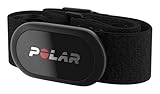
Overview: The Polar H10 represents the gold standard in chest strap heart rate monitoring, delivering supreme accuracy through improved electrode sensors. This waterproof device connects via Bluetooth, ANT+, and 5 kHz frequencies to virtually any compatible equipment or app.
What Makes It Stand Out: Widely recognized as the most accurate heart rate sensor in Polar’s history, the H10 offers multiple simultaneous connections—using Bluetooth and ANT+ at the same time, or two Bluetooth connections simultaneously. The internal memory stores multiple hours of data, allowing training without a connected device.
Value for Money: At $92.36, it’s a premium investment that justifies its cost through unparalleled accuracy. While more expensive than basic straps, it’s cheaper than the Garmin HRM-Fit and offers superior connectivity options.
Strengths and Weaknesses: Strengths include exceptional accuracy, versatile connectivity, comfortable silicone-dotted strap, waterproof design, and internal memory. The main weakness is the chest strap form factor, which some find less convenient than wrist or clip-on options, and it lacks smartwatch features.
Bottom Line: For athletes who prioritize heart rate accuracy above all else, the Polar H10 is unmatched. It’s the professional’s choice for training, compatible with everything and reliable in any condition.
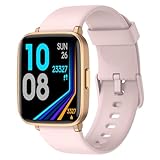
6. LIVIKEY Fitness Tracker Watch with Heart Rate Monitor, Activity Tracker with Pedometer, Sleep Monitor, Calories & Step Counter, IP68 Waterproof Smart Watches for Women Men Fitness Watch for Sports
###6. LIVIKEY Fitness Tracker Watch with Heart Rate Monitor, Activity Tracker with Pedometer, Sleep Monitor, Calories & Step Counter, IP68 Waterproof Smart Watches for Women Men Fitness Watch for Sports
Overview: The LIVIKEY Fitness Tracker delivers essential health monitoring at an entry-level price point. This wearable automatically tracks heart rate, sleep stages, daily steps, calories burned, and active time across nine sport modes. With IP68 waterproofing and a 5-7 day battery life, it provides continuous insights without constant charging, making it suitable for everyday fitness enthusiasts seeking fundamental metrics without complexity.
What Makes It Stand Out: This tracker excels in accessibility and simplicity. The automatic heart rate monitoring works throughout the day, while detailed sleep analysis breaks down deep, light, and awake periods. The IP68 waterproof rating exceeds many competitors at this price, allowing swim and shower use. Smart notifications for calls, texts, and social media keep you connected, while the companion app enables customizable daily step goals and sport mode selection tailored to your routine.
Value for Money: At $19.99, this represents exceptional value in the budget fitness tracker category. Comparable devices from major brands cost 3-4 times more while offering similar core functionality. The combination of waterproofing, multi-sport tracking, and week-long battery life makes it an economical choice for beginners or as a backup device for seasoned athletes who don’t want to risk expensive gear during rough activities.
Strengths and Weaknesses: Strengths:
- Unbeatable price-to-feature ratio
- IP68 waterproof rating for swim/shower use
- Impressive 5-7 day battery life
- Comprehensive sleep stage analysis
- Lightweight, comfortable design Weaknesses:
- Cannot make calls or send texts
- Limited to smartphone compatibility (no tablets)
- App experience may feel basic compared to premium alternatives
- Heart rate accuracy may lag during high-intensity intervals
Bottom Line: The LIVIKEY Fitness Tracker is an outstanding entry-level device that punches above its weight class. While it won’t replace premium smartwatches, it reliably covers essential fitness tracking needs at a price that makes it accessible to everyone. Perfect for fitness beginners, children, or anyone wanting baseline health metrics without financial commitment.
7. Powr Labs Bluetooth and ANT+ Heart Rate Monitor Chest Strap - All Day Comfort, Easy Connectivity - Compatible with Polar, Garmin, Peloton, Wahoo
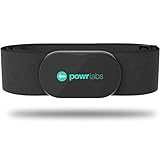
Overview: The Powr Labs Heart Rate Monitor Chest Strap delivers clinical-grade accuracy without the premium price tag. This dual-connectivity device transmits precise heart rate and variability data via ANT+ and Bluetooth to over 400 fitness apps and devices. Designed for serious athletes, it combines medical ±1 BPM accuracy with exceptional 400-hour battery life in a comfortable, sweatproof package.
What Makes It Stand Out: Universality defines this chest strap. It pairs seamlessly with Garmin, Polar, Wahoo, Peloton, cycling computers, and virtually any fitness ecosystem simultaneously. The soft, seamless fabric eliminates chafing during marathon sessions, while the IPX67 rating withstands torrential rain and swimming under wetsuits. The 400-hour replaceable battery eliminates charging anxiety entirely, providing six months of daily training on a single charge.
Value for Money: At $39.99, this undercuts major brand chest straps by 50% while matching their accuracy. The extended battery life alone saves money and hassle compared to rechargeable alternatives. For cyclists, runners, and triathletes who demand reliable data across multiple platforms, it delivers professional performance at an enthusiast price point, making it one of the best values in performance monitoring.
Strengths and Weaknesses: Strengths:
- Dual ANT+/Bluetooth for universal compatibility
- Exceptional 400-hour replaceable battery
- Clinical ±1 BPM accuracy
- Comfortable, chafe-free design
- IPX67 waterproof rating Weaknesses:
- Chest strap format may feel restrictive for some users
- Requires moistening contacts for optimal connectivity
- No onboard memory for offline recording
- Lacks advanced metrics like running dynamics
Bottom Line: The Powr Labs chest strap is a no-brainer for data-driven athletes seeking reliable, accurate heart rate monitoring across multiple devices. It eliminates compatibility concerns while delivering premium accuracy and battery life at a mid-range price. Unless you specifically need advanced running dynamics, this strap outperforms competitors costing twice as much.
8. Zeacool Fitness Tracker with 24/7 Heart Rate, Blood Oxygen Blood Pressure Sleep Monitor, Activity Trackers 5 ATM Waterproof,Step Calorie Counter Pedometer Health Smart Watch for Women Men Bordeaux
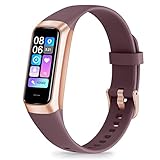
Overview: The Zeacool Fitness Tracker elevates budget wearables by integrating advanced health metrics typically reserved for premium devices. This tracker monitors heart rate, blood oxygen, blood pressure, and temperature 24/7 while tracking sleep and activity across 25 sport modes. The vibrant 1.10-inch AMOLED display and 5 ATM waterproof rating position it as a feature-rich alternative to basic fitness bands.
What Makes It Stand Out: Comprehensive health monitoring sets this device apart. Beyond standard metrics, it tracks blood pressure and SpO2 with real-time data accessible through the “Keep Health” app. The AMOLED touchscreen delivers superior visibility compared to LCD competitors. With 5 ATM waterproofing, it handles swimming and diving scenarios that IP68 devices cannot. Unique features like menstrual cycle tracking, remote photography, and hydration reminders cater specifically to holistic wellness management.
Value for Money: Priced at $26.99, this tracker offers remarkable value for health-conscious users wanting more than basic step counting. The AMOLED display alone justifies the modest premium over entry-level trackers. While blood pressure readings should be validated medically, the sheer volume of health data—combined with superior waterproofing and extensive sport modes—makes it an excellent choice for users prioritizing health insights over brand recognition.
Strengths and Weaknesses: Strengths:
- Advanced health metrics (BP, SpO2, temperature)
- Crisp AMOLED display
- 5 ATM waterproof rating for swimming/diving
- 25 customizable sport modes
- Female health tracking features Weaknesses:
- Blood pressure accuracy unverified for medical use
- Proprietary app may lack third-party integration
- Bordeaux color may not suit all preferences
- Smaller screen size limits data visibility
Bottom Line: The Zeacool Fitness Tracker is ideal for users wanting maximum health data at minimum cost. While it won’t replace medical devices, it provides valuable wellness insights and superior waterproofing that outclasses most budget competitors. The AMOLED display and extensive sport modes make it a smart upgrade for serious health trackers.
9. AliveCor KardiaMobile 6-Lead Personal EKG Monitor – Six Views of The Heart – Detects AFib and Irregular Arrhythmias – Instant Results in 30 Seconds – Works with Most Smartphones

Overview: The AliveCor KardiaMobile 6L transforms your smartphone into a clinical-grade EKG machine, delivering six-lead readings in 30 seconds. FDA-cleared to detect AFib, Bradycardia, Tachycardia, and Normal Sinus Rhythm, this device provides cardiologist-level data without appointments or subscriptions. It captures six times the information of single-lead alternatives, enabling more comprehensive cardiac assessment.
What Makes It Stand Out: This is the world’s only FDA-cleared six-lead personal EKG, offering unprecedented diagnostic detail for home users. The six-lead configuration reveals cardiac issues that single-lead devices miss, providing doctors with superior data for treatment decisions. Instant, subscription-free results make it accessible for ongoing monitoring. Recommended by cardiologists, it bridges the gap between consumer wellness gadgets and medical equipment.
Value for Money: At $129, this is a significant investment compared to basic fitness trackers. For individuals with known arrhythmias or family history of heart disease, it delivers immense value by eliminating costly clinic visits for routine checks. The lack of mandatory subscriptions enhances long-term value, making it substantially more affordable than clinical alternatives over time.
Strengths and Weaknesses: Strengths:
- FDA-cleared six-lead medical-grade EKG
- Detects multiple arrhythmias instantly
- No subscription required for basic functions
- Trusted and recommended by cardiologists
- Provides detailed data for physician review Weaknesses:
- Single-function device (EKG only)
- Higher price point than fitness trackers
- Requires smartphone for operation
- Does not detect heart attacks
- Limited to 30-second snapshots
Bottom Line: The KardiaMobile 6L is essential for anyone needing reliable cardiac monitoring, not casual fitness tracking. While overkill for healthy individuals, it’s invaluable for those with heart concerns, providing medical-grade data that can inform critical health decisions. The six-lead capability and FDA clearance justify the premium for at-risk users.
10. Garmin HRM 200 Heart Rate Monitor, Accurate Heart Rate and HRV Data, Comfortable Machine Washable Strap, M-XL

Overview: The Garmin HRM 200 is a purpose-built heart rate monitor designed for seamless integration within the Garmin ecosystem. It transmits accurate real-time heart rate and heart rate variability data to compatible Garmin smartwatches, cycling computers, and fitness equipment. With up to one year of battery life and a machine-washable strap, it prioritizes convenience and durability for dedicated Garmin users seeking reliable training metrics.
What Makes It Stand Out: Garmin’s ecosystem integration is unmatched—this strap connects instantly to Garmin devices without complex pairing. The machine-washable strap sets it apart from wipe-clean competitors, ensuring hygiene after intense sessions. The user-replaceable battery delivering one year of life eliminates charging entirely. Available in two sizes (XS-S and M-XL), it provides a precise fit that maintains sensor contact during dynamic movements.
Value for Money: Priced at $72.97, the HRM 200 commands a premium over universal chest straps. For Garmin device owners, however, the frictionless integration and reliable connectivity justify the cost. The washable strap and year-long battery reduce long-term maintenance expenses. While less versatile than dual-protocol straps for multi-brand users, it delivers excellent value within its intended ecosystem.
Strengths and Weaknesses: Strengths:
- Seamless Garmin ecosystem integration
- Machine-washable strap for easy cleaning
- Exceptional one-year battery life
- Accurate HRV and heart rate data
- Two size options for optimal fit Weaknesses:
- Garmin-exclusive connectivity limits cross-platform use
- Higher price than universal chest straps
- No ANT+ or Bluetooth Smart for third-party apps
- Requires compatible Garmin device to function
- Lacks onboard memory for offline storage
Bottom Line: The HRM 200 is the definitive choice for Garmin loyalists who prioritize ecosystem synergy and durability. It delivers accurate data with zero maintenance hassle, making it ideal for triathletes, cyclists, and runners invested in Garmin’s platform. Cross-platform users should consider universal alternatives, but for Garmin devotees, this strap is worth every penny.
Why Women Are Ditching Chest Straps for Good
The shift away from chest straps isn’t just about comfort—it’s about data ownership and body autonomy. Traditional chest straps, while clinically accurate, operate on a one-size-fits-men design philosophy that ignores fundamental differences in female anatomy. The typical strap placement conflicts with sports bra structures, creating pressure points and inconsistent sensor contact during movement. For women with smaller rib cages or larger busts, achieving that “snug but comfortable” fit becomes nearly impossible, leading to dropout readings just when you need data most.
Beyond physical discomfort, there’s the psychological barrier. Many women report feeling self-conscious about the visible bulk of a chest strap under workout gear, or frustrated by the additional time and adjustment needed to get ready for a simple run. Strapless monitors integrate seamlessly into accessories you’re already wearing—watches, rings, or arm bands—removing friction from your fitness routine and letting you focus on performance, not equipment management.
Understanding Strapless Heart Rate Monitor Technology
How Optical Sensors Actually Work
Strapless heart rate monitors rely on photoplethysmography (PPG), a non-invasive optical technique that detects blood volume changes in your microvascular tissue. Unlike chest straps that measure the heart’s electrical activity (ECG), optical sensors use LED lights to illuminate your skin and measure how much light is absorbed or reflected back. When your heart beats, blood flow increases, absorbing more light; between beats, less light is absorbed. This creates a pulsating signal that algorithms translate into beats per minute.
The sophistication lies in the multi-wavelength approach. Premium devices use green, red, and infrared LEDs simultaneously, each penetrating different depths of tissue. Green light works best for shallow capillaries at rest, while red and infrared penetrate deeper during intense exercise when blood perfusion changes. The device continuously adjusts which wavelength to prioritize based on your activity level, a process most users never notice but that dramatically impacts accuracy.
The Science of PPG (Photoplethysmography) Explained
PPG technology faces unique challenges in women due to physiological differences in skin structure, subcutaneous fat distribution, and hormonal fluctuations. Estrogen affects microcirculation and blood vessel elasticity, which can alter the PPG signal strength throughout your menstrual cycle. During the luteal phase, increased progesterone leads to water retention that slightly changes tissue density where the sensor rests, potentially requiring algorithmic adjustments that budget devices simply don’t make.
Advanced monitors now incorporate proprietary algorithms trained on female-specific data sets, accounting for these cyclical variations. They also filter out “motion artifacts”—the noise created when your arm moves relative to the sensor. This is where cheaper devices fail: they can’t distinguish between the rhythmic pulse of your heartbeat and the chaotic jostling of a HIIT workout, resulting in those frustrating 180 bpm readings when you know you’re barely at 140.
Types of Chest Strap-Free Monitors Available Today
Wrist-Based Fitness Trackers
These represent the most accessible entry point, sitting on your wrist like a traditional watch. Their advantage lies in all-day wearability, capturing not just workout data but resting heart rate trends, sleep patterns, and daily activity. For women, the key differentiator is band design. Look for tapered bands that accommodate narrower wrists without excess material bulking up. The sensor housing should curve to match wrist anatomy rather than sitting flat, which creates gaps during movement.
However, wrist placement comes with inherent trade-offs. The further a sensor is from your heart, the more delayed the reading—typically 10-15 seconds behind real-time during intense efforts. This latency matters less for steady-state cardio but becomes problematic for interval training where you’re trying to hit specific heart rate zones within seconds.
Smartwatches with HR Capabilities
Smartwatches elevate the game by combining heart rate monitoring with comprehensive health ecosystems. What distinguishes them from basic fitness trackers is processing power—they can run complex algorithms locally rather than relying on cloud processing. This means faster feedback loops and more sophisticated pattern recognition, particularly for detecting irregular heartbeats or atrial fibrillation, conditions that present differently in women and are often underdiagnosed.
The display size becomes a practical consideration here. While large screens show more data at a glance, they can overwhelm smaller wrists and weigh you down during running. Premium models offer always-on displays that dim but don’t black out, letting you check your zone with a quick glance rather than an exaggerated arm flick that disrupts your form.
Forearm and Upper Arm Bands
These devices position the optical sensor on your forearm or upper arm, closer to your heart and on more stable tissue than the wrist. The bicep area experiences less motion artifact during running or weightlifting, producing cleaner PPG signals. For women, upper arm placement eliminates conflicts with bracelets, watches, or the dreaded “smartwatch tan line” dilemma.
The trade-off is social acceptance—they’re more visible and can feel conspicuous in professional settings. However, newer designs resemble sleek compression sleeves rather than medical devices, and the improved accuracy during high-intensity work makes them favorites among serious athletes who’ve abandoned chest straps but refuse to compromise on data quality.
Smart Rings: The Discreet Revolution
Smart rings represent the most minimalist approach, packing PPG sensors into a tiny form factor that looks like jewelry. They typically monitor from the finger’s palmar side, where arterial blood flow is strong and skin is thin. For women who find any wrist device too bulky or who want 24/7 monitoring without looking “sporty,” rings offer unprecedented discretion.
The limitation is battery life—tiny batteries mean daily charging—and sensor real estate. Fewer LEDs and photodiodes fit into a ring, which can reduce accuracy during vigorous movement. They’re best suited for wellness tracking, sleep analysis, and recovery monitoring rather than hardcore training metrics.
Accuracy Matters: What the Research Really Shows
Independent studies comparing strapless monitors to clinical ECG machines reveal a nuanced picture. At rest and during steady-state exercise, top-tier optical devices achieve 95-97% accuracy within ±5 bpm. However, during high-intensity interval training or activities involving irregular arm movements (like boxing or CrossFit), accuracy can drop to 85-90%, sometimes showing deviations of 10-15 bpm.
What matters more than absolute accuracy is consistency. A device that reads 5 bpm high but does so reliably every workout still helps you track fitness progress and maintain zones. The problem arises when inconsistency introduces noise into your data—one day reading high, the next low—making trend analysis impossible.
Factors That Throw Off Your Readings
Cold weather constricts peripheral blood vessels, weakening the PPG signal at your wrist. Dehydration thickens blood, altering flow dynamics. Dark skin tones and tattoos absorb more LED light, reducing signal-to-noise ratio. These aren’t flaws in the technology; they’re variables that sophisticated devices compensate for through algorithmic adjustments and user education.
Women face an additional variable: hormonal contraceptives can increase resting heart rate by 5-10 bpm, shifting all your training zones. Premium devices allow manual zone adjustment or automatically detect your personal baseline over time, while budget options stick to generic age-based formulas that become increasingly inaccurate.
When Chest Straps Still Reign Supreme
Let’s be honest: if you’re a competitive cyclist doing threshold testing or a runner targeting precise pace zones, a chest strap remains the gold standard. The ECG signal doesn’t lie, and for short, maximal efforts where every beat counts, the instantaneous response matters. Strapless technology has closed the gap remarkably, but it hasn’t eliminated it entirely.
The smart approach is hybrid usage: wear your strapless device daily for trends and general training, but break out the chest strap for monthly fitness assessments, race days, or any workout where you’re making significant training decisions based on the numbers.
Key Features That Actually Make a Difference
Continuous vs On-Demand Monitoring
Continuous monitoring captures every heartbeat 24/7, building a comprehensive picture of your cardiovascular health. This reveals your true resting heart rate (not just a single morning measurement) and tracks heart rate variability (HRV) overnight, a key recovery metric. However, it drains battery faster and can feel invasive if you’re not comfortable with constant biometric surveillance.
On-demand monitoring activates only during workouts or when you manually check. This extends battery life and feels less “watched,” but misses crucial data about stress spikes during your day or heart rate patterns during sleep. For women managing anxiety or tracking perimenopausal symptoms, continuous monitoring provides insights that on-demand simply can’t match.
Heart Rate Zones and Personalized Training
Generic zone calculations based on “220 minus age” are notoriously inaccurate for women, who often have higher resting heart rates and different maximums than men of the same age. Look for devices that perform a guided fitness test to establish your personal zones based on lactate threshold or ventilatory threshold. Some advanced models detect your zones automatically after a few weeks of varied-intensity workouts.
The interface matters too. During exercise, you want clear visual indicators—perhaps a color-coded screen or haptic feedback—telling you which zone you’re in without requiring you to interpret numbers mid-sprint. Customizable zones are essential for pregnancy, where traditional intensity guidelines no longer apply.
Sleep and Recovery Tracking Integration
Your heart rate during sleep reveals more than your workout effort. Overnight HR average, lowest HR during deep sleep, and HRV patterns indicate recovery status and readiness to train. For women, tracking these metrics alongside menstrual cycle data can reveal how hormones impact sleep quality and recovery needs.
Quality devices distinguish between sleep stages using heart rate patterns, not just movement. They’ll show if your heart rate remains elevated during what should be restorative deep sleep—a sign of overtraining or stress—and adjust next-day training recommendations accordingly.
Stress Monitoring and HRV Analysis
Heart rate variability, the micro-variations in time between beats, serves as a window into your autonomic nervous system. Higher HRV generally indicates better stress resilience and recovery capacity. Women’s HRV naturally fluctuates throughout the menstrual cycle, typically lowest during the luteal phase when progesterone dominates.
Sophisticated monitors don’t just show a single HRV number; they track trends and contextualize them within your cycle. This prevents the demoralizing experience of seeing your “stress score” spike and thinking you’re failing, when it’s simply biology. Some devices now offer guided breathing exercises that adapt to your real-time HRV, helping you down-regulate stress more effectively.
The Fit Factor: Why Women’s Anatomy Changes Everything
Wrist Size and Sensor Contact
The optical sensor must maintain consistent skin contact to work properly. On smaller wrists, bulky sensor housings lift at the edges during movement, breaking contact and creating dropouts. The ideal device for narrow wrists has a sensor that protrudes slightly, ensuring it stays pressed against skin even when the band shifts.
Band material matters more than you’d think. Silicone bands can slide on smooth skin, especially when sweating. Woven nylon or fabric bands with silicone backing provide better grip without pinching. Quick-release mechanisms let you switch between a snug sport band for workouts and a looser, more comfortable band for all-day wear.
Menstrual Cycle Tracking Integration
The most forward-thinking devices now integrate heart rate data with menstrual cycle tracking, revealing patterns most women never knew existed. Your resting heart rate typically rises 2-5 bpm after ovulation, staying elevated until menstruation begins. This isn’t a problem to fix—it’s valuable data confirming your cycle’s progression.
During your period, you might notice higher heart rates at the same exercise intensity. This reflects increased prostaglandin activity and mild dehydration. A device that overlays cycle phase on your workout data helps you interpret these changes correctly, preventing you from pushing too hard when your body needs gentler movement.
Pregnancy and Postpartum Considerations
Pregnancy fundamentally alters cardiovascular function. Blood volume increases by 30-50%, raising resting heart rate and lowering maximum heart rate. Generic heart rate zones become meaningless. Look for devices with dedicated pregnancy modes that adjust zones automatically and track fetal movement alongside maternal heart rate.
Postpartum, heart rate variability often remains suppressed for months as your autonomic nervous system recalibrates. Continuous monitoring helps you recognize when you’re truly recovered enough for high-intensity work, preventing the common mistake of returning to intense exercise too soon. Some devices offer postpartum-specific recovery scores that factor in sleep disruption from newborn care.
Battery Life Reality Check
The most advanced features are useless if your device dies mid-workout. Wrist-based trackers typically offer 5-7 days with continuous monitoring, while feature-rich smartwatches manage 1-2 days. Forearm bands fall in the middle at 3-5 days. Smart rings, despite their size, often surprise with 2-3 days due to efficient single-purpose design.
Charging time matters as much as battery life. A device that charges fully in 30 minutes is more practical than one that takes 3 hours, especially when you’re trying to squeeze in a workout. Magnetic chargers are convenient but proprietary; USB-C offers universality but requires exposed contacts that can corrode from sweat.
Consider your charging routine. If you track sleep, you need a device that can charge enough during a shower to last the night. Some smartwatches offer “bedtime mode” that disables features overnight to preserve battery, giving you morning HRV data without the all-day drain.
Connectivity and App Ecosystems
Bluetooth vs ANT+ Protocols
Bluetooth Low Energy (BLE) dominates consumer devices, offering universal smartphone connectivity but sometimes struggling with simultaneous connections. If you want your heart rate data on both your phone and a gym treadmill, BLE can drop one connection unexpectedly.
ANT+ excels at broadcasting to multiple devices simultaneously—watch, bike computer, and phone all receiving the same data stream. It’s the athlete’s choice but less common in general fitness devices. Some premium devices support both, automatically switching protocols based on what’s receiving data.
Third-Party App Compatibility
Your device’s native app isn’t always the best analysis tool. Compatibility with platforms like TrainingPeaks, Strava, or Apple Health determines how easily you can integrate heart rate data with training plans or share with coaches. Look for devices that export raw RR-interval data (the time between beats) rather than just average heart rate—this granularity enables advanced HRV analysis in third-party apps.
For women tracking fertility or pregnancy, integration with apps like Clue, Flo, or Ovia turns your heart rate monitor into a powerful reproductive health tool. The best ecosystems allow bidirectional data flow: your cycle phase informs training recommendations, and your physiological responses refine cycle predictions.
Price vs Value: Making Smart Investment Choices
Budget strapless monitors ($50-100) offer basic heart rate tracking during exercise but often lack the algorithm sophistication for reliable all-day monitoring. They work fine for casual walkers or beginners but frustrate serious athletes with inconsistent readings.
Mid-range options ($150-250) hit the sweet spot for most women. They include continuous monitoring, sleep tracking, and decent app ecosystems. Accuracy improves significantly, with better motion artifact filtering and personalized zone calculations. This range often includes features like menstrual cycle tracking without premium pricing.
High-end devices ($300-500) justify their cost through medical-grade features: ECG capabilities, blood oxygen monitoring, and advanced HRV analysis. For women with known heart conditions, hormonal disorders affecting cardiovascular function, or those pursuing elite performance, the investment pays dividends in data quality and health insights.
Consider total cost of ownership. A $200 device that lasts three years costs less per month than a $100 device you replace annually due to battery degradation or sensor failure.
Optimizing Accuracy: Pro Tips for Reliable Data
Proper Wear Positioning
For wrist devices, position the sensor on the flat part of your wrist, about one finger’s width above your wrist bone. Tighten the band one notch beyond comfortable daily wear—you should see a slight indentation when you remove it, but not deep marks. During workouts, slide it slightly higher on your forearm where there’s more flesh and less bone.
For arm bands, placement on the upper bicep (not the forearm) reduces motion artifact. The sensor should sit on the inner arm where blood vessels are more superficial. Position it so it doesn’t conflict with your sports bra strap but isn’t so high it interferes with shoulder movement.
Skin Tone and Tattoo Considerations
Melanin absorbs green LED light, which most devices use as their primary wavelength. This doesn’t make them inaccurate, but it requires stronger LED intensity and more sophisticated signal processing. If you have darker skin, prioritize devices that specify multi-wavelength arrays and have published validation studies on diverse populations.
Tattoos, particularly dark or dense ones, block light penetration entirely. You must position the sensor on untattooed skin. Some arm bands offer sensor modules that can be rotated to find clear skin, while wrist devices give you flexibility to slide up or down your forearm.
The 10-Minute Warm-Up Rule
Optical sensors need time to stabilize after you start moving. Blood flow patterns change as you transition from rest to activity, and algorithms need data to recalibrate. During the first 10 minutes of any workout, take readings as directional rather than precise. Most devices show a “sensor stabilizing” indicator—respect it.
For interval workouts, do a proper warm-up before starting your first intense effort. This ensures the sensor is locked onto your signal when you need accurate zone feedback. Jumping straight into sprints guarantees you’ll get garbage data for the first few intervals.
Maintenance and Longevity Best Practices
Sweat and skincare products are the enemies of optical sensors. Salt crystals from dried sweat create a film that blocks LED light. Rinse your device with fresh water after every sweaty workout, even if it’s “waterproof.” A quick 30-second rinse prevents buildup that requires aggressive cleaning later.
Avoid lotions and sunscreens on sensor contact areas. If you must use them, apply and let them absorb completely before putting on your device. Consider using them only on areas the sensor doesn’t touch. For arm bands, rotate wearing position slightly each day to prevent skin irritation and give contact points time to breathe.
Battery longevity depends on charging habits. Lithium-ion batteries degrade fastest when kept at 100% or drained to 0%. The sweet spot is 20-80% charge. If you’re not tracking sleep, consider partial charging sessions rather than overnight full charges. For devices you do wear overnight, accept that you’ll replace the battery (or device) every 2-3 years.
Pros and Cons: The Honest Assessment
Strapless monitors win on convenience, comfort, and continuous data collection. They integrate into your life seamlessly, providing health insights beyond exercise. Modern algorithms have made them accurate enough for 95% of training scenarios, and the wealth of contextual data—sleep, stress, recovery—creates a holistic health picture chest straps can’t match.
The downsides are real. They’re less accurate during maximal efforts and activities with extreme arm movement. Battery dependency means they can die, unlike passive chest straps. Cost is higher for comparable accuracy. And they collect more personal data, raising privacy concerns about where your biometric information goes and who can access it.
The choice isn’t about which is universally better, but which trade-offs align with your priorities. Most women find that strapless convenience outweighs the slight accuracy compromise for daily use.
Use Case Scenarios: Finding Your Perfect Match
For the Marathon Runner
You need continuous monitoring, long battery life, and GPS integration. Prioritize devices with accurate steady-state cardio tracking and customizable zones. The ability to see real-time HR on your wrist while running, plus post-run analysis of heart rate drift and recovery time, proves invaluable for training progression.
For the HIIT Enthusiast
Rapid heart rate changes demand low sensor latency and excellent motion artifact filtering. An upper arm band often outperforms wrist devices here, staying stable during burpees and mountain climbers. Look for devices that show HR recovery between intervals—a key fitness marker.
For the Yoga and Pilates Practitioner
You want stress monitoring and HRV tracking more than max HR accuracy. A smart ring or slim fitness tracker provides the mindfulness data—heart rate coherence during breathing exercises, stress trends—without interfering with wrist balances or arm balances.
For the Wellness-Focused Professional
Discretion is key. A device that looks professional enough for client meetings while tracking stress and recovery helps you manage work-life balance. Prioritize sleek design, silent vibration alerts for stress spikes, and an app that correlates heart rate with calendar events to identify stress triggers.
Frequently Asked Questions
Will a strapless heart rate monitor work accurately during my menstrual cycle?
Yes, but you need to understand the patterns. Your resting heart rate naturally rises 2-5 bpm after ovulation due to progesterone. Quality devices recognize this pattern and adjust your training zones accordingly. Budget devices may show inflated “stress scores” during your luteal phase. Look for monitors with built-in cycle tracking that contextualizes heart rate data within your hormonal phases rather than flagging normal fluctuations as problems.
How do I know if my device is accurate enough for my fitness goals?
Perform a simple validation test. During a steady-state run or ride, note your device reading, then manually take your pulse at your neck for 15 seconds, multiply by four. Do this every 5 minutes for 20 minutes. If your device stays within 5 bpm of manual counts during steady effort, it’s accurate enough for zone training. For high-intensity intervals, accept a 10 bpm margin of error. If you’re off by more than that during steady state, adjust positioning or consider a different device.
Can I wear my strapless monitor in the pool or shower?
Most modern devices are water-resistant to 50 meters, but water creates challenges for optical sensors. Water pressure changes sensor contact, and water between sensor and skin refracts LED light unpredictably. For lap swimming, look for devices specifically validated for aquatic heart rate—they use different algorithms that account for water interference. For showers, it’s fine to wear, but don’t expect accurate readings. Rinse with fresh water afterward to remove chlorine or salt.
Why does my heart rate reading spike at the beginning of every workout?
This is called “cardiac lag” combined with sensor stabilization. When you start exercising, your heart doesn’t immediately jump to the appropriate rate—it ramps up over 1-3 minutes. Simultaneously, your optical sensor is adjusting to new motion patterns and blood flow dynamics. The spike is usually algorithmic noise, not your true heart rate. Warm up gradually for 10 minutes before trusting the numbers, and ignore the first few minutes of data in your analysis.
Are there any health conditions that make strapless monitors less reliable?
Yes. Atrial fibrillation, premature ventricular contractions (PVCs), and other arrhythmias can confuse PPG algorithms designed for regular rhythms. Poor peripheral circulation from Raynaud’s phenomenon or diabetes may weaken the signal. Anemia reduces blood oxygen content, altering light absorption. If you have these conditions, choose devices with medical-grade certifications and ECG capabilities, and always discuss data with your healthcare provider rather than self-diagnosing.
How tight should I wear my strapless monitor for accurate readings?
Tighter than your regular watch but not so tight it leaves deep impressions. A good test: slide a finger under the band. If it moves easily, it’s too loose. If you can’t slide a finger under at all, it’s too tight. During workouts, tighten one notch from your daily wear position. The sensor needs consistent contact but shouldn’t restrict blood flow. If your hand feels tingly, it’s too tight.
Will my tattoo affect my heart rate monitor’s accuracy?
Dark, dense tattoos block LED light completely. You must position the sensor on untattooed skin. For wrist devices, slide it above or below the tattooed area. For arm bands, rotate it to the inner arm. Light or sparse tattoos may cause minor inaccuracies but usually work fine. If you have full sleeve tattoos, consider a chest strap for accuracy or a smart ring worn on an untattooed finger.
How long do strapless heart rate monitors typically last before needing replacement?
With proper care, expect 2-3 years of reliable performance. Battery capacity degrades to about 80% after 500 full charge cycles (roughly 2 years of daily charging). Optical sensors can accumulate micro-scratches that diffuse LED light, gradually reducing accuracy. Software updates extend functionality, but sensor hardware has a finite lifespan. If you notice increasingly erratic readings despite proper wear, it’s likely hardware degradation.
Can I use my strapless monitor to track my pregnancy’s impact on fitness?
Absolutely, and it’s one of the best use cases. Look for devices with pregnancy modes that automatically adjust heart rate zones as your blood volume increases and maximum heart rate decreases. Track resting heart rate trends—an unexpected drop can signal issues needing medical attention. Postpartum, use HRV monitoring to gauge recovery before returning to high-intensity exercise. Always pair device data with your provider’s guidance, never replacing medical advice with consumer tech.
Why does my device show different heart rates when I switch wrists?
Slight differences are normal due to anatomical asymmetry. Your dominant arm typically has better muscle tone and slightly different blood vessel patterns. The bigger issue is fit inconsistency—most people wear watches looser on their non-dominant wrist. For comparable data, wear the device on the same wrist consistently, positioned identically. If you see large discrepancies (10+ bpm at rest), one position likely has poor sensor contact. Use the position that gives you more stable, believable numbers.