Speed kills on the football field, and for players who make their living in open space, every ounce matters. Wide receivers burning defensive backs on go routes, running backs hitting the edge, and defensive backs mirroring receivers step-for-step—these athletes require equipment that works as an extension of their body, not a limitation. The modern lightweight football helmet has revolutionized how speed positions play the game, offering protection that doesn’t compromise the split-second acceleration and rapid direction changes that define elite performance.
But here’s the reality: not all lightweight helmets are created equal. The market is flooded with options promising featherlight construction and maximum protection, yet many players and parents struggle to separate marketing hype from genuine innovation. Understanding what truly matters in a lightweight helmet—beyond the number on the scale—can mean the difference between equipment that enhances performance and gear that leaves you vulnerable when it matters most.
Top 10 Lightweight Football Helmets for Speed Positions
Detailed Product Reviews
1. Riddell SpeedFlex Adult Football Helmet with Facemask, Speed Flex Helmet for Football

Overview: The Riddell SpeedFlex Adult helmet represents the pinnacle of on-field protection, engineered for elite-level competition. This premium helmet integrates advanced impact-distribution technology throughout its design, making it a top choice for serious adult players who prioritize safety without compromising performance.
What Makes It Stand Out: The revolutionary Flex System incorporates engineered flexibility into the shell, facemask, and attachment clips to dissipate impact forces before they reach the athlete. Patented Side Impact Protection (PISP) specifically addresses dangerous lateral collisions, while Composite Energy Management ensures strategically placed padding maintains its position during intense gameplay.
Value for Money: At $519.99, this helmet sits at the premium end of the market, but justifies its price through NFL-caliber technology and proven concussion-reduction research. While significantly more expensive than entry-level adult helmets ($150-$300), it offers protection features that meet professional standards, making it a worthwhile investment for competitive college and adult players where head injury risk is substantial.
Strengths and Weaknesses:
- Pros: Advanced Flex System reduces impact transfer; superior side impact protection; professional-grade construction; comprehensive facemask and chinstrap included; strategically placed padding stays secure.
- Cons: High cost may be prohibitive for recreational players; slightly heavier than basic models; complex features may be unnecessary for lower-contact leagues.
Bottom Line: For competitive adult players serious about maximizing protection, the SpeedFlex is an exceptional choice that delivers research-backed safety technology worthy of its premium price tag. Recreational players may find better value in simpler models.
2. Riddell Victor-i Youth Football Helmet with Facemask, Football Helmets for Youth

Overview: The Riddell Victor-i Youth helmet strikes an impressive balance between comprehensive protection and accessible pricing for developing players. Designed specifically for youth athletes, this helmet manages various impact types while providing customizable comfort features that accommodate growing athletes.
What Makes It Stand Out: The offset shell design effectively disperses impact energy across multiple directions, while the extended interior liner reaches the mandible area for enhanced jaw protection rarely seen at this price point. The inflatable rear liner and S-jaw pads allow coaches and parents to achieve a precise, secure fit crucial for both safety and comfort.
Value for Money: Priced at $199.99, the Victor-i positions itself as a mid-tier youth helmet offering features approaching premium models. It delivers significantly better protection than basic youth helmets ($80-$120) without reaching the $400+ price range of elite youth models, making it an intelligent investment for players advancing beyond beginner levels.
Strengths and Weaknesses:
- Pros: Extended mandible protection; customizable inflatable fit system; moisture-resistant comfort overliner; position-appropriate S2B facemask; excellent side coverage with extended jaw flap.
- Cons: Lacks the advanced Flex System of premium models; inflation system requires maintenance; may need upgrading for high-school varsity competition; slightly heavier than minimalist youth helmets.
Bottom Line: An excellent choice for youth players transitioning into more competitive football, offering sophisticated protection features and customizable fit at a reasonable midpoint price that serves developing athletes well.
3. Matte Black Blank Riddell Revolution Speed Mini Football Helmet (Decorative Mini Helmet - NOT Wearable - Does NOT FIT Any Human Head)

Overview: This Riddell Revolution Speed Mini Helmet is a meticulously crafted half-scale replica designed exclusively for display and autograph purposes. Measuring just 6" x 4.5" x 5", it is emphatically NOT a protective device and cannot be worn by any person, including infants.
What Makes It Stand Out: As an officially licensed Riddell collectible, it faithfully replicates the iconic Revolution Speed design with authentic interior padding and a functional 4-point chin strap. The matte black finish provides an excellent canvas for signatures, making it ideal for memorabilia collectors seeking professional-quality display pieces.
Value for Money: At $31.91, this mini helmet offers an affordable entry into football collectibles compared to full-size display helmets ($100+). It delivers authentic brand details and quality construction that cheaper knockoffs lack, while occupying minimal display space.
Strengths and Weaknesses:
- Pros: Official Riddell authentic replica; perfect size for autographs and display; includes realistic interior details; sturdy construction; excellent gift for fans.
- Cons: NOT wearable (critical limitation); small size may underwhelm some collectors; limited decorative impact compared to full-size helmets; no team branding on blank version.
Bottom Line: A must-have for autograph seekers and football memorabilia enthusiasts who understand its display-only purpose. Purchase with clear expectations—this is a collectible, not safety equipment.
4. Riddell SpeedFlex Youth Football Helmet with Facemask, Speed Flex Helmet for Football

Overview: The SpeedFlex Youth helmet adapts Riddell’s flagship adult protection technology for younger athletes, delivering professional-grade safety features in a youth-appropriate package. This helmet represents the premium tier of youth head protection for serious young players.
What Makes It Stand Out: Youth players gain access to the same patented PSIP (Side Impact Protection) and Flex System found in adult professional helmets, engineered to reduce force transfer through flexible shell and facemask components. Four individual inflation points allow micro-adjustments for a truly customized fit as youth players grow.
Value for Money: At $439.99, this premium youth helmet commands a steep price but transfers proven NFL-level technology to youth football. While costing double most youth helmets, it provides unparalleled protection for elite youth leagues where collision intensity mirrors high school competition.
Strengths and Weaknesses:
- Pros: Adult-level Flex and PSIP technology; superior customization with four inflation points; quick-release facemask system; research-backed mandible protection; maintains padding position during play.
- Cons: Extremely expensive for youth equipment; players may outgrow before maximizing value; over-engineered for recreational or flag football; replacement costs add up for growing athletes.
Bottom Line: Ideal for elite youth players in high-contact leagues where advanced protection justifies the investment. For developmental or recreational play, more moderately priced youth helmets offer sufficient safety.
5. Riddell SpeedFlex Youth Football Helmet with Facemask, Speed Flex Helmet for Football

Overview: This SpeedFlex Youth helmet appears identical to other youth SpeedFlex models, featuring Riddell’s premier protection technology scaled for young athletes. The $459.95 price point suggests potential colorway or vendor-specific pricing variation for the same advanced helmet system.
What Makes It Stand Out: Offering the identical patented PSIP and Flex System as its SpeedFlex Youth counterparts, this helmet employs hinge clips and flexible components throughout the shell and facemask to dissipate impact energy. The all-points quick release system and four inflation points remain standout features for customization and maintenance.
Value for Money: At $459.95, this represents the highest price point among SpeedFlex Youth offerings, costing $20 more than similar configurations. While delivering identical premium protection technology, shoppers should verify whether color options, availability, or bundled accessories justify the premium over lower-priced SpeedFlex Youth listings.
Strengths and Weaknesses:
- Pros: Professional-grade Flex and side impact protection; excellent fit customization; quick-release facemask convenience; research-driven youth-specific design; durable construction.
- Cons: Highest price variation for same technology; significant investment for growing youth players; features may exceed needs for non-contact leagues; potential price discrepancy without feature differences.
Bottom Line: Purchase only if specific color or immediate availability warrants the extra cost. Otherwise, opt for identically-featured SpeedFlex Youth models at lower price points to maximize value without sacrificing protection.
6. Riddell SpeedFlex Youth Football Helmet with Facemask, Speed Flex Helmet for Football
Overview: The Riddell SpeedFlex Youth Helmet represents the pinnacle of protective technology for young football players. Priced at $439.99, this premium helmet integrates advanced safety research with practical on-field functionality. Engineered specifically for youth athletes, it combines patented impact protection systems with customizable fit features, making it a top-tier choice for serious players and parents prioritizing safety above all else.
What Makes It Stand Out: The patented PSIP (Side Impact Protection) system specifically addresses mandible injuries from lateral collisions—a commonly overlooked impact zone. The innovative Flex System incorporates engineered flexibility throughout the shell, facemask, and hinge clip attachments, creating a crumple zone effect that dissipates energy before it reaches the athlete’s head. Four independent inflation points allow precise customization, while the all-points quick release system enables tool-free facemask removal in seconds.
Value for Money: At $439.99, this helmet sits in the premium youth category, yet delivers professional-grade protection. Comparable varsity-level helmets often exceed $500, making the SpeedFlex a relative bargain for the technology included. The included SF-2BD facemask eliminates a $40-60 additional expense, while the durable polycarbonate shell ensures multiple seasons of use, offsetting the initial investment for growing programs or families.
Strengths and Weaknesses:
- Strengths: Superior side impact protection; innovative Flex energy management; highly customizable fit; premium SF-2BD facemask included; quick-release system for emergencies
- Weaknesses: Premium pricing may exclude budget-conscious families; complex inflation system requires proper training; heavier than basic youth models; white color shows wear quickly
Bottom Line: For serious youth players in high-contact positions, the SpeedFlex justifies every dollar through research-backed protection and durability. It’s an investment in long-term safety that outperforms entry-level helmets significantly.
7. Dreyoo 2 Set Football Chin Strap Cam Lock Housing and Thumb Screws Compatible with Riddell SpeedFlex Helmet, Durable Football Chinstrap Cam Lock Housing Set Keep Stability of Youth Football Helmet

Overview: This $13.99 replacement kit solves a critical pain point for SpeedFlex helmet owners. Containing two complete cam lock housing assemblies with thumb screws, the Dreyoo set offers an affordable solution for damaged or worn chin strap mounting hardware. Designed for both adult and youth SpeedFlex models, this accessory ensures your helmet’s retention system remains secure throughout intense gameplay.
What Makes It Stand Out: The hybrid construction combines impact-resistant ABS plastic housings with durable aluminum alloy thumb screws—a significant upgrade from standard plastic hardware that often shears under stress. The precision-engineered sizing guarantees seamless integration with genuine Riddell SpeedFlex chin straps, eliminating the compatibility guesswork common with generic replacements. The professional-grade design maintains proper tension while allowing quick adjustments on the sideline.
Value for Money: Exceptional value at under $14 for two complete sets. OEM Riddell replacement parts typically cost $8-12 per single housing, making this kit nearly 40% more economical. The aluminum alloy screws alone justify the price, as they resist stripping and corrosion far better than stock hardware. For equipment managers or families maintaining multiple helmets, having spare sets prevents costly last-minute replacements before games.
Strengths and Weaknesses:
- Strengths: Perfect SpeedFlex compatibility; aluminum alloy screws prevent failure; cost-effective two-pack; easy installation without specialized tools; durable ABS construction
- Weaknesses: Only compatible with SpeedFlex models; screws may loosen without occasional thread-locker; black color may not match all helmet aesthetics; not officially Riddell-branded
Bottom Line: An essential insurance policy for SpeedFlex owners. The Dreyoo kit delivers OEM-quality fit with superior hardware durability at a fraction of the cost. Keep a set in your equipment bag—you’ll need it eventually.
8. Riddell SpeedFlex Youth Helmet, White, X-Large
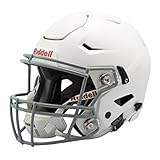
Overview: The X-Large variant of Riddell’s flagship SpeedFlex youth helmet maintains the same $439.99 price point while accommodating larger young athletes who’ve outgrown standard sizes. This model features the identical Flex System and PSIP technology as its counterparts, but incorporates a Ratchet-Lock chin strap attachment for simplified adjustments. Built with a varsity-grade polycarbonate shell, it bridges the gap between youth and adult equipment.
What Makes It Stand Out: The Ratchet-Lock chin strap system distinguishes this model, offering tool-less micro-adjustments that players can modify independently between plays. This self-service capability reduces equipment manager workload and ensures optimal fit throughout practice. The X-Large sizing specifically addresses the needs of middle-school athletes in growth spurts who require adult dimensions without graduating to heavier varsity helmets. The pure white finish provides a clean canvas for team customization.
Value for Money: Identical pricing to standard SpeedFlex models while offering size inclusivity for larger youth players. The polycarbonate varsity shell construction delivers adult-level durability, potentially extending usable life through multiple seasons. Considering many athletes require new helmets after size increases, the X-Large’s broader fit range may delay replacement needs, improving long-term value despite the premium upfront cost.
Strengths and Weaknesses:
- Strengths: Ratchet-Lock enables instant adjustments; X-Large fits hard-to-size athletes; varsity-grade shell durability; maintains full Flex System protection; ideal for middle school transition players
- Weaknesses: White color demands frequent cleaning; Ratchet-Lock adds minimal weight; limited color options in X-Large; same high price as smaller sizes; may be oversized for average youth players
Bottom Line: Perfect for larger youth players who need SpeedFlex protection without adult helmet weight. The Ratchet-Lock convenience and extended sizing make it worth the premium for athletes in that specific size range.
9. Riddell Victor-i Youth Football Helmet with Facemask, Football Helmets for Youth
Overview: The Victor-i positions itself as Riddell’s accessible premium option at $179.99, delivering core brand safety features at less than half the SpeedFlex price. Designed for skill position players, this helmet emphasizes lightweight mobility without sacrificing critical protection. The offset shell design and extended mandible coverage provide comprehensive impact management for quarterbacks, running backs, and receivers.
What Makes It Stand Out: The extended jaw flap and interior liner that reaches the mandible area offer enhanced side protection rarely seen in sub-$200 helmets. Riddell’s offset shell engineering manages multiple impact vectors simultaneously, while the included S2B facemask balances visibility and protection perfectly for ball-handling positions. The removable moisture-resistant overliner addresses hygiene concerns common in youth equipment, making cleaning between games practical for parents.
Value for Money: Outstanding value proposition at $179.99. This helmet delivers Riddell’s engineering credibility and Virginia Tech 4-star equivalent protection for roughly 60% less than flagship models. The included S2B facemask (typically $35-45 separately) and inflatable customization features match competitors priced $50 higher. For developing players in skill positions, it provides professional brand confidence without the professional price tag.
Strengths and Weaknesses:
- Strengths: Excellent price-to-protection ratio; skill-position optimized S2B mask; removable/washable liner; extended side protection; lightweight for mobility
- Weaknesses: Lacks Flex System technology; single inflation point limits customization; not ideal for linemen; basic chin strap attachment; fewer color options than premium lines
Bottom Line: The smart choice for young skill players and budget-conscious families. It delivers authentic Riddell safety DNA and position-specific optimization at a price that allows investment in other protective gear.
10. Schutt F7 2.0 Collegiate Football Helmet, ROPO NB VC Facemask Attached, Large, White

Overview: Schutt’s F7 2.0 challenges Riddell’s dominance with a $379.99 helmet that earned Virginia Tech’s prestigious 5-star rating and a 1.35 impact score—second only to the $800+ VICIS ZERO2. Engineered for collegiate competition but accessible to advanced high school players, this helmet combines carbon steel facemask durability with revolutionary impact distribution technology, making it a serious contender for safety-conscious programs.
What Makes It Stand Out: The RFLX-S impact layer and Tektonic plate system (both interior and exterior) create a multi-stage defense that actively deflects and disperses energy across the entire helmet surface rather than concentrating it. This “load spreading” approach fundamentally differs from traditional foam-based systems. The fast-access inflation point simplifies fit adjustments—critical for programs with high player turnover. Carbon steel facemask material offers proven durability at a lighter weight than titanium alternatives.
Value for Money: At $379.99, it undercuts comparable 5-star helmets by $100-200 while delivering superior test results. The included ROPO NB VC facemask (designed for QB/receiver visibility) represents a $50-70 value. For programs buying in bulk, the durable construction and simplified adjustment system reduce long-term equipment management costs. Individual players get NFL-evaluated technology without the $500+ price barrier.
Strengths and Weaknesses:
- Strengths: Top-tier 5-star safety rating; innovative Tektonic plate system; premium carbon steel facemask; fast inflation access; excellent impact force dispersion
- Weaknesses: Slightly heavier than Riddell SpeedFlex; limited youth size availability; complex technology may intimidate some users; white finish prone to scuffing; premium price for high school budgets
Bottom Line: For elite high school and collegiate players, the F7 2.0 offers best-in-class protection at a surprisingly accessible price. Schutt’s engineering innovation makes this a wise investment for serious programs prioritizing concussion prevention.
Why Weight Matters: The Physics of Speed Positions
The Speed Position Profile
Speed positions demand explosive movements repeated dozens of times per game. A typical wide receiver or defensive back might change direction 40-50 times per contest, with each cut generating forces up to five times their body weight. When your head carries an additional 2-3 pounds of weight at the end of your cervical spine, those forces multiply exponentially. The kinetic chain starts at your feet, but your head’s mass affects balance, proprioception, and the whiplash effect during rapid deceleration.
How Helmet Weight Affects Performance
Research from sports biomechanics labs shows that reducing helmet weight by just 10% can improve 40-yard dash times by 0.05-0.08 seconds and enhance change-of-direction efficiency by measurable margins. More importantly, fatigue accumulation over four quarters shows dramatic differences—players in lighter helmets maintain better tackling form and head positioning late in games when exhaustion typically compromises safety mechanics.
Understanding Helmet Safety Standards
NOCSAE Certification Explained
Every helmet legally worn in organized football must meet National Operating Committee on Standards for Athletic Equipment (NOCSAE) standards. This certification involves rigorous drop-testing from specific heights onto various anvils that simulate different impact scenarios. However, NOCSAE certification represents a minimum safety threshold, not a performance ceiling. Understanding this distinction is crucial—passing these tests doesn’t necessarily mean a helmet excels at reducing concussion risk across the full spectrum of impacts speed players experience.
Virginia Tech STAR Rating System
The Virginia Tech Helmet Lab developed a more nuanced evaluation system that assigns star ratings (1-5) based on how effectively helmets reduce linear and rotational acceleration across multiple impact locations and velocities. For speed positions, the STAR value provides critical insight because it tests impacts at speeds and angles that mirror game situations—like a defensive back colliding with a receiver at full sprint or a running back lowering his head through the hole.
Understanding 5-Star vs Lower Ratings
A 5-star rating indicates a helmet reduces concussion risk by significantly more than baseline models, but the difference between 4 and 5 stars can be nuanced. For speed players who experience more frequent but potentially less violent impacts than linemen, consistent 4-star performance across all impact locations might be preferable to a 5-star helmet that excels only at direct, high-velocity impacts but performs moderately on angled, glancing blows that are more common in open-field situations.
Key Features of Lightweight Helmets
Shell Materials: Polycarbonate vs Advanced Composites
Traditional polycarbonate shells offer durability and cost-effectiveness but typically weigh 14-16 ounces. Next-generation materials like carbon fiber composites, Kevlar blends, and proprietary polymer matrices can shave 4-6 ounces while maintaining or exceeding impact resistance. The trade-off often comes in cost and longevity—composite shells may show stress fractures more readily than polycarbonate after repeated impacts, requiring more frequent replacement.
Impact Liner Technologies
The liner system determines how forces dissipate during impact. Traditional vinyl nitrile foam provides baseline protection, while modern systems use multi-layer constructions with varying densities. Some incorporate thermoplastic urethane (TPU) columns that compress and rebound, managing both high and low-velocity impacts. Others use adaptive foam that firms up under harder impacts while remaining pliable for routine contact. For speed positions, the key is finding a system that handles the frequent, moderate impacts of blocking and tackling without bottoming out during rare high-speed collisions.
Face Mask Design and Weight Considerations
Face masks contribute significantly to total helmet weight—sometimes up to 30% of the total. Speed positions benefit from open, lightweight designs that prioritize visibility and weight savings over maximum bar coverage. Titanium masks offer the best strength-to-weight ratio, typically weighing 8-10 ounces less than traditional carbon steel. The configuration matters too—fewer bars mean less weight but require accepting potential finger exposure. Most speed players opt for two-bar or three-bar designs that balance protection with the lightest possible setup.
Chin Strap and Retention Systems
A helmet that shifts during play becomes a liability, regardless of its weight rating. Modern retention systems use high-strength nylon straps with magnetic or quick-release buckles that maintain constant tension. The chin cup itself has evolved from basic foam to anatomically molded designs that distribute forces across the mandible. Some systems integrate with the helmet’s internal padding to create a unified fit system that moves with the player’s head rather than sliding independently.
The Science Behind Impact Protection
Linear vs Rotational Forces
Most fans understand linear impacts—head-on collisions that compress the brain front-to-back. But rotational forces, caused by angled impacts that twist the head, are responsible for the majority of concussions. Your brain floats in cerebrospinal fluid, and sudden rotation causes shearing forces that damage neural connections. Speed positions experience rotational impacts constantly—diving for a ball, getting spun around by a tackle, or falling awkwardly after a leap.
How Modern Helmets Manage Both
Advanced helmets employ several strategies simultaneously. The outer shell flexes to increase impact duration, reducing peak force. Inside, the liner system manages linear compression while allowing slight rotational movement between layers. Some designs incorporate slip planes—low-friction interfaces that let the helmet rotate slightly around the head during angled impacts, reducing how much twist reaches the brain. This multi-layered approach is essential for speed players who can’t predict whether their next impact will be linear or rotational.
The Role of Energy Absorption
Energy doesn’t disappear—it transforms. Quality helmets convert kinetic energy into heat through friction and material deformation, spreading impact forces over time and area. The rate of energy absorption matters as much as total capacity. A helmet that absorbs energy too slowly allows dangerous forces to reach the head; one that absorbs too quickly can feel jarring and may not handle multiple impacts in succession. The sweet spot varies by position, with speed players needing systems optimized for the rapid-fire impacts of their playing style.
Fit and Comfort: Non-Negotiable Factors
Proper Sizing Techniques
Measure your head circumference one inch above the eyebrows using a flexible tape. This measurement gives you a starting size, but head shape matters enormously. Oval, round, and intermediate fits exist because skull morphology varies significantly. A helmet that fits properly should feel snug but not painful, with no pressure points. When you shake your head vigorously, the helmet should move with your skull, not independently. The front rim should sit one inch above your eyebrows, and the ear holes should align with your ear canals.
The Importance of Custom Fitting
Most high-end helmets offer inflatable air liners or interchangeable padding systems that customize fit after basic sizing. This customization is non-negotiable for speed players because a perfect fit ensures the helmet’s protective systems work as designed. Gaps between head and liner allow the head to accelerate before contacting padding, reducing effectiveness. Overly tight spots cause discomfort that distracts from performance and can lead to players loosening straps—defeating the entire purpose.
Comfort Features That Matter
Moisture-wicking antimicrobial liners prevent the bacterial buildup that causes odor and skin irritation. Occipital locks—pads that cradle the back of the head—prevent forward shift during impacts. Jaw pads should be firm enough to protect but not so rigid they impede communication or cause discomfort when clenching. For speed players who play in various weather conditions, helmets with removable/washable liners are worth their weight in gold for maintaining consistent fit and hygiene.
Ventilation and Heat Management
Why Airflow Is Critical for Speed Players
Skill position players cover more yardage per game than any other position group, often exceeding two miles of total movement. This constant motion generates tremendous metabolic heat, and a helmet acts as an insulator. Studies show that core temperature elevation of just 2-3 degrees Fahrenheit measurably slows reaction time and decision-making—critical deficits for players who win by processing information in milliseconds. Effective ventilation isn’t a luxury; it’s a performance requirement.
Advanced Ventilation Systems
Modern lightweight helmets incorporate strategic venting that works with the helmet’s impact protection rather than compromising it. Vent placement follows computational fluid dynamics models that create airflow channels across the scalp. Some designs use exhaust ports at the rear that create negative pressure, actively pulling hot air out as the player moves. The key is finding a system that balances cooling with structural integrity—too many vents can weaken the shell, while poorly placed ones provide minimal cooling benefit.
Customization Options Without Added Weight
Helmet Decals and Wrapping
Team branding is essential, but traditional decals add weight and can trap heat. Modern vinyl wraps weigh 70% less than multiple decals and conform better to complex helmet curves. They also provide a protective layer against abrasion without affecting impact performance. For players who change teams frequently, wraps offer easier removal without the adhesive residue that can degrade shell materials over time.
Visor Selection for Speed Positions
Visors protect eyes from glare, fingers, and debris while adding psychological intimidation. For weight-conscious players, polycarbonate visors offer the best balance—typically 2-3 ounces versus heavier metalized versions. Anti-fog coatings are mandatory for players who sprint extensively, as heat and humidity can quickly obscure vision. Tint selection affects more than style; certain tints enhance contrast for tracking the ball against sky or stadium lights. Ensure any visor meets league regulations—many organizations restrict mirror or overly dark tints.
Mouthguard Integration
The connection between mouthguard and helmet is often overlooked but critical for speed players. A properly fitted mouthguard stabilizes the jaw and can reduce concussion risk by absorbing some impact force. Look for helmets with integrated mouthguard straps that prevent loss without interfering with quick removal. Some advanced systems allow the mouthguard to attach to the helmet’s internal structure, creating a more unified protective system. Never compromise mouthguard fit for convenience—a poorly fitted guard reduces protection and can become a choking hazard.
Maintenance and Longevity
Cleaning and Inspection Protocols
After each use, wipe down the helmet with antimicrobial wipes, paying special attention to the liner and chin strap. Weekly, remove and hand-wash removable pads with mild detergent, air-drying completely before reinstallation. Monthly, inspect the shell for hairline cracks, especially around vent holes and face mask attachment points. Use a flashlight to check for internal damage not visible from the outside. For composite shells, tap lightly with a coin—dull thuds indicate delamination, while crisp sounds suggest structural integrity.
When to Replace Your Helmet
Most manufacturers recommend replacement every 2-3 seasons for high school players, annually for college/professional athletes. However, speed positions should consider replacement sooner due to the high volume of moderate impacts that cause cumulative damage. Replace immediately after any helmet-to-helmet impact that causes concussion symptoms, visible shell damage, or if the helmet no longer fits snugly after proper inflation/adjustment. The reconditioning process can extend life but reduces effectiveness with each cycle—most helmets shouldn’t be reconditioned more than twice.
Proper Storage Techniques
Never leave helmets in hot cars—temperatures above 140°F degrade foam liners and weaken shell materials. Store in a cool, dry place with good air circulation. Use helmet trees or stands that maintain shape rather than stacking helmets, which compresses liners. During off-season, remove batteries from any electronic components and store liners separately to prevent moisture trapping. For composite shells, consider using protective bags that prevent UV exposure, which can degrade some advanced materials over time.
Cost vs. Performance Analysis
Understanding Price Tiers
Entry-level lightweight helmets ($150-$250) typically use basic polycarbonate shells with single-density foam liners. They meet safety standards but lack advanced features. Mid-tier options ($250-$400) incorporate better ventilation, improved liner systems, and lighter face masks. Premium helmets ($400+) feature composite shells, advanced rotational impact protection, and customizable fit systems. For serious speed players, the performance difference between mid-tier and premium often justifies the cost, but entry-level options can suffice for younger players still growing.
Long-Term Value Considerations
Calculate cost-per-season rather than sticker price. A $500 helmet replaced every three seasons costs less annually than a $200 helmet replaced annually. Factor in reconditioning costs ($50-$75 per cycle) and replacement part availability. Premium helmets often offer better warranty support and easier access to replacement pads. For players pursuing college football, investing in a top-tier helmet in high school provides consistent protection and fit during crucial developmental years when concussion risk has long-term implications.
Position-Specific Considerations
Wide Receivers and Defensive Backs
These positions experience the highest velocity impacts in space, often at awkward angles. Prioritize helmets excelling at rotational impact protection with excellent peripheral vision. Face masks should have minimal bars to reduce weight and obstruction. Consider helmets with slightly larger shells that accommodate the rapid head movements required for tracking deep balls while maintaining awareness of closing defenders.
Running Backs and Kick Returners
These players face frequent, varied impacts—goal-line collisions, open-field tackles, and blind-side hits. Look for helmets with superior multi-impact durability and robust jaw protection. The ability to lower the head safely (though never leading with it) requires excellent fit stability. Prioritize models with reinforced frontal protection and occipital locks that prevent the helmet from shifting during violent cuts and collisions.
Linebackers in Hybrid Roles
Modern linebackers often play in space like safeties but still engage interior linemen. This hybrid role demands versatility—light enough for coverage responsibilities but protective enough for box duties. Consider helmets with removable/repositionable jaw pads that allow you to adjust protection levels based on weekly matchups. Some players keep two face masks—lighter versions for pass-heavy games and heavier ones for run-heavy opponents.
Common Myths About Lightweight Helmets
“Lighter Means Less Protection”
This persistent myth ignores material science advances. Modern composites offer superior strength-to-weight ratios compared to older polycarbonate designs. A well-engineered 3-pound helmet can outperform a 4-pound model from five years ago. The key is understanding that weight reduction must come from advanced materials and intelligent design, not simply removing protective elements. Always verify independent test ratings rather than assuming weight correlates with safety.
“Expensive Always Equals Better”
Price reflects features, materials, and brand positioning, not necessarily protection levels. Some moderately priced helmets achieve 5-star ratings while premium models sit at 4 stars. The expensive helmet might offer better comfort, ventilation, or durability, but not always superior impact protection. Focus on test data and fit quality first, then consider whether premium features justify the cost for your specific situation.
“One Size Fits All for Speed Positions”
The impact profiles of a slot receiver who works the middle differ dramatically from an outside receiver running vertical routes. A defensive back in man coverage faces different risks than one playing zone. Your playing style, conference rules, and even climate should influence helmet selection. The best choice considers your individual needs rather than following position-group trends blindly.
The Future of Lightweight Helmet Technology
Emerging Materials on the Horizon
Graphene-enhanced polymers promise shells that are 20% lighter and 30% stronger than current composites. Self-healing materials that repair microfractures between games could extend helmet life significantly. Bio-inspired designs mimicking woodpecker skulls and ram horns are influencing new energy absorption strategies. While these technologies remain in development, they signal a future where helmets become increasingly protective without adding bulk.
Smart Helmet Integration
Embedded sensors that track impact frequency, location, and severity are becoming standard at higher levels. These systems alert sideline staff to potentially dangerous cumulative impacts, even when players show no symptoms. For speed players, this data helps identify technique issues—like consistently leading with the helmet—that increase injury risk. The challenge is integrating electronics without adding meaningful weight or creating new impact hazards from rigid components.
Custom 3D-Printed Padding
Several companies now offer fully custom liners created from 3D scans of a player’s head. These systems eliminate fit gaps entirely and can tune padding density to specific impact zones based on playing position and personal impact history. While currently premium-priced, this technology represents the ultimate in personalized protection and could become standard as costs decrease.
Making Your Final Decision
The Evaluation Checklist
Before purchasing, verify NOCSAE certification and check current STAR ratings. Measure your head and try on multiple sizes from different manufacturers—sizing isn’t standardized. Bring your mouthguard and any visor you plan to use to test compatibility. Simulate game movements: sprint 10 yards, make a sharp cut, and check for shifting. Inspect ventilation by feeling airflow with your hand. Ask about warranty and replacement policies. Finally, consult your equipment manager or trainer—they’ve seen how different models perform in real conditions.
Trying Before Buying
Never purchase a helmet without wearing it for at least 15 minutes. Reputable retailers have fitting stations where you can test models under supervision. Some programs offer helmet libraries that let players test models during practice. Pay attention to pressure points that might become painful during extended wear. Test the face mask visibility with your head in various positions. If possible, borrow a teammate’s helmet for a non-contact practice to get real-game feel before committing.
Consulting with Equipment Managers
These professionals manage hundreds of helmets across seasons and see which models hold up, which fit issues arise, and which players prefer what styles. They understand your league’s specific requirements and can identify models that offer the best support and parts availability. Build a relationship with your equipment staff—they’re your best resource for making an informed decision that balances protection, performance, and practicality.
Frequently Asked Questions
How much should a lightweight helmet for speed positions actually weigh?
The sweet spot for speed positions falls between 2.8 and 3.5 pounds total weight (shell, liner, face mask, and chin strap combined). Below 2.8 pounds, you often sacrifice protection or durability. Above 3.5 pounds, the performance benefits diminish significantly. The lightest viable options approach 2.5 pounds but typically cost premium prices and may require more frequent replacement.
Can a lightweight helmet really protect as well as a heavier one?
Absolutely. Modern material science allows manufacturers to achieve superior protection with less weight. The Virginia Tech STAR rating system proves this—many top-rated 5-star helmets are among the lightest available. Protection comes from intelligent design and advanced materials, not mass. A heavier helmet often just indicates older technology or unnecessary bulk.
How often should speed position players replace their helmets compared to linemen?
Speed players should actually replace helmets more frequently—typically every 1-2 seasons versus 2-3 for linemen. While linemen experience fewer, more violent impacts, speed players accumulate hundreds of moderate impacts per season from blocking, tackling, and routine contact. This cumulative damage degrades liner effectiveness even when the shell appears intact.
What’s the most important feature for a defensive back specifically?
Peripheral vision and rotational impact protection rank highest for defensive backs. You need to track receivers while maintaining awareness of the quarterback and other threats. Look for helmets with streamlined shells that don’t extend beyond your field of vision and liner systems specifically rated for reducing rotational acceleration. The face mask should have minimal bars in your sight lines.
Should I buy a bigger size to accommodate hair or a skull cap?
Never size up for hair or caps—this creates dangerous gaps between your head and the liner. Instead, measure your head with your game-day hair situation and buy accordingly. Many helmets have slightly more room in the crown to accommodate hair, and proper inflation systems can adjust for minor variations. A properly fitted helmet should feel snug even with your hair compressed.
How do I know if my helmet is too loose or too tight?
Shake your head side-to-side with the chin strap fastened. If the helmet shifts independently of your head, it’s too loose. If you feel sharp pressure points or headaches after 15 minutes of wear, it’s too tight. The skin on your forehead should move slightly when you shift the helmet. You should be able to open your mouth fully without the chin strap pulling the helmet up.
Are carbon fiber helmets worth the extra cost for high school players?
For most high school players, mid-tier polycarbonate helmets with advanced liners offer better value. Carbon fiber’s main advantages—extreme light weight and professional-level durability—matter most at elite levels where players have stopped growing and face collegiate scrutiny. Invest that money instead in proper fitting and potentially replacing a polycarbonate helmet more frequently. The exception would be a player with known concussion history where every advantage matters.
Can I use the same helmet for multiple positions if I play both ways?
If you play both ways at speed positions (like receiver and defensive back), one quality lightweight helmet works perfectly. However, if you split time between speed and contact-heavy positions (like running back and linebacker), consider your primary role. A helmet optimized for speed might lack the frontal reinforcement desired for frequent interior contact. Some players keep two face masks they swap based on position, but this requires careful installation to maintain safety.
Do visors affect helmet weight significantly?
Standard polycarbonate visors add 2-4 ounces—noticeable but not performance-altering. Metalized or mirrored visors can add up to 6 ounces. The bigger consideration is balance; a heavy visor can make the helmet feel front-heavy during rapid head movements. Always test a visor with your specific helmet model, as the combined center of gravity affects how the helmet moves with your head.
How do climate and temperature affect lightweight helmet performance?
Extreme heat degrades foam liners and can make shells more brittle over time. Cold weather makes some materials stiffer, potentially reducing energy absorption. If you play in consistently hot climates, prioritize helmets with excellent ventilation and UV-resistant shell materials. For cold-weather players, ensure the helmet’s liner maintains flexibility in low temperatures. Never store any helmet in temperatures below freezing or above 100°F for extended periods, as this accelerates material breakdown regardless of construction quality.