Transforming your garage into a functional training space doesn’t mean sacrificing your parking spot or building permanent walls. Portable climbing ropes offer a brilliant solution for overhead strength training that can be set up in minutes and stored just as quickly. Whether you’re a climber looking to maintain grip endurance, an athlete seeking dynamic functional fitness, or a parent wanting to create an engaging movement outlet for your family, the right portable rope system turns unused ceiling space into a powerful training tool. But not all ropes are created equal, and garage ceilings present unique structural challenges that demand careful consideration before you start pulling your bodyweight skyward.
This comprehensive guide cuts through the marketing noise to give you the engineering principles, safety protocols, and practical know-how you need to select, install, and use portable climbing ropes safely and effectively. We’ll explore everything from load-bearing calculations to material science, ensuring your home setup rivals professional facilities in both performance and—most importantly—safety.
Top 10 Portable Climbing Ropes for Garage Ceilings
Detailed Product Reviews
1. GSE Games & Sports Expert Gym Climbing Rope, Polyester Workout Rope for Indoor/Outdoor and Home Workouts. Great for Climbing Exercises, Strength Training - 10 Feet

Overview: The GSE Games & Sports Expert Gym Climbing Rope delivers a 10-foot polyester solution for home fitness enthusiasts seeking versatile training equipment. This mid-length rope targets users wanting to incorporate climbing exercises, strength training, and functional movements into their indoor or outdoor routines without committing to permanent installation.
What Makes It Stand Out: The polyester construction offers superior grip compared to slicker synthetic alternatives, while heat-shrunk vinyl sleeves prevent fraying at the ends. The integrated eye hook metal connector loop simplifies mounting to walls or ceilings, eliminating complex hardware requirements. Its versatility extends beyond climbing—the rope doubles as a battle rope or tug-of-war tool, maximizing utility in compact spaces.
Value for Money: At $34.98 ($3.50 per foot), this rope sits in the sweet spot for budget-conscious buyers. You’re getting commercial-grade polyester durability without premium pricing. While shorter than professional gym ropes, the 10-foot length adequately serves most home applications and stores easily when rolled up.
Strengths and Weaknesses: Strengths include excellent grip texture, multi-exercise functionality, simple installation, and space-efficient storage. The heat-shrunk sleeves significantly extend lifespan. However, the unspecified weight capacity raises questions for heavier users, and the explicit warnings against lifting, towing, or fall protection applications limit its versatility. The 10-foot length may feel restrictive for advanced climbers seeking vertical challenge.
Bottom Line: This rope excels as an entry-level training tool for home gyms. If you prioritize grip, simplicity, and multi-use functionality over extreme length or certified weight ratings, the GSE polyester rope deserves serious consideration.
2. Climbing Rope Gym Workout - 10FT Heavy Duty Jute Thick Ropes for Adults Strength Training Outdoor Tree Swing Indoor Home Fitness Exercise - 1.5 Inch

Overview: This 10-foot jute climbing rope targets serious strength trainers who prefer natural materials with enhanced performance specifications. Handwoven from premium heavy-duty jute, it bridges traditional rope craftsmanship with modern fitness demands, offering a tactile alternative to synthetic options for indoor and outdoor workouts.
What Makes It Stand Out: The rope’s 16,000N tensile strength rating supports up to 600 pounds, outperforming many competitors. Selected from over 40 jute varieties and specially processed, it delivers a soft, flexible feel that prevents blisters during extended sessions. The hand-woven knotted loop provides secure anchoring without requiring additional brackets, while heat-shrink rubber caps on both ends prevent fraying and enhance grip safety.
Value for Money: Priced at $35.98 ($3.60 per foot), it commands a slight premium over polyester alternatives but justifies the cost through natural fiber benefits and certified strength ratings. For purists seeking authentic climbing experiences without sacrificing safety benchmarks, this represents solid mid-range value.
Strengths and Weaknesses: Major strengths include exceptional tensile strength, comfortable natural grip, abrasion resistance, and secure knotted loop attachment. The jute construction eliminates oily smells and hard burrs common in lower-quality ropes. However, natural fibers demand diligent dry storage to prevent moisture damage. The 10-foot length, while standard, limits vertical climbing progression for advanced athletes.
Bottom Line: Ideal for fitness enthusiasts prioritizing natural materials and verified strength ratings. If you value traditional craftsmanship combined with modern safety standards, this jute rope delivers impressive performance.
3. Rainbow Craft 6.6FT Climbing Rope Ninja Ladder for Kids - Kids Ninja Warrior Obstacle Course Accessories - Swing Rope Ladder
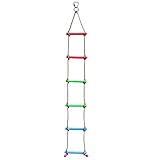
Overview: The Rainbow Craft 6.6FT Climbing Rope Ninja Ladder serves a specialized niche in children’s fitness equipment, transforming backyard spaces into ninja warrior courses. Designed specifically for kids aged 3-12, this polypropylene ladder prioritizes safety certifications and accessory integration over traditional climbing rope functionality for vertical training.
What Makes It Stand Out: CPC certification ensures all plastic, polyester, and metal components meet strict children’s product safety standards—a critical differentiator in this category. The rainbow-colored design appeals visually to young users, while the swing rope ladder format develops coordination differently than vertical ropes. Its compatibility with broader ninja warrior accessories like rings, monkey bars, and cargo nets creates expandable obstacle courses that grow with your child’s interests.
Value for Money: At $29.99, this represents excellent value for parents investing in safe, certified outdoor play equipment. While shorter than adult training ropes, the specialized design and safety validation justify the price point for its target demographic, offering peace of mind.
Strengths and Weaknesses: Outstanding strengths include authoritative safety certification, quick setup with strong hooks, portable design, and seamless integration with ninja course systems. The 220-pound weight capacity provides ample safety margin for children. However, the 6.6-foot length and ladder configuration make it unsuitable for adult strength training. The product cannot serve dual purposes, limiting long-term utility as children age out.
Bottom Line: Perfect for parents building ninja warrior courses for young children. Purchase this for safety-certified fun, not for adult fitness applications.
4. Keepark 10ft Gym Climbing Rope - Natural Hemp Rope Climbing Rope1.5 Inch in Diameter No Mounting Bracket Included

Overview: The Keepark 10ft Gym Climbing Rope offers a natural hemp alternative for traditionalists seeking authentic climbing experiences. This no-frills rope emphasizes material purity and time-tested exercise methodology over modern synthetic enhancements, appealing to purists who value historical fitness approaches.
What Makes It Stand Out: Natural hemp construction provides distinct tactile feedback that many climbers prefer over synthetic alternatives. The rope develops character with use while maintaining structural integrity. Heat-shrinkable end caps with black rubber sleeves prevent abrasion and offer hand protection during intense sessions. Its historical connection to military and combat training traditions adds authenticity to home gym setups.
Value for Money: At $33.99 ($3.40 per foot), this is the most cost-effective option per foot among standard climbing ropes. The absence of a mounting bracket keeps costs down, assuming users have existing anchor points. For hemp enthusiasts, this represents accessible entry into natural fiber training.
Strengths and Weaknesses: Key strengths include authentic natural hemp grip, affordable pricing, easy portability, and straightforward installation to any fixed point. The material naturally resists rot when properly maintained. However, hemp’s rougher texture may challenge beginners accustomed to softer synthetics. The unspecified UV degradation resistance raises concerns for permanent outdoor installation. No mounting hardware included requires separate purchase.
Bottom Line: Choose this rope if you prioritize natural materials and traditional training methods. It’s a budget-friendly authentic option for experienced climbers comfortable with hemp’s unique characteristics.
5. Climbing Rope Climbing Rope 1.5 Inch Diameter 15Feet Length Gym Climbing Rope for Workout Fitness & Strength Training, Gym Rope, Exercise Climbing Rope in Black for Adults or Kids Outdoor & Indoor

Overview: The DAJOUJS 15-foot climbing rope represents the premium tier in home gym equipment, offering maximum length and weight capacity for serious athletes. This professional-grade rope extends vertical training possibilities significantly, accommodating dynamic movements and progressive skill development for both adults and supervised children.
What Makes It Stand Out: The impressive 1,000-pound weight capacity doubles most competitors, ensuring absolute safety margins for intense training. The 15-foot length enables full-body climbing sequences that shorter ropes cannot support. A robust metal loop attachment (2.75" x 1.75") provides secure anchoring, while the 3-strand twist construction maximizes abrasion and UV resistance for outdoor durability.
Value for Money: At $44.79 ($2.99 per foot), this offers the best per-foot value despite the highest total price. The extended length and professional specifications justify the investment for committed athletes. For commercial gyms or serious home fitness enthusiasts, the cost translates to years of versatile, high-intensity training.
Strengths and Weaknesses: Unmatched strengths include exceptional length, industry-leading weight capacity, professional construction, and versatile mounting options. The black color resists visible wear. However, the U-bracket mounting hardware isn’t included, requiring additional purchase. The 15-foot length demands adequate vertical space, potentially limiting installation options. Beginners may find the size intimidating.
Bottom Line: This is the top choice for dedicated athletes, commercial facilities, or anyone seeking maximum versatility and safety. The investment pays dividends in training possibilities.
6. DELLNA 8mm Static Climbing Rope - Heavy Duty Climbing Rope for Rock Climbing, Tree Climbing Gear, Arborist Rope, and Camping Rope, High-Tensile Strength - 10m (32ft), 20m (64ft), 30m (96ft) - Purple

Overview: The DELLNA 8mm Static Climbing Rope positions itself as an all-in-one solution for entry-level climbers and outdoor enthusiasts seeking immediate usability. This purple rope comes in three lengths (10m, 20m, 30m) and includes essential accessories like carabiners, gloves, and a storage bag, making it immediately ready for various applications from tree climbing to camping utility tasks.
What Makes It Stand Out: The complete kit approach distinguishes this offering—most competitors sell rope alone. The vibrant purple color provides excellent visibility in forested or rocky terrain, while the <0.01% skin-slide rate and low elongation specifications demonstrate serious engineering. The high-strength polyester sheath promises durability across harsh weather conditions.
Value for Money: At $13.99, this represents exceptional value, essentially bundling $25-30 worth of gear separately. The inclusion of two carabiners and protective gloves eliminates additional purchases for beginners tackling basic tree work or establishing camp utilities.
Strengths and Weaknesses: Strengths include the comprehensive accessory package, high visibility, weather resistance, and impressive affordability. The 9KN (2023 lbf) rating suffices for static loads and top-rope setups. Weaknesses center on the 8mm diameter feeling thin for some users, and the static design makes it unsuitable for lead climbing where dynamic rope is mandatory. The gloves, while functional, aren’t professional-grade.
Bottom Line: Ideal for recreational tree climbing, hammock suspension, and emergency kits. Serious rock climbers should look elsewhere, but for utility purposes and beginner arborist work, this package delivers unmatched convenience and value for money.
7. NewDoar Climbing Rope 8(5/16in),10mm (3/8in), High Strength Accessory Cord Rope with 2 Steel Hooks, for Outdoor Rescue Rappelling Rope Down Cliffs ledges Safety Escape Tow Strap Equipment(red)

Overview: The NewDoar Climbing Rope delivers a certified safety solution in a substantial 10mm diameter package. Available in four colors and three lengths up to 30 meters, this polyester rope targets climbers seeking EN-standard compliance without premium pricing. The 55g/meter weight balances portability with handling comfort for extended use.
What Makes It Stand Out: EN 892:2012+A1:2016 certification provides verified peace of mind that budget options lack. The reinforced inner core with double-braid construction enhances abrasion resistance significantly, while the 316 anti-oxidation coated steel carabiners resist corrosion better than standard aluminum hardware. Machine-stitched sewing buckles offer reliable termination points that won’t fail under load.
Value for Money: At $16.99, you’re paying modestly more than uncertified alternatives for legitimate safety validation. The 12kN breaking strength exceeds many competitors in this price bracket, making it a smart investment for climbers transitioning from gym to crag.
Strengths and Weaknesses: Strengths include formal certification, robust 10mm diameter, corrosion-resistant hardware, and versatile applications from rappelling to magnet fishing. The rope handles smoothly and knots securely in various conditions. Weaknesses include slightly heavier weight than 8mm options and the static design limiting use to top-rope and rappel scenarios. Some users may want more than two carabiners for complex anchor builds.
Bottom Line: A trustworthy choice for safety-conscious beginners and intermediate climbers focused on top-roping, rappelling, and rescue practice. The certification justifies every penny spent.
8. NTR Orange/Black/Blue Climbing Rope 10M(32ft) 20M(64ft) 30M(96ft) 50M(160ft), 8MM Static Rock Climbing Rope with 2 Steel Hooks, Rappelling Rope for Outdoor, Hiking Safety Escape Rope, Rescue Parachute

Overview: The NTR 8mm Static Climbing Rope punches above its weight class with impressive strength ratings and professional-grade hardware. This rope combines a 48-strand polyester sheath with a 13-core nylon inner construction, achieving 15KN maximum pull force while maintaining water resistance and compact handling characteristics.
What Makes It Stand Out: The ASTM-certified carabiners rated at 25KN (5600lbs) dramatically exceed typical kit hardware standards and inspire confidence. The thermal cutting and sealing process with heat-shrink tubing provides superior end protection compared to simple melting techniques. Single-hand locking carabiners enhance safety during critical moments when you can’t fumble with gear.
Value for Money: At $14.99, this offering delivers professional specifications at entry-level pricing. The carabiners alone would cost $15-20 separately, essentially making the rope free. For users needing high safety margins without breaking the bank, this is exceptional value.
Strengths and Weaknesses: Strengths include outstanding strength-to-weight ratio, premium certified carabiners, professional rope finishing, and water-resistant construction. The versatility spans climbing, rescue, and utility applications effectively. Weaknesses include the 8mm diameter potentially feeling less substantial to some users, and the static nature remains unsuitable for lead climbing scenarios. The included bag is quite basic and may not last.
Bottom Line: Perhaps the best value in the budget category for serious recreational climbers, arborists, and rescue workers. The hardware quality alone makes this a must-buy for safety-focused users.
9. LTTGX Gym Climbing Rope for Strength Training & Fitness Workout - 10ft Exercise Rope for Climbing Training Home Gym

Overview: The LTTGX Gym Climbing Rope serves fitness enthusiasts seeking authentic rope climbing training in indoor environments. This 10-foot, 1.5-inch diameter natural hemp rope supports 500 pounds and targets strength building rather than vertical ascent. Designed specifically for home gyms and fitness facilities, it prioritizes grip development and upper body conditioning over mountaineering applications.
What Makes It Stand Out: Natural hemp construction provides superior grip and hand comfort compared to synthetic alternatives, reducing blister risk during extended workout sessions. The 1.5-inch diameter challenges grip strength more effectively than standard climbing ropes. Its compact 10-foot length suits indoor spaces with standard ceiling heights perfectly.
Value for Money: At $26.99 for a 10-foot rope, the price reflects specialization rather than length. Comparable fitness ropes cost $30-40, making this competitive for the category. However, users seeking outdoor climbing applications will find zero value here.
Strengths and Weaknesses: Strengths include excellent grip texture, hand-friendly natural fibers, high 500-pound rating, and easy storage between workouts. The rope excels for pull-ups, arm extensions, and strength training routines. Weaknesses include extreme length limitation (unsuitable for actual climbing), indoor-use-only recommendation, and lack of mounting hardware. Moisture exposure degrades hemp quickly.
Bottom Line: Perfect for dedicated strength training and CrossFit-style workouts. Do not purchase for outdoor climbing, rappelling, or utility purposes—this is exclusively a fitness tool that excels within its narrow design parameters.
10. 150Ft 1/2 Inch Heavy Duty Climbing Rope - for Tree Swing, Pulling, Outdoor & Gym Use (Red)

Overview: This 150-foot, half-inch diameter Heavy Duty Climbing Rope targets professional arborists and serious utility users requiring maximum strength. With 9000-pound breaking strength from its 48-strand core and 24-strand sheath construction, this nylon rope replaces multiple specialized lines in a professional kit. The all-weather design promises over five years of UV, moisture, and chemical resistance exceeding typical rope lifespans.
What Makes It Stand Out: The extraordinary length and strength combination suits tree work, heavy pulling, and emergency towing scenarios where shorter ropes fail completely. Engineered softness prevents hand fatigue during prolonged rigging operations. Heat-sealed ends with flexible braiding ensure reliable knotting without fraying, critical for professional applications where failure isn’t an option.
Value for Money: At $45.99 ($0.31/foot), this represents solid value for heavy-duty nylon rope. Comparable arborist lines cost $0.40-0.60/foot. For professionals, the multi-scenario utility eliminates need for separate rigging, climbing, and pulling ropes.
Strengths and Weaknesses: Strengths include massive breaking strength, professional length, exceptional durability, and versatile utility from swing setups to emergency rescue. The tangle-free handling saves valuable time on job sites. Weaknesses include substantial weight and bulk for casual camping, overkill for recreational climbing, and lack of included hardware. Storage requires significant space.
Bottom Line: An essential tool for arborists, landscapers, and anyone needing serious pulling power. Recreational climbers should choose dynamic ropes; this is pure utility-grade equipment that excels in professional applications.
Understanding Portable Climbing Ropes for Garage Ceilings
What Makes a Climbing Rope “Portable”?
True portability extends beyond simply being removable. A genuinely portable climbing rope system features quick-detach hardware that doesn’t compromise structural integrity, lightweight yet durable materials that pack down efficiently, and installation methods that leave minimal permanent marks on your ceiling. Unlike fixed gym installations that require bolts sunk deep into structural beams, portable systems use engineered anchor points that distribute load across multiple joists or utilize heavy-duty removable mounts. The rope itself should detach from the anchor via a locking carabiner or similar mechanism, allowing you to take it down after each session without tools.
Benefits of Garage Ceiling Climbing Setups
Garage ceilings typically offer 9-12 feet of vertical space—perfect for rope climbs without requiring the 15-20 foot heights of commercial gyms. This compact training zone builds crushing grip strength, dynamic pulling power, and core stability through natural movement patterns. The psychological benefit is equally valuable: having equipment ready to deploy eliminates friction between you and your workout. Plus, the temperature variations in garages (cooler in winter, warmer in summer) can actually enhance conditioning adaptations when used strategically. Most importantly, portable systems preserve your garage’s primary function; your car returns home each evening without negotiating around permanent fixtures.
Safety First: The Non-Negotiable Foundation
Weight Capacity and Load Ratings
Never trust a rope’s advertised weight limit without understanding the physics behind it. A 300-pound static rating doesn’t account for dynamic forces generated during explosive movements. When you climb, each pull can generate 1.5-2 times your bodyweight in peak force. Multiply your weight by 2.5 to determine your minimum safe working load. A 200-pound climber needs equipment rated for at least 500 pounds. Look for UIAA (International Climbing and Mountaineering Federation) certified ropes or military-spec climbing ropes that list both static tensile strength and dynamic impact force ratings. The anchor hardware must exceed the rope’s rating—this is where most garage setups fail catastrophically.
Material Integrity and Industry Standards
Climbing rope materials fall into two categories: natural (manila, sisal) and synthetic (nylon, polyester, polypropylene). For garage use, synthetic ropes dominate due to moisture resistance and consistent strength. Nylon offers superior energy absorption for dynamic movements but stretches, which some climbers dislike. Polyester provides minimal stretch with excellent abrasion resistance, making it ideal for repeated garage-to-storage cycles. Regardless of material, insist on ropes manufactured to EN 892 (European climbing rope standard) or UIAA 101. These certifications ensure the rope underwent drop testing, abrasion testing, and UV degradation analysis. Avoid “fitness ropes” or “battle ropes” lacking these certifications—they’re not engineered for vertical load-bearing.
Installation Hardware: What Matters Most
The weakest link determines system safety. For portable setups, you need either a beam clamp system rated for overhead lifting or a removable ceiling mount using 3/8-inch or thicker lag bolts into structural joists. Beam clamps grip the joist from both sides, distributing load without permanent drilling—perfect for renters. For drilled installations, use forged steel eye bolts with a load rating stamped on the shank, never bent or welded eyes. The eye must be large enough for a locking carabiner to move freely without binding. Each connection point needs a locking carabiner (screw-gate or auto-locking), and redundant systems should use two independent anchor points connected by a load-distributing sling.
Key Features to Evaluate Before Buying
Rope Material and Construction Quality
Examine the rope’s core-to-sheath ratio. Quality climbing ropes feature a kernmantle construction: a protected inner core bearing the load, wrapped in a durable outer sheath. For garage training, a thicker sheath (around 40-50% of total diameter) resists abrasion from repeated installations. The weave should be tight and uniform—loose weaves snag on hardware and degrade faster. Run your fingers along the rope; you shouldn’t feel core lumps or thin spots. For synthetic ropes, check the melt point (nylon melts around 220°C, polyester around 260°C) because garage environments can reach high temperatures near roofs, potentially weakening fibers over time.
Length, Diameter, and Grip Dynamics
Standard climbing ropes are 1.5-2 inches in diameter, but garage ceilings often benefit from slightly thinner profiles (1.25-1.5 inches) that are easier to grip for beginners while still challenging advanced users. Length calculation is critical: measure floor-to-ceiling height, subtract 6 inches for hardware and clearance, then add 3-4 feet for knot tying and ground excess. A 10-foot ceiling needs roughly 13-14 feet of rope. Too short, and you can’t safely mount/dismount; too long, and excess rope becomes a tripping hazard. Consider adjustable systems with spliced eye loops at intervals, allowing length customization without cutting.
Attachment Mechanisms and Quick-Release Systems
The rope-to-anchor connection determines both safety and portability. The best systems use a spliced eye (a permanent loop formed by weaving the rope back into itself) rather than a knot. Spliced eyes maintain 90% of rope strength; knots reduce strength by 30-50%. The eye should attach to your ceiling anchor via a locking carabiner with a keylock nose (no hook to catch rope fibers). For true portability, look for anchor plates with multiple holes that allow micro-adjustments in joist spacing, and quick-release pins that let you detach the entire anchor assembly in under a minute.
True Portability: Weight and Packability
A genuinely portable system should pack into a gym bag. The rope itself will weigh 3-5 pounds depending on length and material. Anchor hardware adds another 2-4 pounds. Systems exceeding 10 pounds total defeat the purpose of portability. Look for rope bags with integrated tarp bottoms that keep your rope clean during storage and provide a deployment mat that protects the rope from garage floor oil and debris. Some premium systems include modular anchor kits where the same hardware works for both ceiling and outdoor tree branch setups, maximizing versatility.
Garage Ceiling Assessment and Preparation
Locating Load-Bearing Joists and Beams
Your garage ceiling likely has either exposed joists (easiest scenario) or drywall covering structural members. Use a stud finder rated for deep scanning (at least 1.5 inches) to locate joists, which typically run 16 or 24 inches on-center in modern construction. Tap the ceiling with a hammer—hollow sounds indicate empty space, while solid thuds suggest joists. For finished ceilings, look for nail pops or seams that often reveal joist locations. Never anchor to drywall alone; it can only support about 5 pounds per anchor. Joists must be solid wood, typically 2x6 or larger. Engineered I-joists require special hardware that clamps the vertical web rather than screwing into the thin OSB webbing.
Ceiling Height, Clearance, and Spatial Requirements
Minimum functional ceiling height is 8 feet—anything shorter limits exercise variety and increases ground impact risk. Ideal height is 10-12 feet, allowing full arm extension overhead with feet still on the ground. Measure clearance around the rope: you need a 6-foot diameter circle free of vehicles, tools, and obstructions. Consider the “fall zone”—the area where you’d land if you lost grip. This zone should have impact-absorbing flooring like rubber gym mats at least 4 inches thick. Overhead door tracks, garage door openers, and lighting fixtures often interfere; plan your rope location to avoid these by at least 2 feet laterally.
Evaluating Your Ceiling Material and Structure
Exposed joist ceilings are simplest: you can visually inspect wood condition and install directly. Drywall ceilings require cutting access holes to verify joist location and condition—a 2-inch hole saw lets you peek inside before committing to larger cuts. Check for water staining, which indicates roof leaks that rot joists and compromise strength. In older garages (pre-1980), watch for notched joists where electrical wires pass; these weak points can’t bear loads. If your garage has a finished ceiling with insulation, you’ll need to compress the insulation with a mounting plate to prevent thermal bridging and ensure solid metal-to-wood contact.
Installation Best Practices
Essential Tools for Safe Installation
Your toolkit should include: a 3/8-inch variable-speed drill with clutch control, a set of sharp spade bits and twist bits, a torque wrench (critical for proper lag bolt tension), a stud finder with deep-scan mode, a 4-foot level, and a chalk line for marking joists. For beam clamp systems, add an adjustable wrench and socket set. Always have a stud finder that detects live wires—garage ceilings often house electrical for door openers and lights. A headlamp frees both hands while working overhead. Keep a small magnet handy to fish dropped hardware from inside ceiling cavities.
Step-by-Step Mounting Process
First, mark your joist location and drill a pilot hole using a bit slightly smaller than your lag bolt’s root diameter. For a 3/8-inch lag bolt, use a 1/4-inch pilot hole drilled to the full depth of the bolt. Wrap the bolt threads with plumber’s tape to prevent squeaking and improve grip. Drive the bolt with a socket and torque wrench to the manufacturer’s spec—typically 40-50 foot-pounds for 3/8-inch bolts in softwood. Over-tightening strips the wood threads; under-tightening risks pull-out. If using a mounting plate, position it across two joists for load distribution. Attach your locking carabiner to the eye bolt, then clip in your rope’s spliced eye. Give everything a hard tug test before trusting your weight to it.
Load Testing and Safety Verification
Before your first climb, perform a static load test: hang a weight equal to 1.5 times your bodyweight from the rope for 10 minutes. A heavy sandbag works perfectly. Watch for any movement in the anchor, listening for creaking wood. Next, do a dynamic test: attach the rope to a vehicle tow hitch and apply gradual horizontal tension to simulate side-to-side forces. Check that the anchor doesn’t rotate or loosen. Finally, do a “bounce test” where you hang from the rope and perform small pull-ups, watching the ceiling for flex. Any cracking sounds or visible joist deflection means immediate removal and professional assessment. Document your installation with photos for insurance purposes.
Training Techniques for All Levels
Foundational Exercises for Beginners
Start with rope hangs: simply holding your bodyweight for 30-second intervals builds tendon strength and grip endurance. Progress to “rope rows” where you keep feet on the ground and pull your chest to the rope at different angles. The “L-sit rope climb” teaches leg engagement: sit on the ground, lift your legs to horizontal, and pull yourself up one hand at a time while maintaining the L-position. These movements build the neural pathways and connective tissue resilience needed for full climbs. Practice “rope locks”—wrapping the rope around your leg to create a friction brake—while still on the ground. This skill becomes your safety net during fatigue.
Progressive Movements for Intermediate Users
The classic gym-class climb using feet and hands in opposition builds efficient movement patterns. Focus on “silent feet”—placing your feet deliberately rather than sliding—to develop precision. The “no-feet climb” challenges pure upper body strength: keep legs straight and piked, climbing only with arms and core. For power development, try “rope double-clutches”: pull explosively with both hands, gaining 12-18 inches of height, then reset. Time-based intervals work well: 30 seconds of continuous climbing followed by 90 seconds rest, repeated for 5-8 rounds. This builds the lactic acid tolerance crucial for sustained efforts.
Advanced Techniques and Challenges
The “L-sit to hand-over-hand” requires starting seated on the floor, lifting into an L-sit, then climbing to the top without dropping your legs—a brutal core and grip test. “Rope pull-ups” where you climb hand-over-hand without using your feet, then lower slowly, builds eccentric strength. For conditioning, “rope complexes” combine multiple movements: 5 pulls, 10 legless raises, 15-second L-sit hold, repeated without touching down. The “rope traverse” involves setting two ropes parallel and moving laterally between them, developing stabilizer muscles and mental focus. Always terminate advanced sessions before grip failure—plan your exit strategy while fresh.
Building Effective Workout Programs
Structuring Your Climbing Sessions
Treat rope training like heavy lifting: warm up with 5-10 minutes of dynamic shoulder mobility and light hangs. Structure workouts in blocks: strength (low reps, max effort climbs), endurance (high volume, submaximal effort), or power (explosive intervals). A sample strength block: 5 sets of 1 full climb with 3-minute rests, focusing on controlled movement. Endurance block: 10 sets of 30-second hangs with 60-second rests. Power block: 8 sets of 3 explosive double-clutches. Cool down with forearm stretches and finger extensor exercises to prevent elbow tendinopathy. Track volume meticulously: sudden jumps in weekly rope time cause overuse injuries.
Combining Rope Training With Other Modalities
Rope climbs pair excellently with kettlebell swings for a posterior chain emphasis day. Alternate rope intervals with push-up variations to balance pulling and pushing movements. For full-body circuits, combine rope climbs with box jumps and sandbag carries. The rope serves as an active recovery tool on deadlift days: light rope rows increase blood flow without taxing the central nervous system. Conversely, heavy rope sessions should precede lower-body work, not follow it—grip fatigue compromises barbell safety. Consider periodization: dedicate one 4-week block to rope-dominant training, then maintain with 1-2 sessions weekly while emphasizing other modalities.
Maintenance and Equipment Longevity
Routine Inspection Checkpoints
Before each session, run the full length of rope through your hands, feeling for flat spots, stiff sections, or sheath slippage. Check the spliced eye for fraying where it contacts the carabiner. The carabiner gate should snap shut with authority and show no side-to-side play. Monthly, inspect the ceiling anchor: tighten lag bolts to torque spec and look for hairline cracks in the mounting plate. Examine the rope’s core by pinching a small section—if it feels spongy or you can move the sheath independently of the core, internal damage exists. UV exposure from garage windows degrades synthetic fibers; rotate rope storage location monthly to ensure even exposure.
Cleaning Methods for Different Materials
Synthetic ropes need annual washing if used weekly. Use a front-loading washing machine on gentle cycle with mild detergent—never top-loaders with agitators that create core shots. Air dry completely before storage, preferably hung in a figure-8 shape to prevent memory coils. Natural fiber ropes require different care: brush off surface dirt and occasionally wipe with a damp cloth containing a drop of tea tree oil to prevent mildew. Never soak natural ropes; they rot from the inside out. For all ropes, avoid harsh chemicals like bleach or solvents that break down nylon’s molecular structure. Store ropes in breathable bags, not plastic tubs that trap moisture.
Knowing When to Retire Your Equipment
Retire any rope after a hard fall where you dropped more than a foot onto the rope—this creates invisible core damage. Sheath damage exposing more than 2mm of core requires immediate retirement. If the rope has been subjected to chemical exposure (battery acid, solvents common in garages), retire it regardless of appearance. Age matters: even unused, synthetic ropes lose strength after 5 years due to UV and ozone degradation. Natural ropes last 2-3 years in garage environments. Keep a logbook documenting installation date, weekly usage hours, and any incidents. When in doubt, cut the rope into short segments for garden ties and replace it—your safety is worth more than a $100 rope.
Common Mistakes That Compromise Safety
Critical Installation Errors
The most dangerous mistake is using drywall anchors instead of joist-mounted hardware. Another fatal error is undertightening lag bolts—hand-tight is nowhere near sufficient. Some users install anchors parallel to joist direction rather than perpendicular, which allows the anchor to split the joist grain. Installing too close to joist ends (within 12 inches) leverages the wood’s weakest point. Using non-locking carabiners or forgetting to screw the gate shut causes drops. Perhaps most overlooked: failing to account for torsional forces. A rope climber twisting creates rotational torque that can loosen anchors over time; use lock washers or thread-locking compound on all bolts.
Training Habits to Avoid
Jumping straight to legless climbs without building connective tissue tolerance invites elbow and shoulder injuries. “Death gripping” the rope—squeezing maximally the entire time—fatigues forearms prematurely and masks true grip weakness. Train a relaxed grip, engaging only as needed. Climbing while fatigued leads to uncontrolled descents; always leave one climb “in the tank.” Ignoring rope rotation: using the same hand position every time creates sheath wear in one spot. Rotate your rope end-for-end monthly. Finally, training through pain: sharp forearm pain indicates medial epicondylitis developing. Rest and rehab immediately—rope training’s high volume makes small issues catastrophic quickly.
Legal and Insurance Considerations
Homeowner’s Insurance and Liability
Most standard homeowner’s policies cover exercise equipment, but there’s a gray area with self-installed overhead load-bearing systems. Contact your insurance agent before installation and document the conversation. Some policies require professional installation certification for coverage. If you’re training others in your garage—even informally—your policy likely doesn’t cover their injuries. Consider an umbrella policy for additional liability protection. Keep all equipment certifications and installation photos; insurers may deny claims if you can’t prove equipment met safety standards. If you’re a renter, your renter’s insurance definitely won’t cover structural modifications, and your lease likely prohibits them without explicit written permission.
Local Building Codes and Permit Requirements
Surprisingly, a single climbing rope often falls under “temporary exercise equipment” and doesn’t require permits. However, installing multiple anchor points or modifying joist structure triggers building code scrutiny. Most jurisdictions follow IRC (International Residential Code) standards, which require any structural modification to support 40 pounds per square foot live load. Your rope anchor concentrates load in a tiny area, potentially exceeding this. Call your local building department anonymously to ask about “temporary overhead exercise equipment.” If your garage is part of an HOA, covenant restrictions may prohibit visible modifications or any activity that creates noise or perceived risk to neighbors. Always get written approval before drilling.
Frequently Asked Questions
How much weight can a garage ceiling climbing rope safely support?
A properly installed system in a solid wood joist can support 500-1,000 pounds static load, but dynamic climbing forces multiply your bodyweight by 2-3 times. Calculate your minimum safe rating as bodyweight × 2.5. The anchor hardware, not the rope, typically becomes the limiting factor. Always test with static load before trusting dynamic movements.
Can I install a climbing rope in any garage?
No. Garages with metal studs, engineered I-joists with thin OSB webs, or ceilings lower than 8 feet are unsuitable without professional reinforcement. You need solid dimensional lumber joists (2x6 minimum) with adequate height and clearance. Finished ceilings require destructive investigation to verify structure. When in doubt, consult a structural engineer.
What’s the ideal ceiling height for rope climbing?
8 feet is the functional minimum, allowing basic climbs with bent legs. 10-12 feet is ideal for full movement patterns and legless techniques. Measure from floor to bottom of joist, not drywall, and subtract 6 inches for hardware and safety clearance. Remember to account for your height plus arm reach when planning workout variety.
How do I accurately locate ceiling joists in a finished garage?
Use a deep-scan stud finder set to 1.5-inch depth, scanning in a grid pattern. Verify findings by driving a small finish nail through the drywall—if you hit solid wood after 1/2-inch, you’ve found a joist. Joists typically run from garage door toward the back wall, spaced 16 or 24 inches apart. Always probe in multiple spots to confirm direction and spacing.
Do I need a building permit to install a removable climbing rope?
Generally, no—single-point temporary exercise equipment usually doesn’t require permits. However, installing permanent anchor plates or drilling multiple holes may trigger code requirements. Call your local building department anonymously to confirm. HOA communities often have stricter rules requiring architectural review. Get written permission to avoid costly violations.
How often should I inspect my climbing rope and hardware?
Perform a quick visual and tactile inspection before every use. Monthly, conduct a detailed check of all hardware torque specs and rope condition. Annually, or after any fall, perform a full system test with static load. Keep a logbook of inspections and retire equipment based on usage hours rather than calendar time—heavy use warrants more frequent replacement.
Can I use a regular hardware store rope for climbing?
Absolutely not. Hardware ropes lack the core construction, strength ratings, and safety margins of certified climbing ropes. They’re not engineered for repeated dynamic loading or fall arrest. Only use ropes certified to EN 892 or UIAA 101 standards. The price difference is negligible compared to medical costs from equipment failure.
What’s the difference between dynamic and static ropes for garage training?
Dynamic ropes stretch 6-8% under bodyweight, absorbing impact forces—ideal for true climbing where falls are possible. Static ropes stretch less than 2%, providing efficient energy transfer for training movements. For garage ceilings under 12 feet where ground falls are minimal, static ropes offer better control and feedback. Many trainers prefer static ropes for strength work and dynamic ropes for skill practice.
How do I clean and store my climbing rope properly?
Wash synthetic ropes annually in a front-loading machine on gentle cycle with mild detergent. Air dry completely in a figure-8 shape. Store in a breathable rope bag in a climate-controlled area, not a hot garage. Avoid direct sunlight and chemical exposure. Natural fiber ropes need only brushing and occasional tea tree oil wipe-downs. Never store ropes wet or in plastic containers.
Can children safely use garage ceiling climbing ropes?
Children can use properly installed systems under direct adult supervision, but require additional precautions. Install a secondary safety line or use a harness system for beginners. Ensure the rope diameter fits small hands (1-1.25 inches). Set strict rules: no unsupervised use, no horseplay, and mandatory crash pads. Consider a knotted rope for easier gripping and descents. Children’s lighter weight is actually safer for the equipment, but their unpredictable movements demand vigilant spotting.