If you’ve ever watched an athlete explode off the ground with seemingly effortless power, you’ve witnessed the magic of plyometrics in action. That same transformative training method isn’t reserved for elite performers—it’s accessible to anyone with the right tools and knowledge. Plyo box sets have emerged as the cornerstone of explosive bodyweight strength development, offering a versatile platform that bridges the gap between raw potential and kinetic mastery. Whether you’re building a home gym or upgrading a commercial facility, understanding the nuances of these dynamic training tools will fundamentally change how you approach power, agility, and total-body conditioning.
The beauty of plyo box training lies in its deceptive simplicity. A sturdy box becomes your launchpad to develop fast-twitch muscle fibers, enhance neuromuscular coordination, and build the kind of functional strength that translates directly to athletic performance and daily life. But not all plyo boxes are created equal, and choosing the right set requires navigating a landscape of materials, dimensions, safety features, and programming considerations. This comprehensive guide cuts through the marketing noise to deliver evidence-based insights that will help you make an informed decision and maximize your training investment.
Top 10 Plyo Box Sets for Body-Weight Strength
Detailed Product Reviews
1. Rep Foam Soft Plyo Boxes - 6 inch and 12 inch Combo Set

Overview: The Rep Foam Soft Plyo Boxes represent a premium approach to plyometric training, prioritizing safety and joint protection. This combo set includes 6-inch and 12-inch platforms, both measuring 28"x28" to provide an exceptionally wide, stable base. Unlike traditional wooden or steel boxes, these foam constructions absorb impact, making them ideal for high-intensity CrossFit workouts and rehabilitation where shin protection is paramount.
What Makes It Stand Out: These boxes distinguish themselves through substantial weight and density, which dramatically increases stability and reduces tip-risk. The heavy-duty vinyl cover features cross-stitched handles for easy positioning, while four-sided Velcro flaps enable secure stacking. Size markings on two sides allow quick identification during fast-paced workouts, catering specifically to modern Cross Training demands.
Value for Money: At $279.99 for two boxes, this set commands a premium price but delivers commensurate quality. The investment makes sense for commercial gyms or serious home athletes who prioritize safety. While cheaper options exist, the enhanced stability and brand reputation of Rep Fitness justify the cost for those who train intensely and want equipment that protects joints long-term.
Strengths and Weaknesses: Strengths include superior impact absorption, exceptional stability, wide landing surface, quality materials, and reputable brand support. The Velcro stacking system is intuitive and secure. Weaknesses are the limited height variety (only two sizes), large footprint requiring ample space, and high price point that may deter casual users. Foam can compress over years of heavy use.
Bottom Line: This set excels for athletes and facilities where safety is non-negotiable. If you’re tired of bruised shins and want professional-grade equipment that inspires confidence during max-effort jumps, the Rep Foam boxes are worth every penny. For casual users or those on tight budgets, more economical steel options may suffice.
2. Power Systems Step Bench & Weight Bench | Aerobic Platform & Plyo Box for Cardio, Strength | Commercial Grade Full Body Home Gym Stepper | Adjustable Multifunctional Deck & Resistance Band Clips
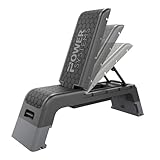
Overview: The Power Systems Deck redefines versatility as a 3-in-1 fitness solution functioning as an aerobic step, plyometric box, and adjustable weight bench. With heights from 8 to 14 inches, this commercial-grade platform adapts to cardio, explosive jump training, and strength exercises with incline/decline capabilities. Its neutral dark gray aesthetic blends seamlessly into any gym environment.
What Makes It Stand Out: This deck’s genius lies in its quick-transition design featuring more than a dozen positions adjusted via convenient release levers. The integrated internal storage compartment keeps resistance bands organized—a feature rarely seen in competitors. Rubber feet maintain stability at maximum height, while the textured non-slip surface ensures secure footing during intense workouts.
Value for Money: At $214.99, this occupies a sweet spot between single-function equipment and expensive multi-gyms. You’re getting three pieces of gear in one compact unit. For home gym owners with limited space, this eliminates need for separate platforms, plyo boxes, and benches, delivering exceptional functional value despite not being the cheapest option.
Strengths and Weaknesses: Strengths include remarkable versatility, space-saving storage (stacks flat and fits under beds), stable 330-lb capacity, quick adjustments, and clever built-in storage. The dense plastic build is durable yet manageable. Weaknesses include limited plyometric height (14" max), lower weight capacity than dedicated benches, and plastic construction feeling less premium than steel alternatives.
Bottom Line: For home gym enthusiasts seeking maximum functionality in minimal space, this deck is a game-changer. It handles most training needs for average users. However, dedicated power athletes requiring higher box jumps or heavy lifters exceeding 330 lbs should consider specialized equipment. It’s the ultimate compromise for versatile home fitness.
3. Titan Fitness Pro-Duty Steel 12" Plyometric Box Set, Anti-Slip Plyo Box Jump Platform, Home Gym Conditioning and Strength Training Exercises, Perform Box Jumps, Step Ups, Dips, Push Ups

Overview: The Titan Fitness Pro-Duty Steel Plyometric Box delivers no-nonsense durability for athletes seeking a straightforward jumping platform. This 12-inch box features 11-gauge steel construction with powder-coated red finish, providing a sturdy foundation for box jumps, step-ups, dips, and agility drills. Its tapered design allows convenient stacking, making it practical for gyms with limited storage space.
What Makes It Stand Out: Titan’s approach focuses on simplicity and ruggedness. The anti-slip rubber landing surface provides secure footing without adding excessive weight. At this price point, steel construction is a standout—offering commercial-grade durability wooden boxes can’t match. The lightweight yet robust design makes it easy to reposition while maintaining stability for explosive movements.
Value for Money: At $79.99, this box represents exceptional value for entry-level athletes or those expanding their home gym on a budget. Steel construction typically commands higher prices, making this accessible without sacrificing durability. While limited to a single height, its versatility across exercise types and expected longevity make it a smart long-term investment for beginners and intermediate users.
Strengths and Weaknesses: Strengths include affordable steel construction, excellent durability, anti-slip surface, easy stackability, and manageable weight. The powder-coated finish resists corrosion and looks professional. Weaknesses are the fixed 12-inch height limiting progression, unforgiving steel edges that can injure shins on missed jumps, and basic design lacking handles. It’s also less joint-friendly than foam alternatives.
Bottom Line: This box is perfect for budget-conscious athletes wanting durable steel construction without breaking the bank. It excels as starter equipment or a supplemental piece. However, those prioritizing safety or seeking progressive height options should consider foam or multi-box sets. For straightforward, reliable performance, it’s hard to beat at this price.
4. GarveeLife 12/18/24/30 in Plyometric Jumping Box Set, Steel Plyo Box for Exercise, Metal Exercise Step Up Box with Anti-Slip Surface for Home Gym Training, Black
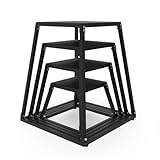
Overview: The GarveeLife Plyometric Jumping Box Set provides a complete progressive training system with four steel boxes ranging from 12 to 30 inches. This comprehensive package enables athletes to develop explosive power through graduated height increases, accommodating everyone from beginners learning proper form to advanced performers executing high-intensity box jumps. The trapezoidal structure enhances stability during dynamic movements.
What Makes It Stand Out: Getting four heavy-duty steel boxes for under $150 is remarkable. Each box features an anti-slip rubber platform and stabilizing rubber stoppers that prevent sliding on various floor surfaces. The trapezoidal design isn’t just aesthetic—it creates a lower center of gravity for enhanced stability. Clear height markings and straightforward assembly make this set accessible for home gym owners wanting professional-grade equipment without premium pricing.
Value for Money: At $149.99 for four boxes, this set offers arguably the best price-per-box ratio in the steel plyo market. Comparable sets often cost twice as much. The progressive height system eliminates future upgrades, saving money long-term. While requiring assembly, the included hardware and clear instructions minimize hassle. For athletes committed to plyometric development, this represents an unbeatable entry point to a full training system.
Strengths and Weaknesses: Strengths include exceptional value, complete height progression, sturdy steel construction, anti-slip features, and trapezoidal stability. The set serves multiple users with different abilities simultaneously. Weaknesses include assembly time, steel’s unforgiving nature on missed jumps, unknown brand reputation compared to established competitors, and potential storage requirements for four separate units. Powder coating may chip with heavy use.
Bottom Line: This set is the smart choice for home gym owners wanting a complete plyometric solution without paying boutique brand premiums. It sacrifices some refinement for affordability but delivers where it counts: durability and functionality. If you’re comfortable with basic assembly and want maximum height options for minimal investment, this is your best bet.
5. Highpi Inflatable Plyo Box/Plyometric Box Stackable Jump Box Set of Four Training Equipment for Jumping Exercise, Workout, Crossfit 31’‘x31’‘x24’’

Overview: The Highpi Inflatable Plyo Box revolutionizes portable fitness equipment with its innovative air-filled design. This modular system consists of four 6-inch panels that connect via industrial-grade Velcro, creating configurable heights of 6, 12, 18, and 24 inches. Weighing just 10kg total, it offers unprecedented portability for athletes who train in multiple locations or have limited permanent space.
What Makes It Stand Out: Military-grade dual-walled PVC construction provides surprising stability while protecting joints better than rigid surfaces. Unlike foam or steel, this inflatable design eliminates storage concerns entirely—deflate and pack it away in the included carry bag. The package comes complete with an air pump, repair kit, and optional anchor straps for added stability, making it a true turnkey solution for mobile training.
Value for Money: At $139.98 for four configurable heights, Highpi competes aggressively with traditional options. You’re essentially getting a complete plyo system that travels anywhere. The included accessories (pump, repair kit, bag) add significant value. While longevity concerns exist with inflatable gear, the 1-year warranty on seams and valves provides peace of mind. For apartment dwellers or mobile trainers, the space savings alone justify the cost.
Strengths and Weaknesses: Strengths include extreme portability, joint-friendly impact absorption, versatile configurations, lightweight design, and comprehensive accessory package. It’s safer for beginners worried about missed jumps. Weaknesses include potential puncture vulnerability, less stability than solid options, requiring inflation/deflation, and possible perception of being less “serious” than traditional equipment. Performance may vary based on proper inflation.
Bottom Line: The Highpi inflatable box is ideal for mobile personal trainers, apartment residents, or anyone prioritizing portability and storage over absolute stability. It’s not intended to replace commercial gym equipment but rather to provide a practical alternative for space-constrained environments. If you need gym equipment that fits in a closet, this is your solution.
6. Plyometric Jump Box, 18 Inch Steel Plyo Box with Anti-Slip Top - Single/Set Plyometric Platform for Strength & Conditioning Training, Home Gym Exercise Box for Men & Women (Black)

Overview: This adjustable steel plyo box delivers four heights (12", 18", 24", 30") in a single package, supporting up to 550 pounds. The powder-coated steel construction features a trapezoidal design for maximum stability during box jumps, step-ups, and conditioning drills in home or commercial settings.
What Makes It Stand Out: The four-height adjustability system offers exceptional progression potential, growing with your fitness level from beginner to advanced. Tool-free assembly and a stackable design make it perfect for space-conscious home gyms. The textured anti-slip top and rubber base stoppers provide secure traction on any surface, protecting floors while keeping you stable.
Value for Money: At $29.99, this is exceptional value. Most steel plyo boxes cost $60-80 for a fixed height. Getting four heights with commercial-grade 550-pound capacity at this price is remarkable, making professional-level training accessible on a budget without sacrificing quality.
Strengths and Weaknesses: Strengths include outstanding weight capacity, versatile height options, stable base design, comprehensive anti-slip features, and space-saving storage. The main weakness is that height changes require disassembly, which interrupts workout flow compared to flip-style boxes. Steel construction also poses higher injury risk than foam during missed jumps.
Bottom Line: A budget-friendly powerhouse for serious home gym owners. The four-height versatility and robust construction make it ideal for progressive training, though users should master proper technique to minimize contact injury risks inherent to steel platforms.
7. Retrospec Leap Plyo Box Jump Platform Set - Heavy-Duty Steel Exercise Equipment for Home Gym Training

Overview: The Retrospec Leap Plyo Box Set provides a sturdy steel platform for explosive training, supporting up to 350 pounds. Its tapered design features a wide, stable base that narrows toward the top, creating a secure jumping surface for box jumps, step-ups, and calisthenics in home gym environments.
What Makes It Stand Out: The tapered geometry enhances stability while maintaining a smaller top footprint, reducing intimidation for newer athletes. Rubber stoppers on the base and non-slip surface provide excellent traction during dynamic movements. The stackable design allows multiple boxes to nest together, saving valuable floor space in compact home gyms.
Value for Money: At $99.99, this sits in the mid-range price category. While the 350-pound capacity is lower than some competitors, the quality steel construction and thoughtful design justify the cost. It’s priced fairly against similar steel boxes, though foam alternatives at this price point offer higher weight capacities and softer landings.
Strengths and Weaknesses: Strengths include the confidence-inspiring tapered design, excellent stability, space-saving nesting capability, and versatile training applications. Weaknesses are the moderate 350-pound weight limit, which may not suit heavier athletes or those using added weights. The steel construction lacks cushioning, increasing injury risk during missed jumps compared to foam boxes.
Bottom Line: This is a solid choice for intermediate users prioritizing stability and space efficiency. The tapered design builds confidence, but heavier athletes or those wanting maximum safety should consider higher-capacity or cushioned alternatives.
8. OLIXIS 3-in-1 Plyometric Jump Box Jumps for Home Gym, Non-Slip Multi-Use Cushioned Plyo Box for Conditioning, Strength Training 24 x 20 x 16 Inch, Classic Black
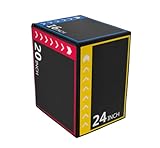
Overview: The OLIXIS 3-in-1 cushioned plyo box offers three heights (16, 20, and 24 inches) in a lightweight 10-pound package. The foam construction provides a safer landing surface than steel alternatives, while the color-coded sides allow quick height changes by simply flipping the box during training sessions.
What Makes It Stand Out: The rapid height adjustment system is brilliant—just rotate to your desired height mid-workout without tools or disassembly. The removable zippered cover makes cleaning simple, addressing hygiene concerns in home gyms. At only 10 pounds, it’s remarkably portable while still supporting intense use for conditioning and strength training.
Value for Money: Priced at $69.99, this box competes directly with other foam plyo boxes. The 3-in-1 functionality eliminates the need for multiple boxes, offering excellent value. While more expensive than basic steel options, the cushioned safety features and convenience features justify the premium for many users seeking injury prevention.
Strengths and Weaknesses: Strengths include the instant height adjustment, lightweight portability, cushioned surface that reduces injury risk, easy-clean zippered cover, and non-slip textured surface. The main weakness is the unspecified weight capacity—foam boxes typically support less than steel, potentially limiting use for heavier athletes or weighted exercises. Durability may also be a concern with heavy daily commercial use.
Bottom Line: Perfect for home gym owners prioritizing safety and convenience. The flip-to-change design and cushioned construction make it ideal for beginners and intermediate users, though heavy lifters should verify weight limits before purchasing.
9. STMHOM Jump Boxes, Heavy-Duty Steel Plyometric Jump Box for Home Gym, Step up Box for Workout with Rubber Pad Plyo Jumping Box Platform Conditioning Strength Training with Sizes 12", 18", 24"
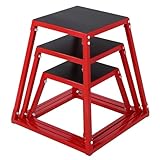
Overview: The STMHOM steel plyo box set includes three separate boxes at 12, 18, and 24 inches, supporting up to 500 pounds. The heavy-duty steel tubes feature a powder-coated finish for durability, while rubber pads on the base and top provide secure traction for various exercises from box jumps to dips.
What Makes It Stand Out: Having three dedicated boxes allows simultaneous use for complex circuits or multiple users—stack them for progressive jumps or use separately for different exercises. The trapezoidal design enhances stability, and the straightforward three-step assembly gets you training quickly without complicated tools or lengthy setup processes.
Value for Money: At $112.99 for three boxes, the per-box cost is reasonable, but the total investment is significant for a home gym. The 500-pound capacity matches premium options, justifying the price for serious athletes. However, foam 3-in-1 boxes offer similar versatility at lower cost and weight, representing better value for casual users.
Strengths and Weaknesses: Strengths include the high weight capacity, stable trapezoidal base, anti-slip rubber surfaces, quick assembly, and the ability to use multiple boxes simultaneously for varied training. Weaknesses are the higher total cost, storage requirements for three separate units, and steel construction’s injury risk compared to cushioned alternatives. The set lacks intermediate heights between the three sizes.
Bottom Line: Ideal for dedicated athletes wanting multiple platforms for complex training routines. The high capacity and simultaneous-use capability are excellent, but budget-conscious buyers or those with limited space should consider adjustable or 3-in-1 options instead.
10. OLIXIS 3-in-1 Plyometric Jump Box, Jumps for Home Gym, Non-Slip Multi-Use Cushioned Plyo Box for Conditioning, Strength Training 24 x 20 x 16 Inch, Multi-Color

Overview: The OLIXIS 3-in-1 plyo box delivers three training heights (16, 20, and 24 inches) in a single lightweight unit. Weighing just 10 pounds, this cushioned platform features color-coded sides for instant height identification and changes, making it perfect for dynamic workouts where speed and safety matter.
What Makes It Stand Out: The vibrant multi-color design isn’t just aesthetic—it provides immediate visual feedback for quick height selection during circuit training. The simple rotation mechanism allows seamless transitions between heights without breaking workout flow. The zippered, removable cover solves the common problem of keeping foam equipment clean and hygienic over time.
Value for Money: At $69.97, this represents strong value in the foam plyo box category. The 3-in-1 design eliminates the need for multiple purchases, while the cleaning-friendly cover extends product lifespan. It’s priced competitively against similar foam boxes and offers significant savings over buying three separate steel platforms for home use.
Strengths and Weaknesses: Strengths include the instant tool-free height changes, lightweight portability, injury-reducing cushioned surface, easy-maintenance cover, and visual color-coding system. The primary weakness is the unspecified weight capacity, which may not suit heavier users or weighted vest training. Foam construction may compress over time with extremely heavy use compared to steel alternatives.
Bottom Line: An excellent safety-conscious choice for home gyms. The color-coded, flip-to-change design and cushioned construction make it perfect for families or beginners, though serious power athletes should confirm weight ratings match their specific training needs.
What Are Plyo Boxes and Why Are They Essential for Explosive Training?
Plyo boxes—short for plyometric boxes—are elevated platforms designed specifically for jump training and explosive bodyweight movements. Originally popularized by track and field coaches in the 1960s, these tools have evolved from simple wooden crates to sophisticated training systems engineered for safety, versatility, and performance. At their core, they provide a stable target for jump landings, a platform for step-ups and depth jumps, and an unstable surface for advanced stability work.
The essential value of plyo box sets stems from their ability to facilitate the stretch-shortening cycle—a natural muscle mechanism that produces maximum force in minimal time. Unlike traditional strength training that often emphasizes slow, controlled movements, plyometric training with boxes teaches your muscles to store and release elastic energy efficiently. This translates to measurable improvements in vertical jump height, sprint speed, change-of-direction ability, and overall power output. For bodyweight enthusiasts, boxes unlock progressions that would otherwise be impossible, making them non-negotiable for anyone serious about developing explosive strength without external loading.
The Science Behind Plyometric Training
Understanding the Stretch-Shortening Cycle
The stretch-shortening cycle (SSC) represents the physiological foundation of all plyometric training. When you rapidly descend before a jump, your muscles undergo an eccentric lengthening phase that stores elastic energy in the muscle-tendon unit. This is immediately followed by an amortization phase—the brief transition period where your body switches from deceleration to acceleration. Finally, the concentric phase releases that stored energy, amplifying your power output beyond what concentric action alone could produce.
Plyo boxes optimize this cycle by providing consistent, predictable landing surfaces that allow you to focus on minimizing ground contact time. Research demonstrates that training the SSC through box jumps can improve muscle tendon stiffness, enhance motor unit recruitment patterns, and increase rate of force development by 20-30% in trained individuals. The key is the box’s height, which must be carefully selected to ensure the amortization phase remains under 200 milliseconds—any longer and you lose the elastic energy advantage.
Neuromuscular Adaptations from Box Training
Beyond the mechanical aspects, plyo box training drives profound neuromuscular adaptations. Each explosive effort recruits high-threshold motor units and improves intramuscular coordination—the synchronized firing of muscle fibers. Over time, this creates more efficient neural pathways, essentially rewiring your nervous system to produce force faster.
Studies using electromyography (EMG) show that box jumps activate the gastrocnemius, quadriceps, and gluteal muscles at 90-100% of maximal voluntary contraction—levels comparable to heavy back squats. This makes plyo boxes invaluable for athletes who need power development without the spinal loading associated with barbell training. Additionally, the predictive nature of box height allows for progressive overload of the nervous system, something that’s difficult to achieve with unstructured jump training.
Types of Plyo Box Sets: Materials and Design Variations
Wooden Plyo Boxes: Traditional and Sturdy
Wooden plyo boxes represent the original design that has stood the test of time. Typically constructed from 3/4-inch plywood with internal bracing, these boxes offer unparalleled stability and a firm landing surface that provides immediate tactile feedback. The rigid structure ensures zero compression upon landing, forcing your muscles to absorb and redirect forces quickly—critical for developing true explosive strength.
When evaluating wooden options, look for boxes with sanded edges and corners to prevent shin injuries during missed jumps. Premium sets feature interlocking joints and reinforced internal frames that distribute stress evenly. The downside? Weight. A solid wood box set can weigh 60-80 pounds total, making rearrangement challenging. They also lack forgiveness—miss a jump and you’ll know it immediately. For dedicated home gyms with permanent setups, wood remains the gold standard for performance purists.
Foam Plyo Boxes: Safety-First Approach
Foam plyo boxes have revolutionized home training by addressing the primary barrier to plyometric practice: fear of injury. Constructed from high-density foam cores (typically 1.8-2.2 lbs/ft³ density) wrapped in durable vinyl, these boxes compress slightly upon landing, reducing joint impact forces by 15-25% compared to wood. This makes them ideal for beginners, rehabilitation scenarios, and high-volume training where fatigue increases injury risk.
The trade-off comes in responsiveness. That same compression that protects joints also absorbs some of the elastic energy you’re trying to harness. Advanced athletes may find foam boxes feel “dead” compared to wood. Quality foam sets feature progressive density layers—softer on the outside, firmer toward the core—to balance safety with performance. Look for stitched seams rather than heat-welded ones, and ensure the vinyl cover is at least 18oz weight for durability.
Steel and Metal Frames: Commercial Durability
Commercial facilities demand equipment that withstands constant abuse, and steel-framed plyo boxes deliver. These typically feature tubular steel frames with rubberized landing surfaces, combining the stability of wood with enhanced durability. Powder-coated finishes resist chipping and corrosion, while non-slip rubber tops provide secure footing even when sweat-drenched.
The key advantage is longevity—quality steel boxes last decades in high-traffic environments. They also offer modular designs, with stackable frames that create multiple heights. However, they represent the most expensive category and can be overkill for home use. Pay attention to weld quality; continuous welds outperform spot welds significantly. Also, verify that rubber surfaces are bonded with industrial-grade adhesive, as delamination is the most common failure point.
Adjustable vs. Fixed-Height Sets
Adjustable plyo box sets typically feature nesting boxes or flip-to-adjust designs that offer 3-8 height options in a single footprint. This versatility is perfect for small spaces and varied programming, allowing seamless transitions between exercises. The best adjustable systems use locking pins or magnetic catches to prevent accidental collapse during use.
Fixed-height sets require purchasing multiple individual boxes, which consumes more space but provides superior stability—no moving parts means no potential failure points. For serious athletes training multiple qualities (strength, power, speed), a fixed-height set of 4-6 boxes (ranging from 12 to 36 inches) offers the ultimate in performance and reliability. The decision ultimately hinges on your space constraints and training specificity needs.
Key Features to Evaluate When Choosing Your Plyo Box Set
Height Progressions and Versatility
A well-designed plyo box set should offer height increments that match your current ability while allowing future progression. The standard progression follows approximate 6-inch jumps: 12", 18", 24", 30", and 36". This spacing allows for both linear progression (adding 6 inches as you improve) and wave loading (alternating between heights within a session to manage fatigue).
Consider sets that include an 8-inch option for rehabilitation or elderly trainees, and a 42-inch box for elite vertical jump development. Some innovative sets feature half-height increments (3-inch steps) that provide more granular progression for advanced athletes fine-tuning their power output. The key is ensuring the set covers your starting point through your goal achievement—buying a set that’s too ambitious leads to frustration and injury.
Weight Capacity and Structural Integrity
Never overlook the weight capacity rating, which should exceed your body weight by at least 50% to account for dynamic landing forces. A 200-pound athlete generates impact forces of 3-5x body weight during depth jumps, meaning a box rated for 300 pounds static load might fail under dynamic conditions. Look for dynamic weight ratings specifically, not just static capacity.
For wooden boxes, examine the internal bracing pattern. Diagonal cross-bracing in all three planes creates a structure that can handle multi-directional forces. Foam boxes should specify foam density and compression rating (ILD). Steel frames need gauge specifications—14-gauge steel offers commercial durability, while 16-gauge suffices for home use. Always request engineering test data from manufacturers; reputable companies provide load testing certificates.
Surface Texture and Grip Properties
Landing surface texture directly impacts performance and safety. Wood boxes should feature sanded but unfinished tops—varnish creates a slick surface when dusty. Some premium wood boxes include routed cross-hatch patterns or embedded rubber strips for enhanced grip. Foam boxes need vinyl with embossed textures; smooth vinyl becomes dangerously slippery with moisture.
For steel boxes, the rubber surface matters most. Look for recycled rubber with a Shore A durometer rating of 60-70—soft enough to cushion slightly but firm enough for stability. The rubber should be at least 1/2-inch thick and bonded to the frame, not just laid on top. In humid climates, avoid porous materials that absorb moisture and develop mold. Removable, washable covers for foam boxes are worth their weight in gold for hygiene.
Portability and Storage Considerations
Your training environment dictates portability needs. Home gym owners need nesting designs that store in under 4 square feet of floor space. Look for boxes with cut-out handles on the sides—preferably ergonomic grips rather than simple holes. Weight per box matters; individual boxes under 25 pounds allow for easy solo reconfiguration.
Commercial facilities should prioritize stackability and transport options. Some steel sets include dedicated dollies or carts for moving multiple boxes simultaneously. For outdoor training, consider weather-resistant materials and UV protection. Remember that you’ll frequently adjust configurations between exercises; if it’s cumbersome, you’ll avoid using them. Test the setup time before purchasing—converting a 3-box nested set to individual heights should take under 60 seconds.
Safety Protocols: Mitigating Injury Risk
Proper Landing Mechanics
The single most important safety factor isn’t the box—it’s your technique. Land with feet hip-width apart, knees tracking over toes, and hips back in a quarter-squat position. Your landing should be nearly silent; loud thuds indicate poor force absorption. Practice “sticking” landings for 2-3 seconds to develop stability before adding complexity.
Box height should never compromise landing position. If your knees cave inward or your heels lift significantly, the box is too high. Start with step-downs before attempting jumps, and always land on the entire foot, not just the balls of your feet. This distributes forces through the entire kinetic chain, protecting the Achilles tendon and plantar fascia from excessive stress.
Box Height Selection Strategy
A conservative starting height allows you to master mechanics before chasing height. Begin with a box that allows you to land with 90-degree knee flexion—typically 12-16 inches for most adults. Progress only when you can perform 3 sets of 10 jumps with perfect form and minimal fatigue. The “edge of ability” principle applies: your working height should challenge you but allow technical mastery.
For depth jumps specifically, the optimal box height is 12-24 inches—higher doesn’t necessarily mean better. Research shows that drop heights exceeding 30 inches actually increase ground contact time, negating the SSC benefits. Use a “reactive strength index” (jump height divided by ground contact time) to objectively determine your ideal training height rather than ego-driven selection.
Surface Placement and Environmental Factors
Place your plyo box on a level, non-slip surface. Rubber flooring with at least 3/8-inch thickness provides ideal shock absorption and prevents box sliding. Avoid concrete unless using a non-slip mat underneath—the box can shift mid-jump on hard surfaces. Check for overhead clearance; you need at least 18 inches above your maximum jump height to avoid ceiling contact.
Environmental temperature affects material performance. Cold conditions make rubber surfaces harder and less grippy; warm conditions soften foam excessively. Acclimate your boxes to room temperature before training. In dusty environments, wipe wood surfaces with a damp cloth to prevent slipping. Never use plyo boxes outdoors on wet surfaces—the risk of catastrophic slip is too high.
Progressive Overload Principles
Progressive overload with plyometrics differs from weight training. Instead of adding weight, you manipulate intensity through height, complexity, and contact time. Follow the 5-10% rule: increase box height by no more than 5-10% once you’ve mastered current height for 2-3 weeks. More important than height is reducing ground contact time—use a contact mat or video analysis to ensure you’re getting faster, not just higher.
Volume management is crucial. Start with 40-60 foot contacts per session, 2-3 times weekly. Advanced athletes might handle 120-140 contacts, but only with proper periodization. Implement deload weeks every 4th week, reducing volume by 50%. Track not just successful jumps but also misses and near-misses—trending upward here indicates you’re progressing too aggressively.
Programming Plyo Box Workouts for Maximum Results
Beginner Foundations: Building the Base
Novices should spend 4-6 weeks developing landing competency before adding true plyometrics. Start with box step-ups (3x10 each leg) to build unilateral stability. Progress to box step-downs, focusing on controlled eccentric lowering. Once you can step down silently, introduce low box jumps (12 inches) with emphasis on “sticking” the landing.
Incorporate eccentric-focused work: jump up to a low box, then step down slowly (3-second descent). This builds the tendon stiffness necessary for true plyometrics. Perform these sessions twice weekly with 48 hours between sessions. Keep rest periods generous—60-90 seconds between sets ensures quality over quantity. Remember, the goal isn’t exhaustion; it’s neural adaptation and technical perfection.
Intermediate Protocols: Increasing Complexity
Intermediate trainees can introduce countermovement jumps and cyclic jumps. Try the “box jump medley”: perform 3 jumps to a 20-inch box, immediately followed by 3 jumps to a 24-inch box, then back down. This teaches rapid force adjustment and improves reactive strength. Depth drops from 12-18 inches prepare you for true depth jumps.
Implement contrast training: pair heavy goblet squats (5 reps) with immediate box jumps (5 reps) to exploit post-activation potentiation. Use a moderate box height for jumps—technical proficiency matters more than height here. Introduce lateral box jumps to develop frontal plane power, crucial for athletes in cutting sports. Session frequency can increase to 3 times weekly, but monitor morning resting heart rate for overtraining signs.
Advanced Applications: Elite Performance
Advanced programming incorporates shock methods and complex training. Depth jumps from 18-24 inches with a 10-second contact time target develop extreme reactive strength. Multi-directional box drills—forward, lateral, and rotational jumps in sequence—mimic sport-specific demands. Use video analysis to ensure ground contact stays under 200ms.
Implement French Contrast Method: heavy load → plyometric → weighted plyometric → assisted plyometric. For example: back squat (85% 1RM) → box jump → weighted vest box jump → band-assisted jump. This density of stimuli drives neural adaptations but requires careful monitoring. Advanced athletes should periodize plyometrics into phases: accumulation (volume), intensification (height/complexity), and realization (peaking). Never train plyometrics to failure—quality degradation means session termination.
Exercise Library: Movements for Total Body Development
Lower Body Power: Jumps and Bounds
Beyond standard box jumps, explore single-leg variations. Single-leg box jumps develop unilateral power and expose imbalances. Start with 8-inch boxes, focusing on equal takeoff and landing mechanics. Lateral bounding onto boxes improves frontal plane stability and is essential for field sport athletes. Try “box jump intervals”: 10 seconds max reps, 50 seconds rest, for 8 rounds to develop power endurance.
Depth jumps to a second box teach rapid force absorption and redirection. Stand on a 20-inch box, step off, and immediately jump onto a 24-inch box. The key is minimizing ground contact time—think “hot coals” on the floor. For advanced trainees, seated box jumps remove the stretch reflex, forcing pure concentric power development. Sit on a bench, swing arms, and explode onto the box without rocking backward.
Upper Body Explosiveness: Push-Up Variations
Plyo boxes aren’t just for legs. Incline plyometric push-ups (hands on box) allow faster hand removal and greater rep velocity than floor push-ups. Progress to hand-clap push-ups on a box, then to “depth drop push-ups”: hands start on boxes, drop to floor, explode back up. This trains rapid eccentric-to-concentric transition in the pressing muscles.
For shoulder health, use boxes for “pike push-up jumps”: start in downward dog position, hands on floor, feet on box. Perform explosive push-ups where hands leave the floor slightly. This develops overhead pressing power with reduced joint stress. Advanced users can try “box handstand push-up negatives”: kick up to handstand against wall, lower head to box slowly, then drop down. This builds the eccentric strength needed for freestanding handstand push-ups.
Core Stability and Rotational Power
Elevating feet on a box during plank variations increases anti-extension demands. Try “plyo plank switches”: forearms on floor, feet on box, rapidly switch foot position (left foot down, right foot up) while maintaining rigid torso. This develops rotary stability under dynamic conditions. For oblique power, perform “box rotational throws”: stand perpendicular to box, rotate and jump onto it, emphasizing hip drive.
“Box burpee broad jumps” combine conditioning with power: burpee with hands on box, jump forward as far as possible, turn around, repeat. This teaches force production under fatigue—a critical sport-specific quality. For anti-rotational strength, try “single-arm plank reaches” from box height: one hand on box, other hand reaches alternately to floor and overhead while preventing torso rotation. The elevation increases the lever arm and challenge.
Integration with Other Training Modalities
Combining with Olympic Lifting
Plyo boxes complement Olympic lifts perfectly. Use box jumps as a neural primer before cleans or snatches—the explosive pattern potentiates the nervous system for similar movements. Conversely, Olympic lifts build the absolute strength that plyometrics convert to power. A sample complex: power clean (3 reps) → box jump (5 reps) → rest 2 minutes. The clean provides overload, the jump translates that strength to velocity.
For technical reinforcement, use low box jumps to teach the “triple extension” pattern (ankles, knees, hips) that defines both jumping and Olympic lifting. The box provides a visual target for hip height, helping lifters achieve full extension. Some coaches use plyo boxes as pulling blocks for hang cleans, though this requires boxes rated for significant weight and impact. Never use foam boxes for this purpose; the compression alters bar path unpredictably.
Pairing with Calisthenics Progressions
Plyo boxes serve as adjustable platforms for advanced calisthenics. Use them for deficit handstand push-ups, increasing range of motion as strength improves. Place hands on boxes for L-sit progressions—the elevation makes the position more accessible while maintaining effectiveness. For single-arm push-up progressions, use a box under one hand to reduce load while learning the movement pattern.
Box-assisted front levers: lie under a low box, grasp it with both hands, and attempt to raise body to horizontal. The box provides a stable grip and allows micro-adjustments in difficulty by changing hand position. Combine box jumps with muscle-up training: perform 3 explosive box jumps, then immediately attempt 1-2 muscle-ups. The jump potentiates the pulling motion by activating similar motor patterns.
Using Boxes for Mobility and Flexibility
Beyond power development, plyo boxes function as mobility tools. Use a 12-inch box for deep squat holds, gradually increasing depth as hip mobility improves. The box provides a safety net—you can sit back onto it if you lose balance during deep mobility work. For ankle mobility, perform “box calf stretches”: place forefoot on box edge, heel on ground, and gently drive knee forward.
Hip flexor mobility: place back foot on low box in a split stance, perform dynamic hip flexor stretches with greater range than floor-based versions. Thoracic spine mobility benefits from “box thoracic extensions”: kneel before a box, place elbows on top, and gently sink chest toward floor while maintaining hip position. The box’s height allows precise angle adjustment for targeted soft tissue work.
Maintenance and Longevity of Your Equipment
Cleaning and Hygiene Best Practices
Wooden boxes require minimal maintenance but benefit from quarterly inspection for splinters or cracks. Wipe surfaces with a slightly damp cloth; avoid harsh chemicals that degrade wood fibers. If the surface becomes slick from use, light sanding with 120-grit paper restores texture. Apply a thin coat of natural oil (not varnish) annually to prevent moisture absorption and cracking.
Foam boxes demand more attention. Vinyl covers should be wiped down with antibacterial solution after each session, especially in shared facilities. Use a soft brush to clean textured surfaces where sweat accumulates. For stubborn stains, diluted mild soap works, but rinse thoroughly to prevent residue. Inspect seams monthly; loose stitching should be repaired immediately before it unravels. Keep foam boxes out of direct sunlight—UV radiation degrades foam integrity and causes vinyl cracking.
Inspecting for Wear and Structural Damage
Create a monthly inspection protocol. For wooden boxes, check all screw joints—loose screws indicate structural stress. Tap the box sides; a hollow sound suggests delamination. Check corners for compression damage, which weakens the entire structure. Any box showing cracks through multiple plywood layers should be retired immediately.
Steel frames require weld inspection—look for hairline cracks in high-stress areas (corners, connection points). Test rubber surfaces for hardness changes; softening indicates material breakdown. Foam boxes need compression testing—if they don’t rebound fully within 30 seconds, the foam has degraded. Mark boxes with inspection dates and retire any that fail checks. A documented maintenance log protects you legally in commercial settings and ensures safety.
Storage Solutions for Home Gyms
Space efficiency defines home gym storage. Nesting box sets should slide into corners or closets easily. For individual boxes, vertical storage racks (similar to dumbbell racks) keep them accessible without consuming floor space. Wall-mounted brackets work for lightweight foam boxes but aren’t suitable for heavy wood sets.
Consider environmental factors: store boxes in climate-controlled spaces to prevent wood warping and foam degradation. Avoid stacking heavy objects on foam boxes, which causes permanent compression set. If space is extremely limited, adjustable boxes are worth the premium—they replace 3-5 individual boxes in one unit. For garage gyms, elevate boxes off concrete floors using pallets or mats to prevent moisture wicking into wood.
Common Mistakes and How to Avoid Them
The most pervasive error is prioritizing box height over landing quality. Social media has created a culture of “box height as status,” leading to dangerous compensations. Remember: a quiet, stable landing on a 20-inch box develops more power than a sloppy, loud landing on a 36-inch box. Film your landings from the side—your shins should remain relatively vertical, not shooting forward past your toes.
Another critical mistake is insufficient rest between sets. Plyometrics train the nervous system, not the metabolic system. Resting 30 seconds between maximal efforts is like resting 30 seconds between heavy deadlifts—you’ll accumulate fatigue and compromise form. Respect the 60-90 second rest minimum. Also, avoid training plyometrics on the same day as heavy lower body lifting unless you’re an advanced athlete using contrast methods—the neural fatigue from heavy lifting impairs power output and increases injury risk.
Finally, neglecting eccentric strength creates a dangerous power-strength imbalance. If you can jump onto a 30-inch box but can’t control a step-down from 18 inches, you’re building a ticking time bomb. Always match jump height with controlled descent ability. Implement step-downs as a separate training component, not just a recovery method. This builds the tendon resilience necessary to handle the forces you generate.
Frequently Asked Questions
How much space do I realistically need for a plyo box set?
A functional plyo training area requires a minimum of 8x8 feet of clear floor space with 12-18 inches of overhead clearance beyond your maximum jump height. For a full nested set, allocate 3 square feet of storage space. If performing multi-directional drills, expand to 10x10 feet for safety.
What’s the learning curve for beginners starting plyo box training?
Most beginners need 4-6 weeks of foundational work before performing true plyometrics. This includes landing mechanics, step-downs, and low box jumps. Expect noticeable improvements in landing quality within 2 weeks, but resist the urge to increase height prematurely. Neurological adaptations precede structural ones.
Can plyo box training replace traditional leg exercises like squats?
No—plyo boxes complement, not replace, traditional strength work. They develop power (rate of force development) but provide insufficient mechanical tension for maximal strength or hypertrophy. The ideal program includes both heavy strength work and plyometric training for complete lower body development.
How often should I replace my plyo boxes?
With proper maintenance, wooden boxes last 10+ years, steel frames 15+ years, and foam boxes 5-7 years. Replace foam boxes when compression set exceeds 1 inch or vinyl shows significant cracking. Retire any box showing structural cracks, regardless of age. Commercial facilities should budget for foam box replacement every 3-5 years due to heavy use.
Are foam plyo boxes suitable for heavy athletes?
Yes, but verify dynamic weight capacity, not just static rating. Quality foam boxes support 300+ pounds dynamic load. Look for higher foam density (2.0+ lbs/ft³) and reinforced seams. Heavy athletes may prefer wood or steel for the enhanced stability, but premium foam boxes perform admirably when properly specified.
What’s the difference between box jumps and depth jumps?
Box jumps are concentric-focused—you generate force from the ground up. Depth jumps are reactive—you step off a box, absorb force, and immediately rebound. Depth jumps train the stretch-shortening cycle more intensely but require greater strength and technique. Master box jumps before attempting depth jumps.
Can children and teenagers safely use plyo box sets?
Absolutely, with appropriate supervision and scaling. Youth athletes benefit enormously from plyometric training for bone density and neuromuscular development. Use foam boxes, start at 6-8 inch heights, and emphasize landing mechanics over height. Pre-pubescent athletes should avoid maximal effort depth jumps; focus on submaximal, technically perfect repetitions.
Why are my shins hitting the box during jumps?
Shin contact indicates either insufficient hip flexion on takeoff or premature knee extension. Focus on driving knees up toward chest rather than forward. The box should be close enough that you don’t need to jump horizontally (6-12 inches away), but not so close that your shins strike it. Practice “tucking” drills without a box to develop the motor pattern.
Should I wear specific footwear for plyo box training?
Minimalist training shoes or barefoot work best for developing proprioception and force transfer. Cushioned running shoes absorb force you want to redirect, reducing power output and increasing injury risk. Ensure whatever you wear provides lateral stability for landings. Some athletes prefer dedicated weightlifting shoes for the elevated heel and firm sole, especially if ankle mobility is limited.
How do I know if I’m ready to increase box height?
You should consistently land with perfect mechanics (quiet, stable, vertical shins) for 3 sets of 10 reps at your current height with minimal fatigue. Film yourself landing—if you can pause the video at landing and your position looks identical to your starting athletic stance, you’re ready. Another test: you should be able to immediately perform a second maximal jump after landing without resetting. If you need to “gather” yourself, stay at the current height.